Midi Skirts
Fashion Influence — how style shapes, and is shaped by, the people who wear it
The midi skirt is the in-between length: longer than a knee skirt, shorter than a maxi, ending at the middle of the calf. This guide covers where the midi came from — the fashion industry's late-1960s attempt to move hemlines down from the miniskirt — the lengths and fabrics it comes in, and why the mid-calf hemline has settled into a permanent wardrobe option.
Midi Skirts
A midi skirt is a skirt whose hemline falls at mid-calf, roughly halfway between the knee and the ankle. The name is simply "mid" made into a length: in the family of skirt lengths — micro, mini, knee, midi, maxi — the midi is the one that covers the knee and the upper calf and leaves the ankle and shoe on show. The cut can be almost anything: A-line, pencil, pleated, wrap and circle skirts are all made at midi length, so "midi" describes where a skirt ends rather than how it is shaped.
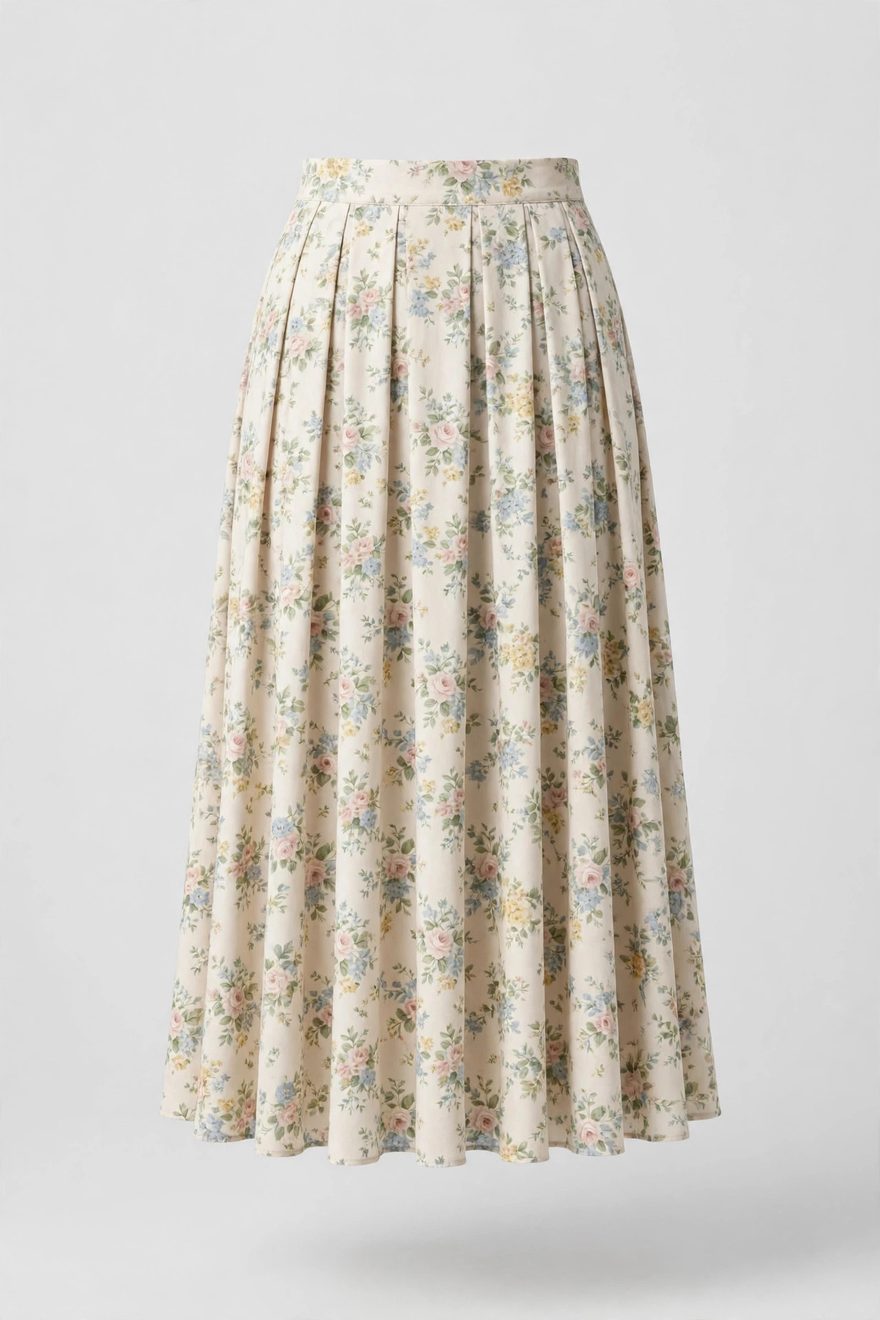
The midi was introduced deliberately. In the late 1960s, after a decade of rising hemlines crowned by the miniskirt, designers and fashion editors promoted the midi as the successor style, and in 1970 the longer length was pushed hard by the fashion press and retailers. Many women resisted at first — the mid-calf hem was associated with the 1940s, and organised protests defended the mini — but the length survived the argument. Through the 1970s the midi became an ordinary option rather than a manifesto, and it has returned in every decade since, most strongly in the 2010s, when the mid-calf skirt became a default length for skirts and dresses alike.
Because length is its only rule, the midi takes every fabric a skirt can take. Flowing midis in chiffon, rayon and light cotton are warm-weather garments; pleated midis in satin and metallic knits are evening pieces; and the same length in wool, tweed, denim or corduroy, worn with boots, is a cold-weather staple. Fitted midi pencil skirts in ponte and other firm knits work as office wear. The one proportion to watch is where the hem lands: it ends near the widest part of the calf on many wearers, so midi skirts are often cut to finish just above or just below that point.
Fashion Products Fashion Products M-R Fashion Products M
Return to the Influence Fashion home page.
Choosing a Midi Length
Midi is a range, not a point. A short midi ends just below the knee and reads as polished day wear; a long midi nearly reaches the ankle and reads as relaxed, or formal if the fabric is. The shoe completes the effect, because the midi always shows the ankle and the top of the shoe: ankle boots, loafers, heels and sneakers all work with it, and a boot tall enough to disappear under the hem closes the gap entirely in winter. This is the practical reason the midi suits tall and short wearers alike — within the range, each can pick the exact hemline that fits her proportions.
Midi Skirts in the Length Family
On this site the length family is covered by the skirts guide and its companions: maxi skirts at the long end, short skirts at the other, and the midi between them. The same silhouette often exists at several lengths — the pleated skirt sold as a mini one season is sold as a midi the next — which is why length, more than cut, is the midi's whole identity. Shoppers choosing between lengths are really choosing how much leg and shoe the outfit shows, and the midi is the choice that splits the difference.
Common Questions
What is a midi skirt?
A skirt whose hemline ends at mid-calf, between the knee and the ankle. Midi names a length rather than a cut, so A-line, pencil, pleated, wrap and circle skirts are all made as midis.
When did the midi skirt appear?
The midi was promoted in the late 1960s and pushed hard in 1970 as the fashion industry's chosen successor to the miniskirt. After early resistance it became a standard length and has returned in every decade since.
What shoes work with a midi skirt?
The hem shows the ankle and the top of the shoe, so ankle boots, loafers, heels and sneakers all work. In winter a boot tall enough to meet the hem closes the gap; in summer a sandal or flat keeps the line light.