Pencil Skirts
Fashion Influence — how style shapes, and is shaped by, the people who wear it
The pencil skirt is the narrow one: a straight tube of fabric that follows waist, hips and thighs to about the knee. This guide covers where the cut came from — post-war tailored suits and Christian Dior's slim skirts — the vent or kick pleat that makes a tight skirt possible to walk in, and how the style is worn now, from boardroom suiting to knit casual versions.
Pencil Skirts
A pencil skirt is a fitted skirt with a straight, narrow cut, usually ending at or just below the knee. It takes its name from its shape: long and slim like a pencil. There is no flare and no gathering — the skirt's outline is the wearer's outline, shaped with darts at the waist and a centre-back seam. Because the hem is barely wider than the hips, a pencil skirt almost always has a vent, slit or kick pleat at the back so the wearer can actually walk in it. The pencil skirt definition covers the same ground from the dictionary side.
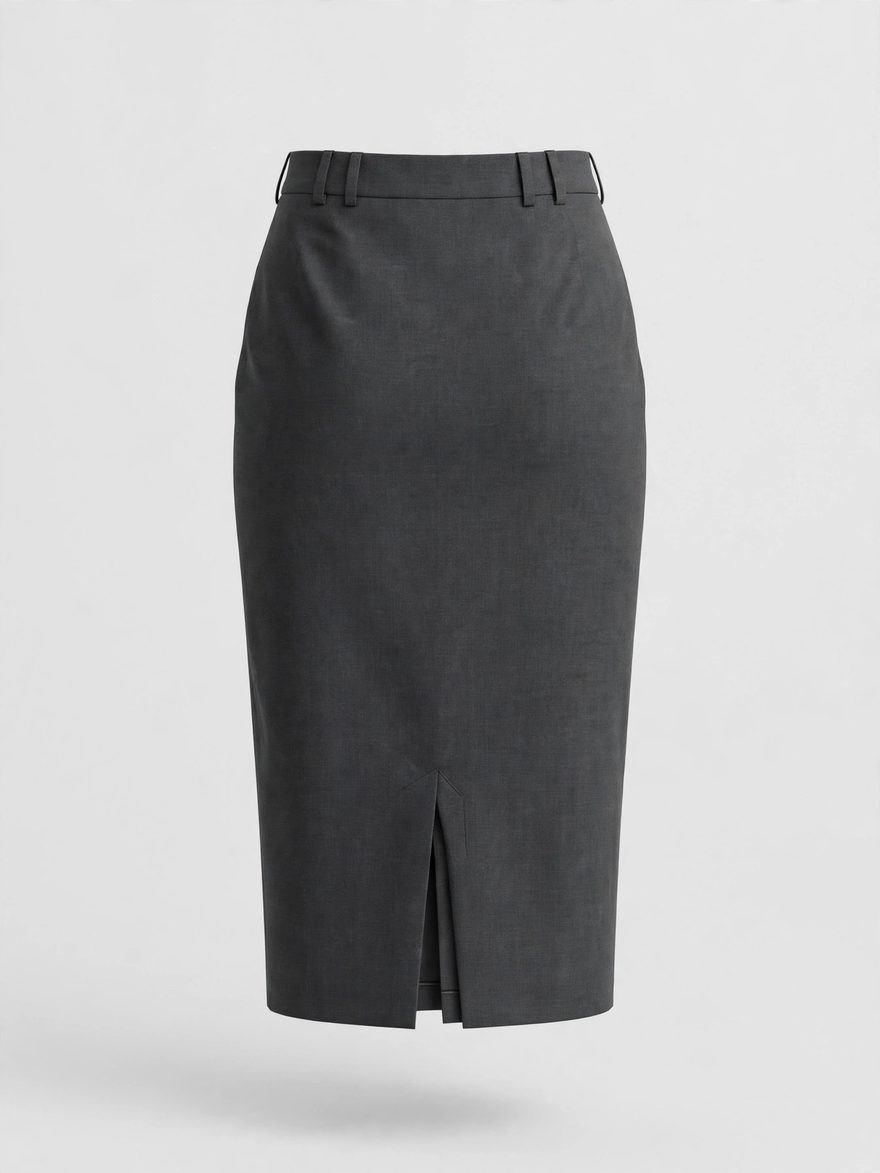
The pencil skirt's ancestor is the hobble skirt of about 1910, so tight at the ankle that wearers genuinely hobbled — an extreme the modern style avoids by ending at the knee and adding the vent. The pencil skirt proper arrived with post-war tailoring: Christian Dior's New Look of 1947 paired nipped-waist jackets with slim below-knee skirts, and the combination defined the 1950s suit. The style has cycled ever since — 1980s power dressing, 2000s office wear — because a tailored narrow skirt is the natural partner of a fitted jacket or a tucked-in blouse.
Classic pencil skirts are cut in suiting fabrics — wool blends, tweed, gabardine — and lined. Modern versions are often knitted: ponte, scuba and heavy jersey with elastane trade the tailored structure for stretch, and are worn casually with sweaters and trainers as readily as formally with heels. Denim pencil skirts follow jeans styling; the denim miniskirts of 1983 were short pencils. Length decides the register: above the knee reads young, at or below the knee reads professional, which is why the pencil remains the reference office skirt in the skirts family.
Fashion Products Fashion Products M-R Fashion Products P
Return to the Influence Fashion home page.
The Vent: A Small Detail That Does the Work
Stand still and a pencil skirt is a clean tube; walk, and the tube has to open somewhere. The vent — an overlapped slit in the centre-back seam — is the tailored answer: it lies flat and invisible when standing and opens with each stride. A kick pleat does the same job with a folded insert of fabric, and a plain slit is the simplest, least finished version. On knit pencil skirts the vent is sometimes omitted because the fabric stretches, but on any woven pencil skirt its presence, length and stitching are the quickest test of how the garment was made.
Pencil Skirts at Work and After
The pencil skirt's working life is the suit: matched with its jacket it is business formal, and with a blouse, knit or shirt it covers most office dress codes. Outside work the same skirt changes register with what joins it — a T-shirt and trainers make it casual, a silk camisole and heels make it evening wear. Fit is the whole game: a pencil skirt should skim, not squeeze, and the waist should sit without a belt doing structural work. When it fits, it is one of the longest-lived shapes in the wardrobe, which is why it appears in the skirts guide alongside far showier styles.
Common Questions
What is a pencil skirt?
A straight, narrow skirt, usually knee-length, that follows the line of the waist, hips and thighs with no flare. It is named for its long, slim shape, like a pencil.
Why do pencil skirts have a slit at the back?
Because the hem is as narrow as the hips, the skirt would not allow a normal stride. A vent, slit or kick pleat at the back opens as the wearer walks and closes when standing.
What is the difference between a pencil skirt and a hobble skirt?
Degree and length. The hobble skirt of about 1910 was tightest at the ankle and genuinely restricted walking. The pencil skirt ends at the knee and adds a back vent, so it is close-fitting but practical.