Flower Design Jewelry
Roses, daisies, lilies and blossom in metal, enamel and gems
Flower design jewelry is one of jewelry's oldest and largest motif families: roses for love, daisies for innocence, lilies, violets, pansies, orchids, cherry blossom and generic blossoms, rendered as pendants, earrings, rings, bracelets, brooches and hair jewelry. Flowers are made in carved and modeled metal, painted and plique-a-jour enamel, gemstone petals, mother of pearl and real-flower resin pieces, and the language of flowers gives many designs a specific message. This guide covers flower meanings, the main species in jewelry and how each is rendered, construction techniques for petals, and choosing flower jewelry for occasions from weddings to spring gifts.
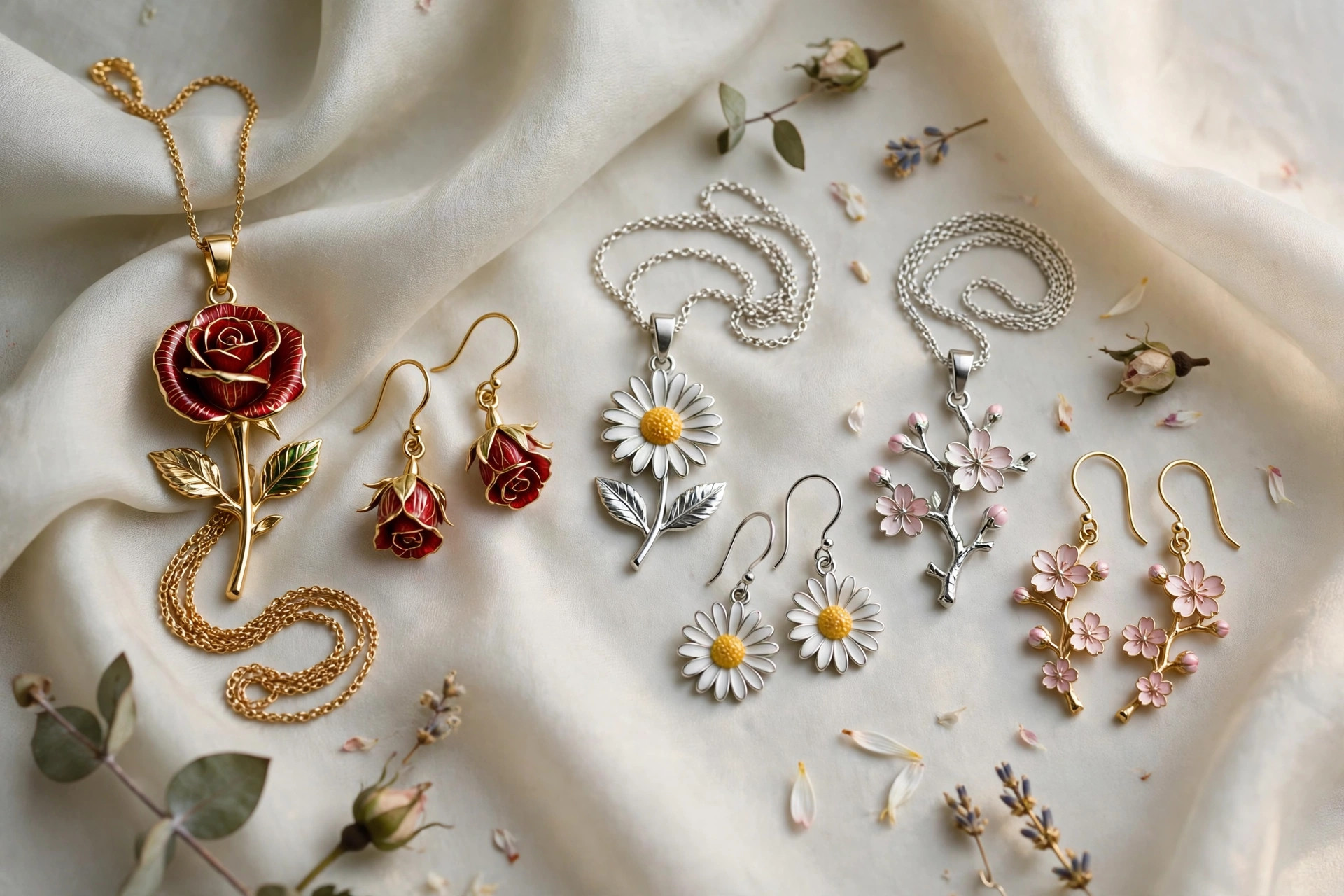
Flower design jewelry, also known as floral jewelry, is a popular and timeless style of adornment that incorporates floral motifs and elements into various pieces of jewelry. These designs are inspired by the beauty and elegance of flowers and are often used to create pieces that are both aesthetically pleasing and symbolic. Here's a detailed explanation of flower design jewelry:
Types of Flower Design Jewelry:
Rings: Flower design rings often feature a flower-shaped centerpiece, with petals and a central gemstone resembling the flower's stigma. These rings can be simple and delicate or elaborate with intricate details.
Necklaces: Flower design necklaces come in various styles, such as pendant necklaces with floral motifs, choker necklaces with flower charms, or long chains with flower-inspired pendants.
Earrings: Flower earrings can be studs, dangles, or hoops, with designs ranging from small, delicate flowers to larger, more ornate floral arrangements.
Bracelets: Floral bracelets may incorporate flower charms or links in the form of blossoms, leaves, or vines, creating a nature-inspired look.
Materials:
-
Gemstones: Precious and semi-precious gemstones like diamonds, sapphires, emeralds, and rubies are often used to add sparkle and color to flower design jewelry.
-
Metals: Flower jewelry is typically crafted from metals like gold (yellow, white, or rose), silver, platinum, and even more affordable options like brass or bronze.
-
Enamel: Some floral pieces are embellished with colorful enamel to mimic the vibrant hues of real flowers.
-
Pearls: Pearls can be used to represent flower buds or dewdrops on petals, adding elegance to the design.
Symbolism:
-
Love and Romance: Flowers are often associated with love, making flower design jewelry a popular choice for engagement rings, anniversary gifts, and other romantic occasions.
-
Femininity: Flowers symbolize femininity, making floral jewelry a great choice for women who want to celebrate their femininity and grace.
-
Natural Beauty: Floral designs also celebrate the beauty of nature, reminding wearers of the world's natural wonders.
Customization:
- Many jewelers offer customization options for flower design jewelry. You can choose your preferred flower type, the arrangement of petals, the choice of gemstones, and even the metal type to create a personalized piece.
Maintenance:
- To keep your flower design jewelry looking its best, it's essential to clean and store it properly. Use a soft brush or cloth to remove dirt and oils, and store it in a fabric-lined jewelry box to prevent scratches and tarnishing.
Occasions:
- Flower design jewelry is versatile and suitable for various occasions. It can be worn casually, to weddings, parties, and other formal events, depending on the design and materials used.
Popularity:
- Flower design jewelry has enduring popularity because of its timeless appeal and versatility. It remains a favorite choice for people of all ages.
Flower design jewelry is a beautiful and symbolic form of adornment that celebrates the natural beauty and elegance of flowers. Whether you're looking for a romantic gift, a symbol of femininity, or a way to connect with nature, flower design jewelry offers a wide range of options to choose from, allowing you to express your personal style and sentiments through its exquisite designs.
The Language of Flowers Still Sells Jewelry
Victorian buyers sent whole messages in flower symbolism, and modern flower jewelry still trades on the edited version: everyone knows a rose is love and a daisy is innocence, even if the full floral code is forgotten. Designers use that recognition, which is why species accuracy matters in flower jewelry as it does in animal jewelry: a rose must have its layered, swirling petals, a daisy its flat white rays around a gold center, and confusing the two dissolves the message the piece was bought for.
Construction quality shows in the petals' edges and backs. Fine flower jewelry finishes a petal all the way around and gives enameled blooms depth through shading; cheap versions are flat stampings with surface color. The heart, clover and other motif guides in this section share flower jewelry's symbolic logic, but flowers remain the largest motif family of all because they combine that symbolism with pure decoration better than any other subject in nature.
Common Questions
What do different flowers mean in jewelry?
The rose means love, with color refining the message: red for romantic love, pink for admiration, white for purity, yellow for friendship. Daisies mean innocence and cheerfulness, lilies purity and devotion, violets modesty and faithfulness, pansies remembrance, since their name comes from the French for thought, orchids rarity and refinement, and cherry blossom the beauty and brevity of life.
How are flower petals made in jewelry?
Metal petals are modeled, engraved or cast with texture, enamel petals are painted or set as translucent plique-a-jour, which glows like stained glass, and gem petals are carved from stone or built from shaped stones around a center. Centers are often a diamond, pearl or contrasting stone standing for the flower's heart.
What jewelry forms suit flowers best?
Brooches and pendants give flowers their natural scale and let a bloom sit flat and visible. Earrings carry small blossoms, studs and drops, rings set a single flower as the head, and bracelets and necklaces string repeated small flowers. Bridal jewelry uses white and blush flowers for a soft, romantic effect that diamonds alone cannot give.