Semi Precious Gem Rings
Colorful natural gems beyond the precious four
Semi-precious gem rings feature stones outside the traditional precious four of diamond, ruby, sapphire and emerald, a trade distinction based on historical rarity rather than beauty or durability. The group most used in rings includes purple amethyst, blue topaz, yellow citrine, green peridot, red garnet and smoky quartz, prized because they offer large, clean stones in strong colors at prices far below precious gems. Hardness varies and decides suitability for a ring: topaz at 8 on the Mohs scale and garnet at 6.5 to 7.5 wear well, while peridot at 6.5 to 7 and amethyst and citrine, both quartz at 7, need protective settings for daily use. This guide surveys the main semi-precious ring stones by color and hardness, explains treatments such as heating and irradiation, and covers setting choices, sizing and care. Because individual stone pages cover amethyst, garnet and other gems in depth, this overview focuses on comparing the group as a whole so a buyer can shortlist by color, budget and how often the ring will actually be worn each week.
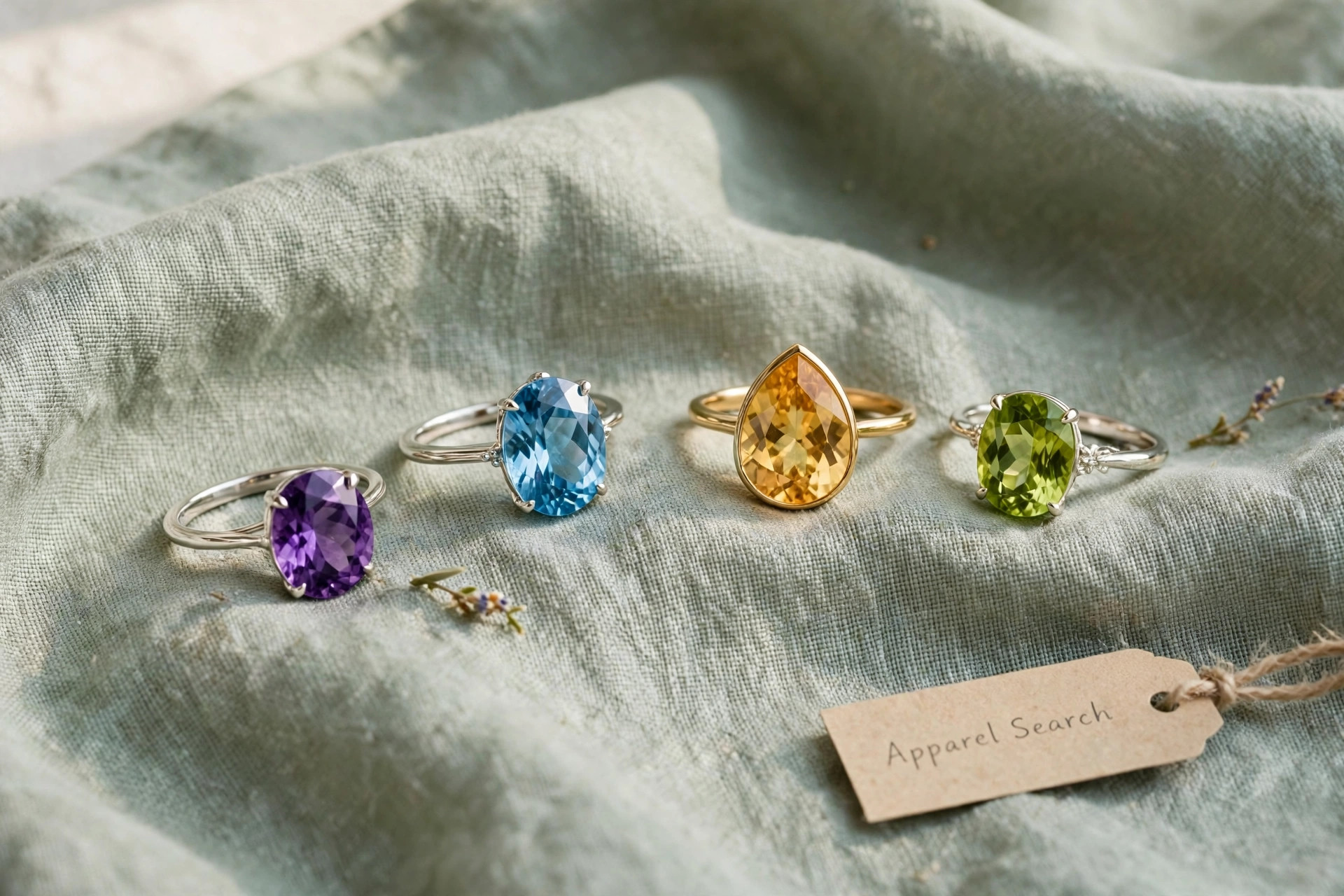
Semi-Precious Gemstone Rings: Affordable Elegance and Individuality
Semi-precious gemstone rings offer a vibrant and budget-friendly alternative to traditional precious gemstone rings. These rings feature gemstones that, while not classified as precious, are prized for their beauty, color variations, and unique properties.
Popular Semi-Precious Gemstones:
Amethyst: Known for its calming purple hues, amethyst is believed to promote clarity and spiritual growth. Learn about amethyst rings.
Citrine: Displaying warm yellow to orange tones, citrine is associated with energy, positivity, and creativity. Learn about citrine rings.
Peridot: Peridot exudes a beautiful green color and is linked to renewal, growth, and vitality. Learn about peridot rings.
Garnet: Available in a range of colors, garnet symbolizes passion, energy, and strength. Learn about garnet rings.
Aquamarine: With its calming blue shades reminiscent of the ocean, aquamarine is associated with tranquility and clarity.
Affordability and Accessibility:
Semi-precious gemstones are more abundant and often more affordable than precious gemstones like diamonds, rubies, and sapphires. This affordability allows for a wider audience to enjoy the beauty and elegance of gemstone rings.
Diverse Designs and Versatility:
Semi-precious gemstone rings come in various designs, settings, and styles to suit individual preferences. From simple solitaire settings to intricate vintage designs, these rings offer a wide range of options for personalization.
Healing and Metaphysical Properties:
Many semi-precious gemstones are believed to have healing and metaphysical properties. Individuals often choose gemstones based on the properties they seek, such as calmness, balance, or positive energy.
Unique Color Variations:
Semi-precious gemstones offer a diverse array of colors and hues. Whether you prefer the deep purples of amethyst, the vibrant greens of peridot, or the fiery reds of garnet, there's a semi-precious gemstone to match your style and taste.
Casual and Versatile Wear:
Due to their affordability and diverse colors, semi-precious gemstone rings are often chosen for everyday wear or as fashionable accessories to complement different outfits and occasions.
Birthstone Jewelry:
Several semi-precious gemstones are birthstones associated with specific months. People often choose their birthstone for personalized jewelry, including rings, to celebrate their birth month. Learn about birthstones.
Semi-precious gemstone rings offer an affordable yet elegant option for those looking to incorporate the beauty and symbolism of gemstones into their jewelry collection. With a wide variety of gemstones and designs available, individuals can find a semi-precious gemstone ring that resonates with their style, personality, and desired properties.
Time to read about semi-precious gem necklaces, semi-precious gemstone earrings, and semi precious gem bracelets.
Learn about semi-precious gemstone.
Choosing by Color, Size and Setting
The great advantage of semi-precious stones is size with clarity: a 10 by 8 millimeter amethyst or topaz with an eye-clean interior is an ordinary purchase, while the same size in sapphire would be exceptional. That makes these stones ideal for cocktail rings, right-hand rings and bold solitaires where color coverage matters more than carat prestige. Check color in daylight and indoor light, since some stones shift: amethyst can look browner under warm bulbs, and peridot stays distinctly yellow-green in all lighting.
Set softer stones with protection. A bezel or half-bezel that wraps the girdle, or a low four-prong setting with sturdy claws, will outlast a high, exposed cathedral setting for peridot and quartz. Silver, gold and platinum all work; white metal cools purple and blue stones, while yellow gold warms citrine, garnet and smoky quartz. Because many semi-precious rings are inexpensive, confirm the metal and stone identity in writing rather than relying on color names alone.
Common Questions
What does semi-precious actually mean for a ring stone?
It is a traditional trade label, not a grade of quality. Diamond, ruby, sapphire and emerald were classed as precious, and all other gems as semi-precious, based on old ideas of rarity. The label says nothing reliable about durability or value: a fine tsavorite garnet or Paraiba tourmaline can cost more per carat than a commercial sapphire, so judge each stone by its own color, clarity, cut and hardness.
Which semi-precious stones hold up best in an everyday ring?
Blue topaz and garnet are among the most practical, combining good hardness with resistance to chipping in a normal prong or bezel setting. Amethyst and citrine, both quartz, are hard enough for daily wear but benefit from low settings that keep the crown from striking hard surfaces. Peridot is softer and more brittle, so it suits occasional-wear rings or bezels that shield the girdle and facets.
Are semi-precious ring stones usually treated?
Many are, and reputable sellers disclose it. Citrine is commonly heat-treated amethyst, blue topaz is almost always irradiated and heated to achieve its blue, and many amethysts are gently heated to even out color. Treatments that are stable and disclosed are standard in this price range. Ask specifically about fracture filling or coatings, which are less durable and should lower the price.
More to Explore
- about amethyst rings
- about citrine rings
- about peridot rings
- about garnet rings
- Learn about birthstones
- about semi-precious gem necklaces
- semi-precious gemstone earrings
- semi precious gem bracelets
- about semi-precious gemstone
- About Rings
- Rings Guide Pg. 2
- Jewelry Guide
- Jewelry Stores
- Jewelry Wholesalers
- Jewelry News
- Jewelry