Timepieces
Every device that measures time, not only watches
A timepiece is any device or instrument that measures and displays time, typically in hours, minutes and sometimes seconds, designed to track the passage of time accurately for personal timekeeping, coordination of activities and measuring intervals. The word itself shows the idea: time, the continuous progression of events, joined with piece, an item or object, an instrument made to measure that progression. The category is far wider than the wristwatch. Sundials and water clocks served ancient civilizations, reading time from the sun and from flowing water. Mechanical clocks followed in the medieval period, then pocket watches, and eventually wristwatches, and the meaning of the word has kept expanding with technology to digital watches, smartwatches and other electronic instruments. The key distinction is simple and worth stating plainly: a watch is a timepiece, but not all timepieces are watches, since clocks, pocket watches and hourglasses are timepieces too. Older timepieces divide into vintage pieces, generally 20th century and valued for era, design, craftsmanship and rarity, and antique pieces, typically from the 18th century or earlier and held as significant artifacts. This guide explains the term, its history, and how the categories fit together.
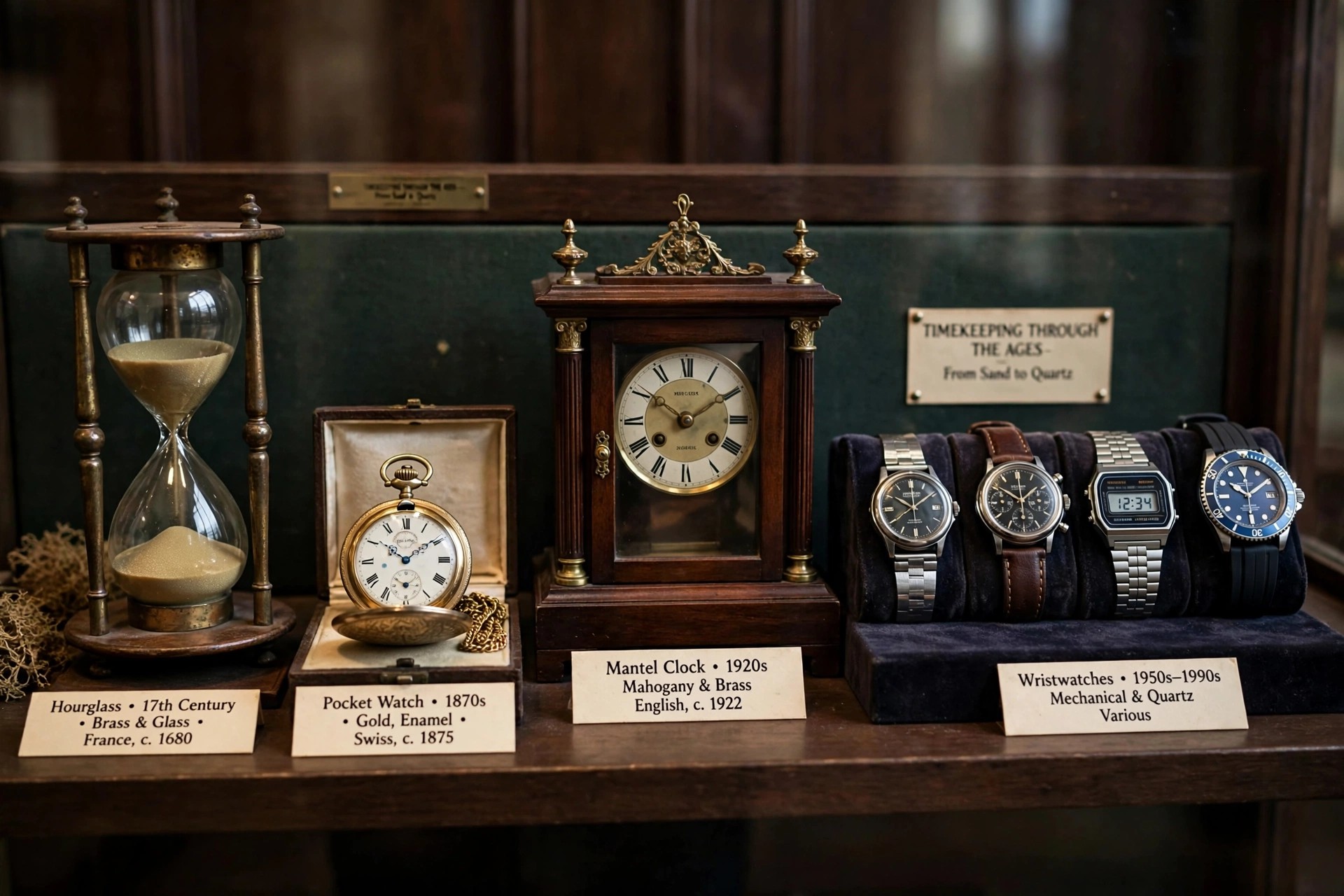
It is important to note that a watch is a timepiece but not all timepieces are watches.
"Timepieces" is a term used to refer to devices or instruments that measure and display time, typically in hours, minutes, and sometimes seconds. These devices are designed to accurately track the passage of time and are used for various purposes, including personal timekeeping, coordination of activities, and measuring intervals.
Meaning and History:
The term "timepiece" is a compound word formed by combining "time," which refers to the continuous progression of events, with "piece," denoting an item or object. Therefore, a timepiece is essentially an instrument or piece designed to measure and display the progression of time accurately.
The history of timepieces dates back thousands of years. Initially, ancient civilizations used sundials and water clocks to measure time based on the position of the sun or the flow of water. As technology advanced, mechanical clocks were developed in the medieval period, followed by pocket watches and eventually wristwatches.
Watch vs. Timepiece:
A watch is a type of timepiece that is worn on the wrist. While a watch is a timepiece, not all timepieces are watches. Timepieces can encompass a broader category that includes not only wristwatches but also clocks, pocket watches, hourglasses, and other devices designed to measure time.
Evolution of the Meaning of Timepiece:
The meaning of the word "timepiece" has evolved over the years with advancements in technology. Initially referring to mechanical clocks and watches, the term now encompasses a broader range of devices, including digital watches, smartwatches, and various electronic timekeeping instruments.
Vintage and Antique Timepieces:
Vintage Timepieces: Vintage timepieces generally refer to older watches or clocks that are considered representative of a specific era or style. These timepieces are often valued for their historical significance, design, craftsmanship, and rarity. Vintage timepieces are typically from the 20th century and are collected by enthusiasts and collectors.
Antique Timepieces: Antique timepieces are even older, typically dating back to the 18th century or earlier. They hold historical, cultural, and aesthetic value and are often considered significant artifacts. Antique timepieces are sought after by collectors and museums due to their rarity, craftsmanship, and the insight they provide into the technology and culture of their time.
In conclusion, "timepieces" represent a broad category of devices that measure and display time. While watches are a subset of timepieces, the term has evolved over time to encompass a wide array of devices, including traditional and modern instruments. Vintage and antique timepieces are prized for their historical and aesthetic value, showcasing the progression of horological technology and design over the years.
Learn about vintage timepiece watches and antique timepiece watches.
How the Meaning Grew
Each era added its instruments to the word. Medieval mechanical clocks made time public, striking hours for whole towns. Pocket watches made it personal and portable. Wristwatches, the subject of most pages in this watches section, made it constant, carried on the body all day. Digital watches replaced moving parts with electronic displays, and smartwatches added computing, communication and health sensing around the same basic job of displaying the time accurately.
That breadth is why collectors use the word carefully. A vintage wristwatch and an antique longcase clock share the name timepiece and almost nothing else: different centuries, different mechanisms, different markets. The vintage and antique pages linked from here take the two collecting categories in turn, and the watches directory places the wristwatch, the modern form of the timepiece, in its full range of types and brands.
Common Questions
What is the difference between a watch and a timepiece?
A watch is one kind of timepiece: the kind worn on the wrist. Timepiece is the broader category covering every instrument that measures and displays time, including wall and mantel clocks, pocket watches, hourglasses, digital watches and smartwatches. Saying a watch is a timepiece is always correct; calling a clock a watch is not. In the watch trade the word timepiece is also used as a respectful general term for a fine watch, which is accurate usage as long as the wider meaning is remembered.
What counts as a vintage timepiece, and what counts as antique?
Vintage timepieces are older watches or clocks representative of a specific era or style, typically from the 20th century, valued for historical significance, design, craftsmanship and rarity, and collected by enthusiasts. Antique timepieces are older still, typically dating to the 18th century or earlier, with historical, cultural and aesthetic value as artifacts, sought by collectors and museums for their rarity and for the insight they give into the technology and culture of their time.
What were the earliest timepieces?
Sundials and water clocks, used by ancient civilizations thousands of years ago. A sundial measures time from the position of the sun by the shadow it casts, and a water clock measures it by the regulated flow of water. Both depend on natural processes rather than machinery, and both were accurate enough to organize daily life, work and ceremony. Mechanical clocks, developed in the medieval period, were the step that freed timekeeping from sun and weather and began the line that leads to pocket watches and wristwatches.