Scissor Factories
Manufacturers of scissors and shears for cutting fabric, thread, leather, fiberglass and Kevlar in the garment industry.
Scissors are a working tool at every stage of garment production, from the cutting room, where long shears work through plies of fabric, to the sewing floor, where small scissors and thread clippers finish seams and trim loose ends. This directory brings together scissor factories that supply the garment industry: manufacturers of heavy-duty fiberglass scissors, fabric and thread scissors, sewing machine supplies, and heritage knife and scissor makers.
The factories listed below serve different ends of that trade. Some specialize in industrial scissors built to cut heavy fiberglass, leather, Kevlar and heavy fabric; others supply the sewing trade with scissors, thread clippers and machine parts, or carry on centuries-old cutlery traditions. The guide sections that follow explain the main types of garment scissors, how size and blade choice follow the material being cut, and what to confirm when sourcing scissors for a factory or workroom.
Scissors & Cutting Resources
Types of Scissors Used in Garment Production
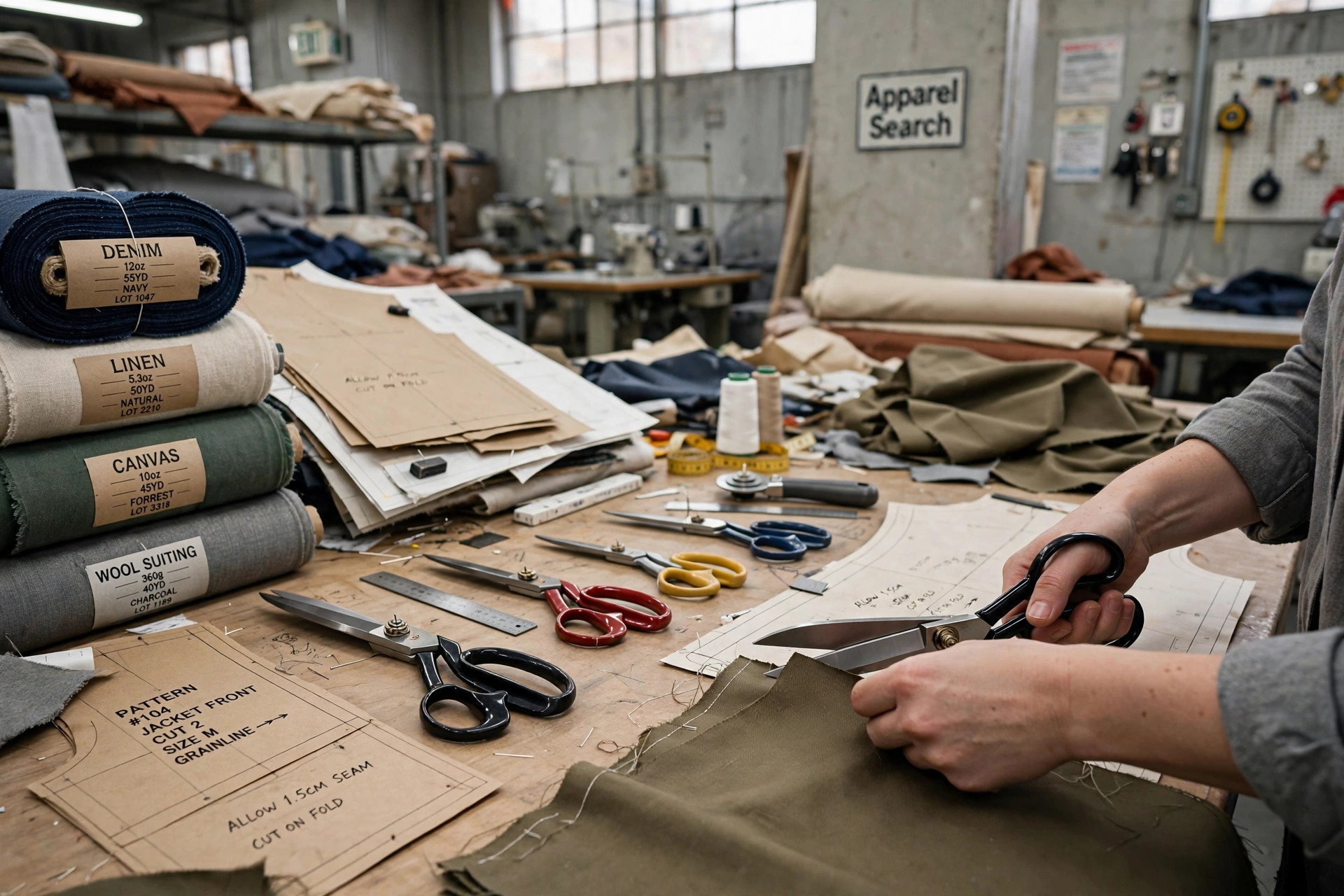
A garment factory uses several distinct cutting tools, and they are not interchangeable. Fabric shears are the large, heavy scissors of the cutting room, with long blades and offset handles that let the lower blade slide flat along the table while cutting pattern pieces from fabric. Smaller dressmaking and tailor's scissors handle single layers, sample work and alterations. Thread scissors and clippers are small, quick tools used at the sewing machine and in finishing to snip thread ends cleanly without nicking the garment. Pinking shears cut a zigzag edge that helps woven fabric resist fraying, which is why they have their own place in sample rooms and finishing departments.
Specialized production adds further types. Heavy-duty industrial scissors are built for materials that would quickly dull or damage ordinary shears, including fiberglass, leather and Kevlar. The factories in this directory reflect that spread: Avec Industries builds its range around heavy fiberglass, leather, Kevlar and fabric cutting, while the sewing-supply manufacturers listed here pair their scissors with thread clippers and machine parts for the sewing floor. Matching the tool to the job is the first sourcing decision, because a scissor that is excellent on thread can be ruined in a week on cutting-room work.
Choosing Scissors by Material
Blade steel, edge grind and handle strength all follow the material. Fiberglass and Kevlar are abrasive and fibrous, so scissors made for them use hardened blades and a cutting action that shears fibers cleanly instead of pushing them aside. Leather needs a strong, sharp edge that can follow curves without tearing, and heavy fabric needs enough blade length and leverage to cut without the operator forcing the cut. For everyday woven and knitted apparel fabrics, a well-balanced fabric shear in the right size matters more than any special feature: the blades should meet evenly along their whole length and the pivot should be adjustable as the tool wears.
Thread work sits at the opposite end of the scale. Scissors for cutting sewing thread are small and light, often spring-loaded clippers that can be picked up and used with one squeeze between other operations. Double C. Limited, one of the sewing-supply manufacturers listed below, supplies scissors for cutting sewing thread alongside its sewing machine spare parts, which is the typical buying pattern: thread tools are sourced with machine supplies, while cutting-room shears are sourced as tools in their own right.
Sizes and Cutting-Room Practice
Garment scissors are sold by overall length, and Avec Industries' range shows the usual industrial spread: sizes from 7 inches up to 12 inches. Shorter scissors give control for detail work, sample cutting and trimming; longer shears give the leverage and blade travel needed for straight cuts through fabric on the cutting table. A workroom normally keeps several sizes rather than one compromise size, because operators reach for different tools for pattern paper, single fabric plies, and finishing work.
However they are sized, scissors stay useful only if they are kept for their intended material. Cutting paper dulls blades meant for fabric, and using fabric shears on fiberglass or webbing damages the edge, which is why factories separate cutting tools by station and material. Sharpening, pivot tension and clean storage are part of the real cost of the tool, and buyers sourcing for a factory should ask suppliers about replacement and servicing as well as the purchase price.
Heritage Makers and Sewing-Supply Manufacturers
Sheffield, England is one of the historic homes of scissor making, and the Sheffield Knives listing below shows how deep those roots run. J. Adams Ltd is a family business that has been making knives and scissors for six generations, and it is the parent company for three other old established manufacturers: F.E & J.R. Hopkinson Ltd, established 14 June 1944; John Nowill & Sons Ltd, whose corporate name was granted by the Cutlers Company of Hallamshire on 27 April 1700; and Austin McGillivray & Co. Heritage makers of this kind supply both trade and retail customers who want traditionally made scissors with a long service life.
Alongside the heritage makers, this directory lists high-volume sewing-supply manufacturers in Asia. Jincheng Company, founded in 1988, manufactures sewing machine supplies as well as scissors and thread clippers under its Synter series, and Zhangjiagang City Jincheng Scissors Factory produces all kinds of scissors for cutting thread, fabric and twill tape. Between the two models — craft production in Sheffield and factory production in China and Pakistan — garment businesses can source at the volume, price and tradition their work requires.
Scissor Factory Listings
Manufacturers and exporters of scissors, shears and related sewing supplies for the garment trade.
Avec Industries
Avec Industries (Pakistan) are manufacturers and exporters of fiberglass scissors. Their scissors cut 100% heavy fiberglass, heavy leather, heavy Kevlar and heavy fabric, and they offer scissors in sizes 7", 8", 9", 10", 11" and 12" at low prices.
Fiberglass Scissors — sizes 7" to 12"
Double C. Limited
Double C. Limited is a manufacturer and exporter with its own plant in mainland China, in Changzhou. Its main range covers its own brand names YOYO and YOKO, for series of different sewing machine spare parts and sewing machines. They also provide scissors for cutting sewing thread, and supply original brand products.
All members of the company are qualified technical personnel with over 10 years of experience. Devoted to meeting the various requirements of clients, they reply and offer solutions promptly and efficiently, and they welcome distributor and OEM enquiries.
Jincheng Company
Jincheng Company has adhered to the principle of "in pursuit of technical innovation and perfecting the customer service system" since it was founded in 1988. Its fire-new Synter series products have been introduced and promoted as the company takes part in international competition. They manufacture sewing machine supplies as well as scissors and thread clippers.
Sheffield Knives Co.
Sheffield Knives Co. (United Kingdom): J. Adams Ltd is a family business which has been making good quality knives and scissors for six generations. They are the parent company for three other old established manufacturers: F.E & J.R. Hopkinson Ltd, established 14 June 1944; John Nowill & Sons Ltd, whose corporate name was granted by the Cutlers Company of Hallamshire on 27 April 1700 A.D.; and Austin McGillivray & Co.
Zhangjiagang City Jincheng Scissors Factory
Zhangjiagang City Jincheng Scissors Factory produces all kinds of scissors, with several years of experience in manufacturing scissors. Their scissors can be used to cut thread, fabric, twill tape and more.
More Cutting & Trim Resources
Common Questions
What scissors do garment factories use?
Cutting rooms use long fabric shears for pattern pieces, smaller scissors handle sample and detail work, thread scissors and clippers trim thread at the sewing machine and in finishing, and pinking shears cut a zigzag edge that resists fraying. Heavy materials such as fiberglass, leather and Kevlar need dedicated heavy-duty scissors.
What sizes do industrial garment scissors come in?
Industrial ranges commonly run from about 7 inches for control and detail work up to 12 inches for long cutting-table cuts. Avec Industries, listed on this page, offers its fiberglass scissors in 7, 8, 9, 10, 11 and 12 inch sizes.
Why should fabric scissors not be used on other materials?
Paper, fiberglass, webbing and other abrasive or hard materials dull or damage an edge ground for fabric, and the scissors then crush rather than cut cloth. Factories keep separate scissors by station and material, and sharpen and adjust pivots as part of routine tool care.