The Hook
The Plainest Shirt in the Room
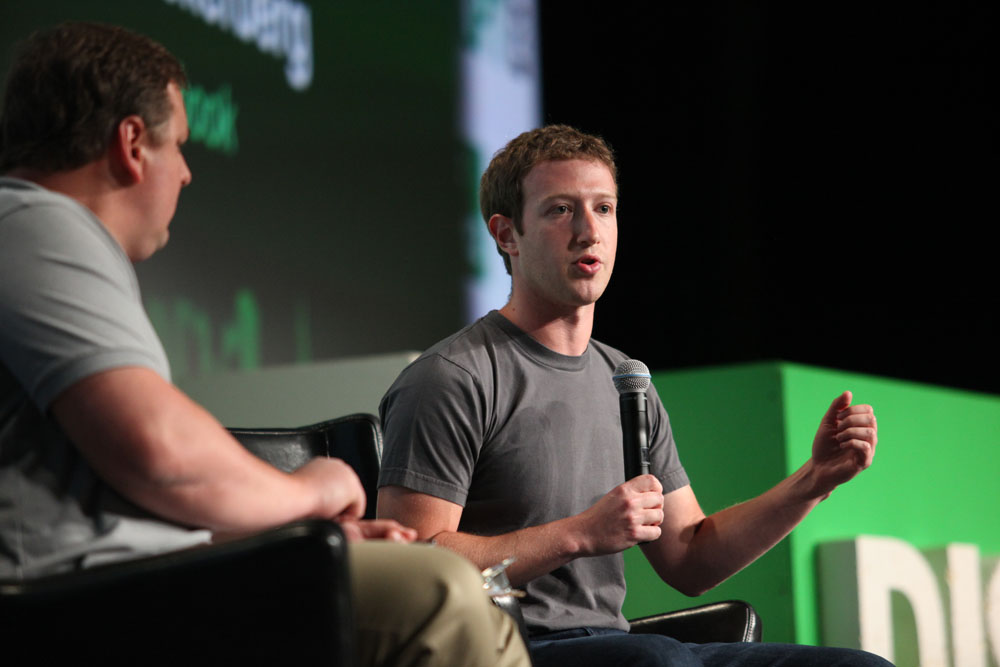
There is a photograph’s worth of information in Mark Zuckerberg’s gray T-shirt, and none of it is in the shirt. It is a plain crew-neck tee — no logo, no graphic, no color to speak of — worn by the founder, chairman and chief executive officer of Meta to interviews, product launches, congressional-adjacent appearances and fireside chats for the better part of a decade. Along with Steve Jobs’ black turtleneck and Jensen Huang’s leather jacket, it completes the trio of garments that defined how the tech industry dresses its kings. But Zuckerberg’s version had the strangest career of the three: it began as a scandal, became a philosophy, and ended — if the fashion pages of 2026 are to be believed — as a phase he has now outgrown.
The arc matters because Zuckerberg is the only one of the three who explained his uniform at length, in public, in his own words — and the only one who later walked away from it in full view. His story therefore says the most about what a CEO uniform is actually for. It started, as most people forget, not with the T-shirt at all, but with a hoodie.
The T-Shirt File
- The Look
- A plain gray crew-neck T-shirt, worn with jeans or dark trousers. Before it, from the company’s earliest days: a gray zip-up hoodie.
- His Explanation
- Decision elimination. From his November 2014 Facebook Q&A: he owns multiples of the same shirt so he can “make as few decisions as possible.”
- The Flashpoint
- May 2012: wearing the hoodie to meet IPO investors, he was called out by Wedbush analyst Michael Pachter as showing a “mark of immaturity.”
- The Evidence Photo
- His own closet, January 2016: a rail of identical gray tees and gray hoodies, captioned “What should I wear?”
- The Reported Maker
- Brunello Cucinelli, custom-ordered at $300–$400 — reported by W Magazine and CNBC, never confirmed by Zuckerberg, Meta or the brand.
- The Current Chapter
- Since 2023: shearling jackets, a gold prayer-pendant chain, graphic tees co-designed with Mike Amiri, and (per the New York Times, 2026) Loro Piana, Loewe and The Row.
The Hoodie Era
First, the Hoodie — and the Fight It Started
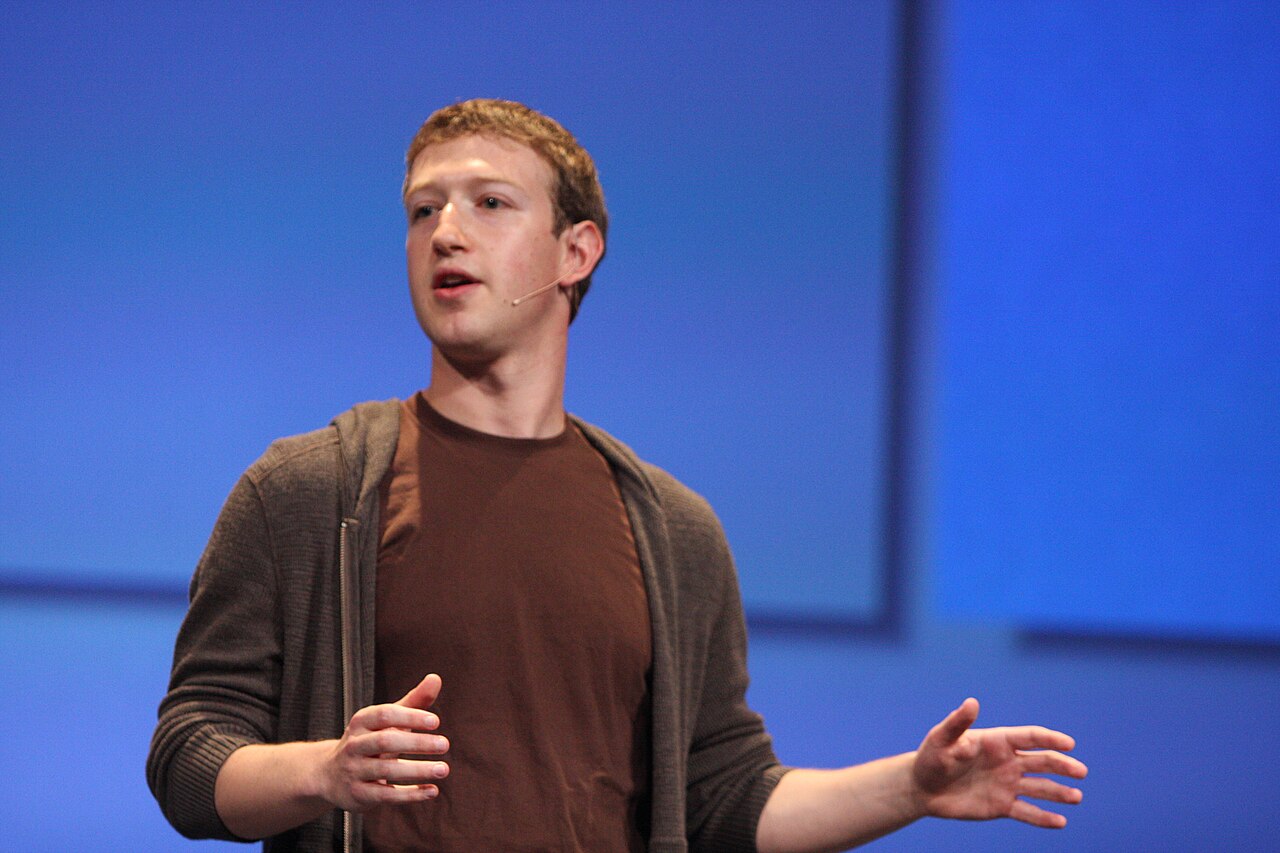
Before the T-shirt there was the hoodie, and it was there from the beginning. The freely licensed photographs reach back to Facebook’s f8 developer conference in July 2008, where a 24-year-old Zuckerberg keynoted in a gray zip-up hooded sweatshirt worn open over a brown T-shirt — the dorm-room founder uniform, unchanged for the stage. Through the company’s growth years the hoodie was load-bearing: it said the founder was a builder, not a suit, and that Facebook’s culture would be set by the people who wrote the code.
The hoodie met its jury in May 2012, when Facebook took its initial public offering on the road. Zuckerberg wore it to meet the investors he was asking to buy the stock — and Wall Street, or at least one loud corner of it, revolted. Wedbush Securities analyst Michael Pachter told Bloomberg the hoodie “is actually showing investors he doesn’t care very much,” called it a “mark of immaturity,” and added: “He’s got to show [investors] the respect that they deserve because he’s asking them for their money.” Pachter went further, suggesting Zuckerberg was better suited to be chief product officer than CEO. The episode was instantly christened “Hoodie-gate,” and it ran for days.
Other analysts pushed back in the same coverage — the hoodie as authentic brand, substance over dress — and history has not been kind to the prosecution: Facebook listed on 18 May 2012, and the hoodie’s wearer remains chairman and CEO of what is now Meta a decade and a half later. But the episode fixed the terms of the debate that would follow Zuckerberg’s clothes for years: was the casual uniform a founder’s confidence, or a founder’s contempt for the room? His answer, when it came two years later, reframed the whole question. The uniform wasn’t about the room at all. It was about the morning.
In His Own Words
“As Few Decisions as Possible”
On 6 November 2014, at his first public Facebook Q&A, Zuckerberg was asked the question the whole internet wanted answered: why the same gray shirt, every day? His reply is the most complete explanation any tech founder has ever given for a signature uniform, and it deserves to be read in full rather than in the clipped form it usually travels in:
“There are multiples of the same shirt. I want to clear my life so I make as few decisions as possible about anything other than how to best serve this community. There’s a bunch of psychology theory that even making small decisions about what you wear, what you eat for breakfast, etc., can make you tired. I’m in this very lucky position where I wake up every day and help serve more than a billion people. I feel like I’m not doing my job if I spend any of my energy on things that are silly or frivolous about my life.”
— Mark Zuckerberg, first public Facebook Q&A, 6 November 2014, as reported by PCWorld and TechCrunch.
Three things in that answer did real work. First, the correction: not one shirt, but multiples of the same shirt — the uniform is a stock, not a relic (the same point Jensen Huang would make about his “30 or 40” jackets a dozen years later). Second, the mechanism: decision fatigue, the psychology-theory idea that small choices deplete the same energy big ones need. Third, the framing: getting dressed plainly was cast not as laziness or anti-fashion but as a duty to the “more than a billion people” he served — frugality of attention as a form of respect, which quietly inverted Pachter’s charge. The hoodie-wearer who supposedly didn’t care was, by his own account, the man who cared too much to spend a decision on a shirt.
Fashion writers noticed the lineage immediately. The New York Times’ Vanessa Friedman would later describe the uniform approach as Jobs’ invention, “later adopted by adherents including Mark Zuckerberg and Barack Obama” — and the comparison is exact in one respect: like Jobs, Zuckerberg turned a private efficiency into a public identity, whether he intended the second half or not. A man who wears the same gray shirt in every photograph becomes, in every photograph, instantly identifiable. The uniform saves its wearer a decision every morning and buys him a logo he never has to design.
The Closet Photo
“First Day Back After Paternity Leave. What Should I Wear?”
Every famous uniform eventually produces its relic photograph, and Zuckerberg posted his himself. On Monday 25 January 2016 — his first day back at work after a two-month paternity leave following the birth of his daughter Max — he shared a picture of his closet: a rail of hangers holding identical gray T-shirts, with several gray and blue-gray hoodies hanging alongside them, captioned, deadpan: “First day back after paternity leave. What should I wear?”
The coverage was wide and amused — GeekWire’s headline, “Fifty shades of Mark Zuckerberg,” was the one that stuck — but the photo is more informative than the jokes suggested. It proved the 2014 account was literal: the wardrobe really was multiples, arrayed and interchangeable. And it quietly corrected the timeline most people carried in their heads: the hoodie had not been replaced by the T-shirt. Both hung on the same rail, in the same gray palette — the hoodie had been absorbed into the uniform rather than retired, a layer of the same system. (The photograph is Zuckerberg’s own post and is not freely licensed, which is why this feature describes it rather than republishing it; every photograph actually shown here is a verified free-license image, credited below.)
The $300 Question
What Are the Shirts, Actually? Reported, Not Confirmed
Here is the claim everyone repeats: that the plain gray T-shirts are custom-ordered from the Italian luxury house Brunello Cucinelli at roughly $300 to $400 apiece — a stealth-luxury punchline that has powered a thousand listicles. It is time to be precise about its status, because this feature separates what is documented from what is merely repeated: the Cucinelli claim is reported, and it has never been confirmed by Zuckerberg, by Meta, or by Brunello Cucinelli.
Traced to its sources, the substantive reporting is W Magazine (April 2018), which wrote that “the pigeon gray T-shirts he favors are custom-ordered from Brunello Cucinelli, and we know they go for upwards of $300 a pop”; CNBC followed in 2019 with “almost $300.” That is respectable fashion-press sourcing, and the claim may well be true — a billionaire’s “plain” tee is rarely a three-pack — but no primary confirmation exists, and the price figures ($300, $300–$400, “upwards of $300”) drift from retelling to retelling in the way of numbers nobody has checked against a receipt. Treat any article that states the maker and price as settled fact as telling you more than it knows.
Two side-stories show how completely the attribution has taken hold anyway. An Austrian entrepreneur, Klaus Buchroithner of Vresh Clothing, reverse-engineered the tee’s fabric, color and cut and sold a replica for about $46, with profits directed to the Chan Zuckerberg Initiative — the uniform, democratized. And in 2026, costume designer Susan Lyall, researching how to dress Jeremy Strong as Zuckerberg for the film The Social Reckoning, went looking for “the exact Brunello Cucinelli T-shirt and sweater” — evidence that among the professionals whose job is accuracy, the unconfirmed attribution is now simply treated as canonical. The gray tee’s maker is a fact of fashion culture. Whether it is a fact of Zuckerberg’s closet remains, officially, unproven.
“This is worth more because it’s used.”
— Mark Zuckerberg, July 2024, putting on the leather jacket Jensen Huang had just handed him on stage at SIGGRAPH — the two surviving uniform-wearers of tech, trading uniforms.
The Evolution, 2023–2026
The Uniform Loosens: Shearling, Gold Chains and His Own Designs
The surprise of Zuckerberg’s style story is its final act. Beginning in 2023, the man who had eliminated clothing decisions began, visibly, to enjoy them. The markers came in quick succession. In February 2024 he was photographed in Japan wearing a brown shearling jacket (reported at around $1,000) and Meta smart glasses, praising Japanese McDonald’s on Instagram. Days later came the famous “jersey swap” photograph with Jensen Huang — Zuckerberg in Huang’s black leather moto, Huang in Zuckerberg’s shearling — which Zuckerberg captioned by calling Huang “Taylor Swift, but for tech.” The same month, at the Ambani pre-wedding celebrations in India, he and Priscilla Chan wore matching embellished ensembles reported as Alexander McQueen and Rahul Mishra. The uniform era’s gray was giving way to something else: participation.
The jewelry made the point most sharply. In the summer of 2024 Zuckerberg began wearing a gold chain with a pendant, and — unusually for him — explained it himself, on Bloomberg’s The Circuit with Emily Chang: he had worked with a designer (identified by Chang as Eli Halili) on a pendant engraved with the Mi Shebeirach, the Jewish prayer for healing that he sings to his daughters every night: “May we have the courage to make our lives a blessing.” A signature accessory, personally meaningful and publicly explained, is the opposite of decision elimination. It is adornment, chosen.
Then he started designing. At Meta Connect on 25 September 2024 he took the stage in a boxy black graphic tee of his own co-design with Mike Amiri, reading Aut Zuck aut nihil — “Zuckerberg or nothing,” after the Latin aut Caesar aut nihil. The series ran to other classical mottos: pathei mathos (“learning through suffering”) and Carthago delenda est (“Carthage must be destroyed”), the latter worn at his 40th birthday party in May 2024. On the Acquired podcast he was frank about the new hobby: “I started working with people to design some of my own clothes… we’re going to design eyewear, we’re going to design other stuff that people wear — let’s get good at this.”
The fashion establishment delivered its verdict in September 2026, when Vanessa Friedman profiled the transformation in the New York Times (“Mark Zuckerberg Is Trying Something On”). By her reporting, he now shops for himself — via Instagram ads, of all funnels — buys a great deal of Loro Piana, personally chose printed Loewe shorts worn at Sun Valley, wore trousers by The Row, commissioned a custom Amiri tee reading “BUILDING IS MY LOVE LANGUAGE,” and was hunting, in a sentence that would have been unimaginable in 2014, for “the 20 polo-collared shirts that I like the best.” Twenty versions of a chosen shirt: the uniform instinct, repurposed for pleasure. The decision-elimination era is over; what replaced it is a man using clothes the way his younger self used them, but in reverse — to say something, rather than to say nothing, as loudly as possible.
Timeline
From Dorm Room to Designer: The Uniform in Dates
- 2008
The hoodie on stage. At Facebook’s f8 conference, the 24-year-old founder keynotes in a gray zip-up hoodie over a T-shirt (pictured above) — the look that defines the company’s first era.
- May 2012
Hoodie-gate. On the IPO roadshow, analyst Michael Pachter calls the hoodie a “mark of immaturity” and questions whether Zuckerberg respects investors. Facebook lists on 18 May 2012; the hoodie stays.
- Nov 2014
The explanation. At his first public Facebook Q&A, Zuckerberg explains the multiples and the philosophy: “as few decisions as possible”; energy spent on “silly or frivolous” things would be energy stolen from the community.
- Jan 2016
The closet photo. Back from paternity leave, he posts the rail of identical gray tees and hoodies: “What should I wear?” The uniform is now documented fact, and a meme.
- 2018–19
The $300 story. W Magazine reports the tees are custom Brunello Cucinelli at upwards of $300; CNBC echoes “almost $300.” The claim is never confirmed by any party to it — and never dies.
- Feb–Mar 2024
The thaw. A brown shearling jacket in Japan; the Instagram “jersey swap” with Jensen Huang; designer ensembles at the Ambani pre-wedding in India.
- July 2024
The chain. On Bloomberg’s The Circuit, he explains the gold pendant engraved with the Mi Shebeirach prayer he sings to his daughters.
- Sept 2024
His own label. At Meta Connect he wears Aut Zuck aut nihil, a black graphic tee co-designed with Mike Amiri — the uniform’s wearer turned designer.
- Sept 2026
The fashion profile. Vanessa Friedman documents the new wardrobe in the New York Times: Loro Piana, Loewe, The Row, custom Amiri — and a hunt for twenty perfect polo shirts.
The Uniform Effect
What the Gray Tee Actually Did
Set the three uniforms side by side and Zuckerberg’s is the only one that was ever really argued about. Jobs’ turtleneck was accepted as an artist’s eccentricity; Huang’s jacket was received as showmanship; but the gray tee (and the hoodie before it) was litigated — by analysts in 2012, by Congress-adjacent commentary for years, by the fashion press on a slow drip — because it sat exactly on the fault line between two ideas of what a chief executive is. Pachter’s “mark of immaturity” was the old idea speaking: the suit as a sign of respect owed to capital. Zuckerberg’s 2014 answer was the new idea’s manifesto: respect is owed to users, measured in decisions hoarded for their benefit, and dress is a cost center of the mind.
The new idea won so completely that it is easy to forget it was ever contested. The plain tee became the default silhouette of the founder class — the visual shorthand, imitated by a generation of startup CEOs, for “too busy building to dress.” Which is precisely why the post-2023 evolution reads as news. When the man who industrialized the anti-fashion uniform starts co-designing Latin-motto graphic tees and hunting for the perfect twenty polos, the signal is not hypocrisy; it is that the uniform had finished its job. It carried him from dorm room to one of the largest companies on earth. What he wears now — shearling, gold, Amiri, Loro Piana — is a second uniform being assembled in public, this one for the role of elder statesman of the industry he helped create. Whether it hardens into as strict a code as the gray tee remains, as the fashion writers say, one to watch.
The Shirt Itself
Getting the Look: It Really Is Just a T-Shirt
Of the three signature uniforms, Zuckerberg’s is the only one a reader can replicate this afternoon for the price of lunch — always assuming the unconfirmed Cucinelli reporting is wrong, and that his cost more. The formula is a plain gray crew-neck T-shirt, mid-weight cotton, no logo or graphic, in a regular (not slim, not boxy) fit, worn with dark jeans or trousers. The discipline is in the details: the same shade of gray, every time; a crew neck that keeps its shape; and enough identical shirts that the choice never has to be made. Our men’s T-shirts guide covers fits, fabrics and weights in depth; the men’s designer T-shirts guide explores the premium end the Cucinelli story points at; the men’s graphic T-shirts guide covers the printed territory of his Amiri era; and the types of T-shirts entry in our terms library breaks down the crew neck and its cousins. One honest caution, learned from the man himself: the look works because it is a system, not a shirt. Buying one gray tee is shopping. Buying ten is a uniform.
Signature Looks: The Tech Uniform Trio
Three tech founders turned a single garment into a personal logo. Zuckerberg’s gray T-shirt is one of a trio of signature looks profiled in this series:
Questions
Common Questions
Why does Mark Zuckerberg wear the same gray T-shirt every day?
By his own explanation, to eliminate a decision. At his first public Facebook Q&A in November 2014 he said he owns multiples of the same shirt: “I want to clear my life so I make as few decisions as possible about anything other than how to best serve this community... I feel like I’m not doing my job if I spend any of my energy on things that are silly or frivolous about my life.”
Are Mark Zuckerberg’s gray T-shirts really $300 shirts from Brunello Cucinelli?
That is reported, not confirmed. W Magazine reported in 2018 that the gray T-shirts are custom-ordered from Brunello Cucinelli at upwards of $300 each, and CNBC put the figure at almost $300 in 2019. Neither Zuckerberg, nor Meta, nor Brunello Cucinelli has ever publicly confirmed the claim.
What did Mark Zuckerberg’s 2016 closet photo show?
A closet rail of identical gray T-shirts alongside several gray hoodies, all on hangers. He posted it on 25 January 2016, his first day back from paternity leave, captioned: “First day back after paternity leave. What should I wear?”
Does Mark Zuckerberg still wear the gray T-shirt?
Less and less. Since 2023 his public wardrobe has expanded to a brown shearling jacket, a gold chain with a prayer pendant he helped design, black graphic T-shirts co-designed with Mike Amiri, and — in a September 2026 New York Times fashion profile — pieces from Loro Piana, Loewe and The Row. The gray tee still appears, but the strict uniform era is over.
What is Mark Zuckerberg’s job at Meta?
He is Meta’s founder, chairman and chief executive officer — the same role, under the company’s new name, that he held at Facebook. Meta’s own leadership page lists him as “Founder, Chairman and Chief Executive Officer.”
Sources
Sources & Further Reading
- PCWorld, November 2014 — the fullest contemporaneous report of Zuckerberg’s first public Facebook Q&A, including the gray-shirt explanation: pcworld.com. TechCrunch’s same-day summary: techcrunch.com.
- Computerworld, “Hoodie-gate: Facebook CEO’s attire a sign of immaturity?”, May 2012 — the Pachter comments and the analyst pushback: computerworld.com.
- GeekWire, “Fifty shades of Mark Zuckerberg,” January 2016 — coverage of the closet photo: geekwire.com.
- W Magazine, April 2018, and CNBC, 2019 — the Brunello Cucinelli attribution and $300 figure, as traced in the reporting above; neither has been confirmed by Zuckerberg, Meta or the brand.
- TechCrunch, September 2024 — the Aut Zuck aut nihil shirt at Meta Connect: techcrunch.com.
- Kveller, 2024 — the Mi Shebeirach pendant and the Circuit interview: kveller.com.
- Vanessa Friedman, “Mark Zuckerberg Is Trying Something On,” New York Times, 25 September 2026, as summarized in Back Row’s critique of the profile: backrow.net.
- Meta, leadership page — “Mark Zuckerberg, Founder, Chairman and Chief Executive Officer”: meta.com.
Where reporting conflicted — above all on the maker and price of the gray T-shirts — this feature says so rather than picking a winner. Quotations are as reported by the outlets above.
Photo Credits
About the Photographs
Every photograph in this feature is a real, freely licensed image from Wikimedia Commons — no AI-generated or altered imagery is used. Credits, as required by the licences:
- TechCrunch Disrupt, 2012 (top of page): photo by TechCrunch, licensed under CC BY 2.0. Source: Wikimedia Commons.
- f8 conference, 2008: photo by Brian Solis, licensed under CC BY 2.0 (resized for the web). Source: Wikimedia Commons.
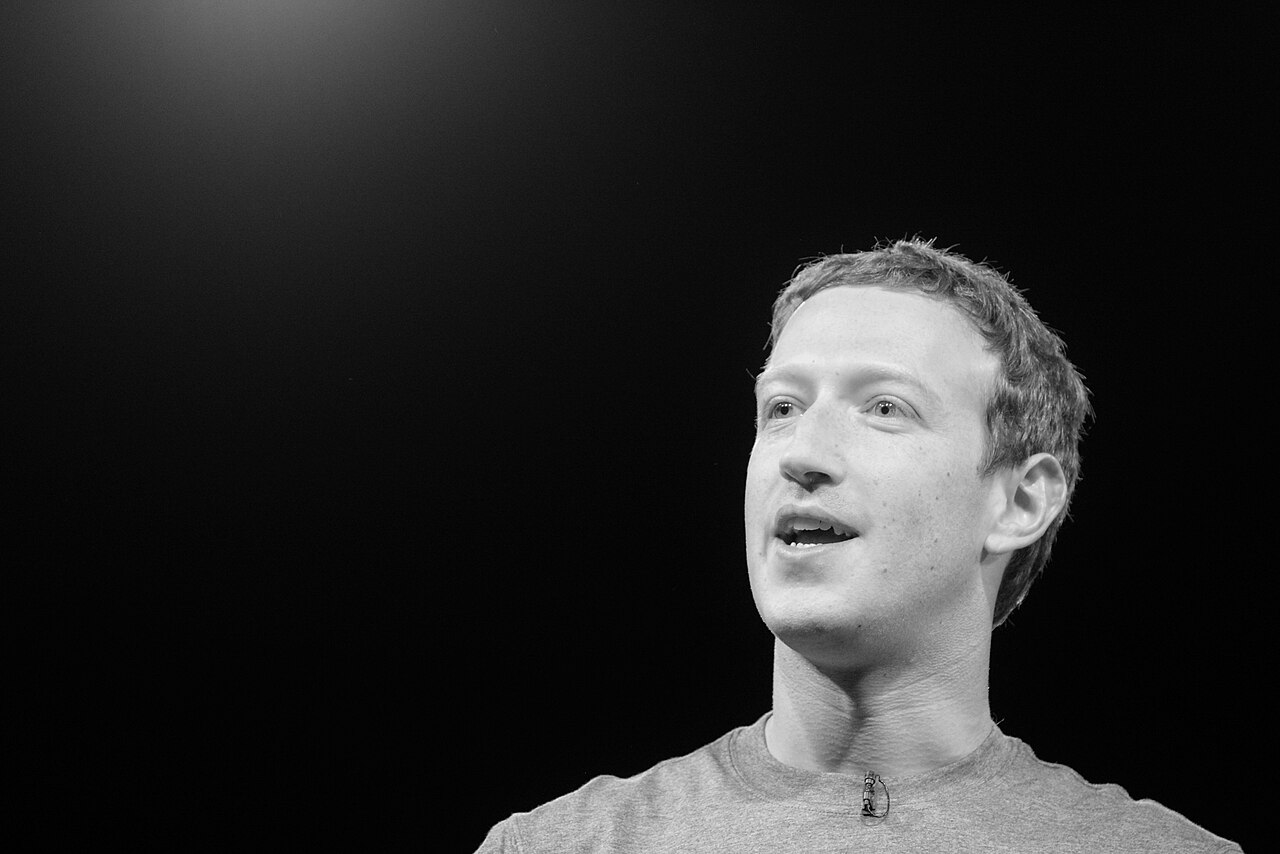
- Mobile World Congress, 2016: photo by Alessio Jacona, licensed under CC BY-SA 2.0 (resized for the web). Source: Wikimedia Commons.


The famous 2016 closet photograph discussed in this feature is Mark Zuckerberg’s own Facebook post; it is not freely licensed and is described, not reproduced.
More to Explore
Search Apparel Search