The Method, for Men
Same Audit, Same Words, Menswear Evidence
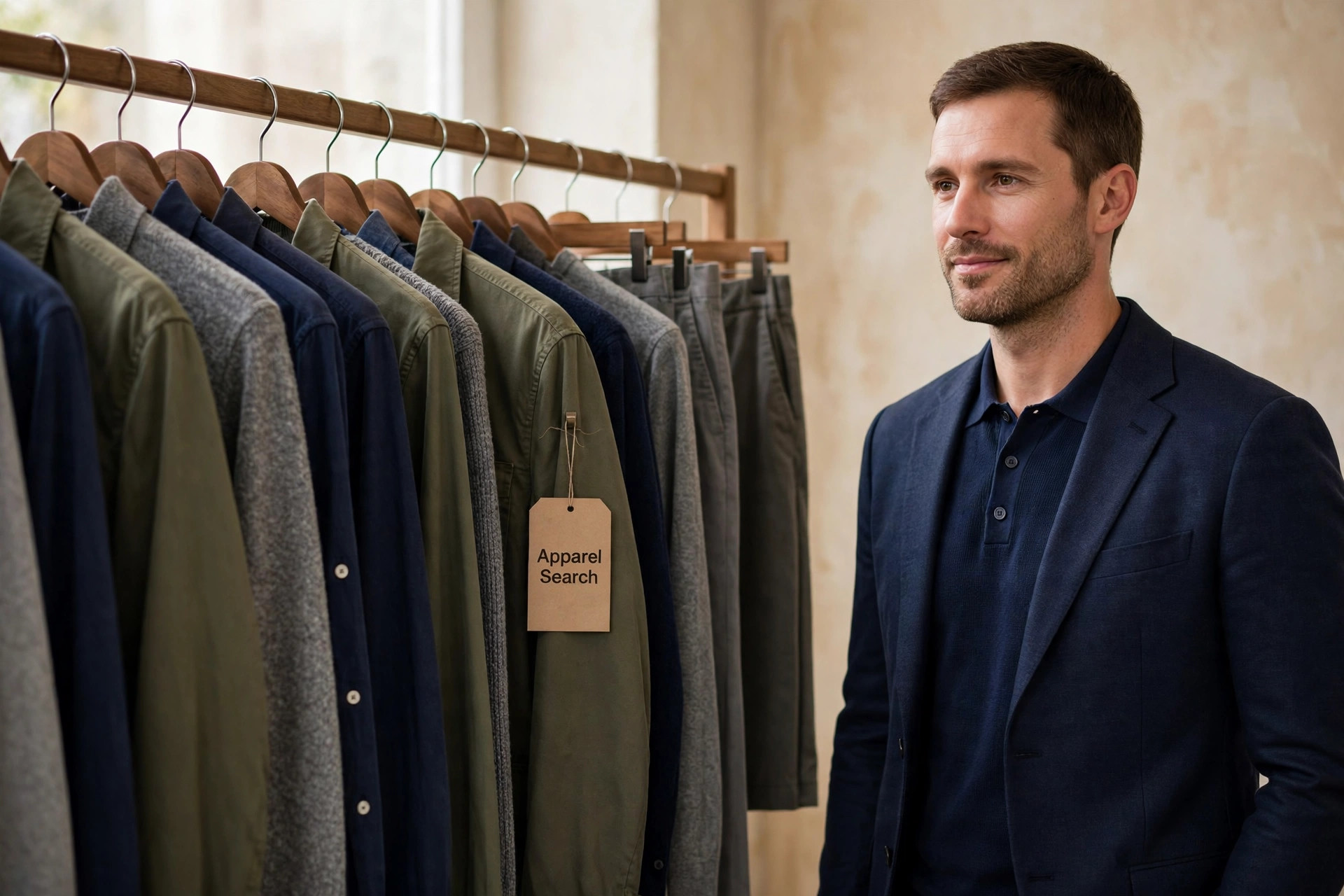
Men’s personal style runs on the same method as any other: audit what you actually wear, find the pattern, name it in three words, and turn it into formulas. What differs is the evidence. Most men’s wardrobes are smaller, more uniform-driven and more repeat-heavy than the average — which makes the audit faster and the pattern easier to see, because a man who wears the same four outfits in rotation has already voted with his laundry basket.
Start there. Pull the last month’s real rotation — including what you wore on ordinary weekends, not just work — and write down the repeats: the trouser cuts, the two or three shirt shapes, the shoe you default to, the jacket that goes over everything. That list is your practical pattern. The general framework is set out in the find your personal style guide; this page translates it into menswear decisions and a rotation you can repeat without thinking.
Words and Formulas
Three Words, Then Formulas That Repeat
Choose the Three Words
Use the three-word method: a practical word from the audit (rugged, tailored, relaxed, minimal), an aspirational word (sharper, smarter, more creative), and an emotional word (capable, comfortable, confident). Menswear words should describe fit and finish more than fashion — those are the levers that actually move a man’s outfit.
Fix the Fit First
Before any new purchase, make the current rotation fit properly: trouser length, sleeve length, shoulder seams where shoulders end. In menswear, fit is the largest single difference between the same clothes looking deliberate or accidental.
Write Three Formulas
Convert the pattern into formulas such as: dark trouser plus knit polo plus clean sneaker; chinos plus Oxford shirt plus suede shoe; jeans plus crew-neck knit plus overshirt. Three formulas, each in two or three colorways, cover a normal week without a single new decision.
Build the Repeatable Rotation
Arrange the formulas across the week so laundry, weather and formality rotate predictably. A written rotation sounds rigid and feels like freedom: the men’s capsule wardrobe guide shows how few pieces a full rotation actually needs.
The shopping filter follows automatically. A new item must match all three words and complete or improve an existing formula. Menswear’s trap purchase is the single statement piece — the bold jacket, the unusual shoe — that matches no formula and therefore gets worn twice a year. Your words exist to veto it in the shop, kindly and early.
Palette and Type
Color, Type and the Quiet Details
Most men’s rotations run on a narrow palette — navy, grey, olive, white, brown leather — and that narrowness is a feature: everything combines with everything. If your audit shows a wider spread, check it against the color season guide and keep the colors that suit you near your face; trousers and shoes can stay neutral regardless. Single-color dressing is a legitimate shortcut here, and the monochrome outfits guide shows how tonal outfits read as deliberate rather than plain.
As for type, the menswear versions of the archetypes in the personal style types guide — classic tailoring, minimalist, rugged-bohemian, sporty — work the same way: a vocabulary for describing your dominant pattern, never a uniform to adopt wholesale. Take the classic man’s shoe discipline, the minimalist’s palette discipline, or the sporty man’s comfort standards as single borrowed elements, and leave the rest of each costume behind.
Keeping It Running
Maintenance: Where Men’s Style Is Won
A repeatable rotation lives or dies on maintenance. Shoes cleaned and rotated so no pair is worn two days running, knitwear folded rather than hung, trousers pressed or steamed on a rhythm, and a standing rule that anything damaged leaves the rotation until repaired — a worn collar or a broken sole quietly downgrades every formula it touches. Twice a year, run the declutter logic from the closet declutter guide over the rail: out go the sizes that no longer fit, the shirts kept for a job you no longer do, and the duplicates bought because the original was in the wash.
Re-audit the three words annually. Men’s style tends to change through circumstance — a new role, a new climate, more or less formality — rather than through taste alone, and the rotation should follow the life. When the words update, the formulas update, and getting dressed stays what it should be for a man with a system: a two-minute non-event that reliably produces the same quiet result — clothes that look like his, because they are.
Questions
Common Questions
How is finding personal style different for men?
The method is identical — audit, pattern, three words, formulas — but the evidence differs. Men’s wardrobes tend to be smaller and more repeat-heavy, so the audit is quicker, and the biggest levers are fit, finish and a repeatable rotation rather than variety. A small rail that repeats deliberately beats a large rail full of exceptions.
How many outfits does a man need in a weekly rotation?
Three formulas in two or three colorways each usually cover a normal week — roughly nine to twelve working combinations from fifteen to twenty pieces. The men’s capsule wardrobe approach builds a full rotation from a similarly small count by making sure every piece fits at least two formulas.
What is the most common men’s style mistake?
Buying single statement pieces that fit no existing formula — the distinctive jacket or unusual shoe worn twice a year. The three-word filter prevents it: a purchase must match all three words and complete or improve a formula already in the rotation, or it stays in the shop.
More to Explore
Search Apparel Search