01 — The Sets
What a Mommy & Me Set Actually Is
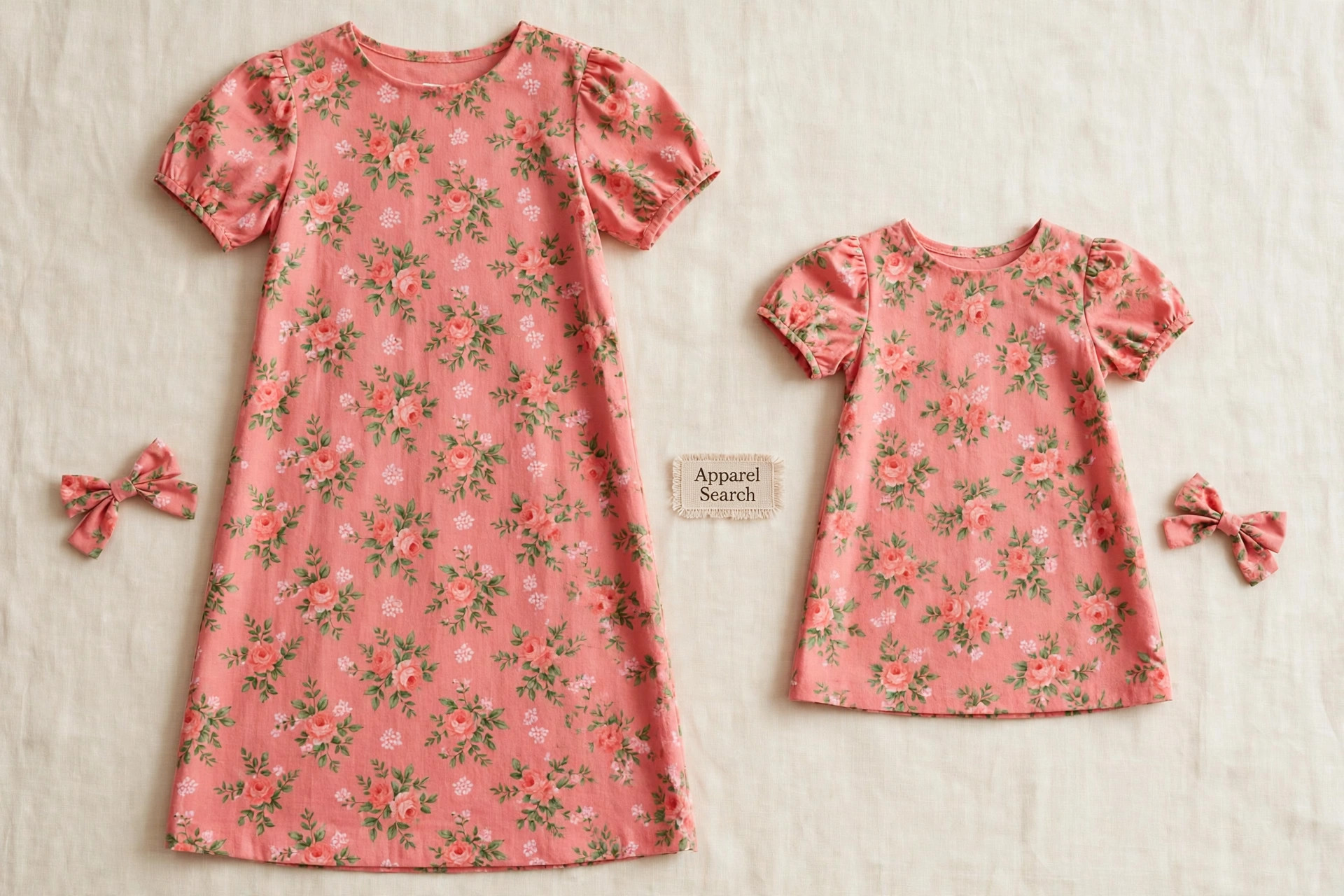
A mommy-and-me set is one design produced in two size ranges: a women's dress or top and a children's version in the same fabric and print. The better sets are not the same garment shrunk down. The women's version is cut with its own shaping, longer length and grown-up neckline, while the children's version gets a higher waist, shorter skirt, covered buttons or a back zip a child can tolerate, and room to move.
Dresses are the classic format — one fabric, two silhouettes — followed by matching tops worn with each wearer's own bottoms, and matching pajamas for mornings at home (the wider family version is covered under matching family outfits). Sets are sold for photographs, holidays, weddings and birthdays, but the garments are ordinary dresses and tops, and the good ones earn ordinary wear afterwards.
02 — Styles & Fabrics
Dress Styles and Fabrics That Work Twice
Simple silhouettes translate best across the two ranges. An A-line or fit-and-flare dress, a smocked bodice, a shirt dress and a plain tee or blouse all read clearly at both sizes. Fine details do not: pintucks, tiny trims and delicate beading disappear or snag at children's scale, and heavily structured styles rarely exist in small sizes at all.
- Cotton and cotton blends — breathable, washable, and the standard for printed sets.
- Rayon and viscose — softer drape for dressier sets; check the children's version for washability.
- Knit jersey — the forgiving choice: stretch helps both fits and survives a full day of wear.
- Print scale — mid-size prints work at both scales; very large prints overwhelm the small dress, very small ones vanish in photographs.
03 — Sizing
Two Ranges, Two Charts, One Order
Buy the two pieces against two different charts. The women's piece is sized by bust, waist and hip; the children's piece by height and weight, and age labels are only a rough guide. Children between sizes should size up: a matching set bought for an event a month away needs growing room more than a perfect fit today. Because both pieces come from one production run of one fabric, buy them together — a later reorder may be a different dye lot, and the two dresses will sit side by side in every photograph.
04 — Step by Step
Choosing a Mommy & Me Set, Step by Step
Start with fabric
Pick a washable fabric with some body: printed cotton, a cotton blend or jersey. Matching sets get worn, played in and washed as a pair.
Match the silhouette
Choose a simple shape that exists honestly in both ranges, with the children's version cut for movement, not just scaled down.
Size both charts
Measure the adult by bust and waist and the child by height, size up for the child, and order both pieces in one order.
Plan the second wear
Check each piece works on its own afterwards: the dress with other shoes, the child's dress as an everyday party dress.
05 — Occasions
Where the Sets Get Worn
Family photographs and spring holidays are the home ground of the matching dress set — our Easter dresses and family outfits guide shows the same coordination logic across a whole family. Sets also appear at weddings beside the flower girl dresses, at first birthdays (see first birthday outfits), and in the studio portrait tradition. Whatever the occasion, judge the set as two garments: seams finished, closures that work at both sizes, and fabric that washes, because only one of the two wearers will be careful with it.
Questions
Common Questions
Are mommy and me dresses cut the same in both sizes?
No. Good sets share fabric and print but are patterned separately: the women's dress has adult shaping and length, while the children's version has a higher waist, a shorter skirt, simpler closures and room to move. A children's dress that is only a scaled-down adult pattern usually fits poorly.
What fabric is best for a matching dress set?
Printed cotton, a cotton blend or cotton jersey. Cotton washes well and photographs without shine, and jersey adds stretch that helps both wearers. Avoid delicate fabrics for the children's piece, and check that both garments carry the same washing instructions so the colours age together.
How do I size a mommy and me set?
Use two charts: bust, waist and hip measurements for the women's piece, and height and weight for the children's piece rather than the age label. Size up for a child between sizes, and order both pieces together so they come from the same dye lot.
More to Explore
Search Apparel Search