01 — Two Approaches
Identical Sets and Coordinating Sets
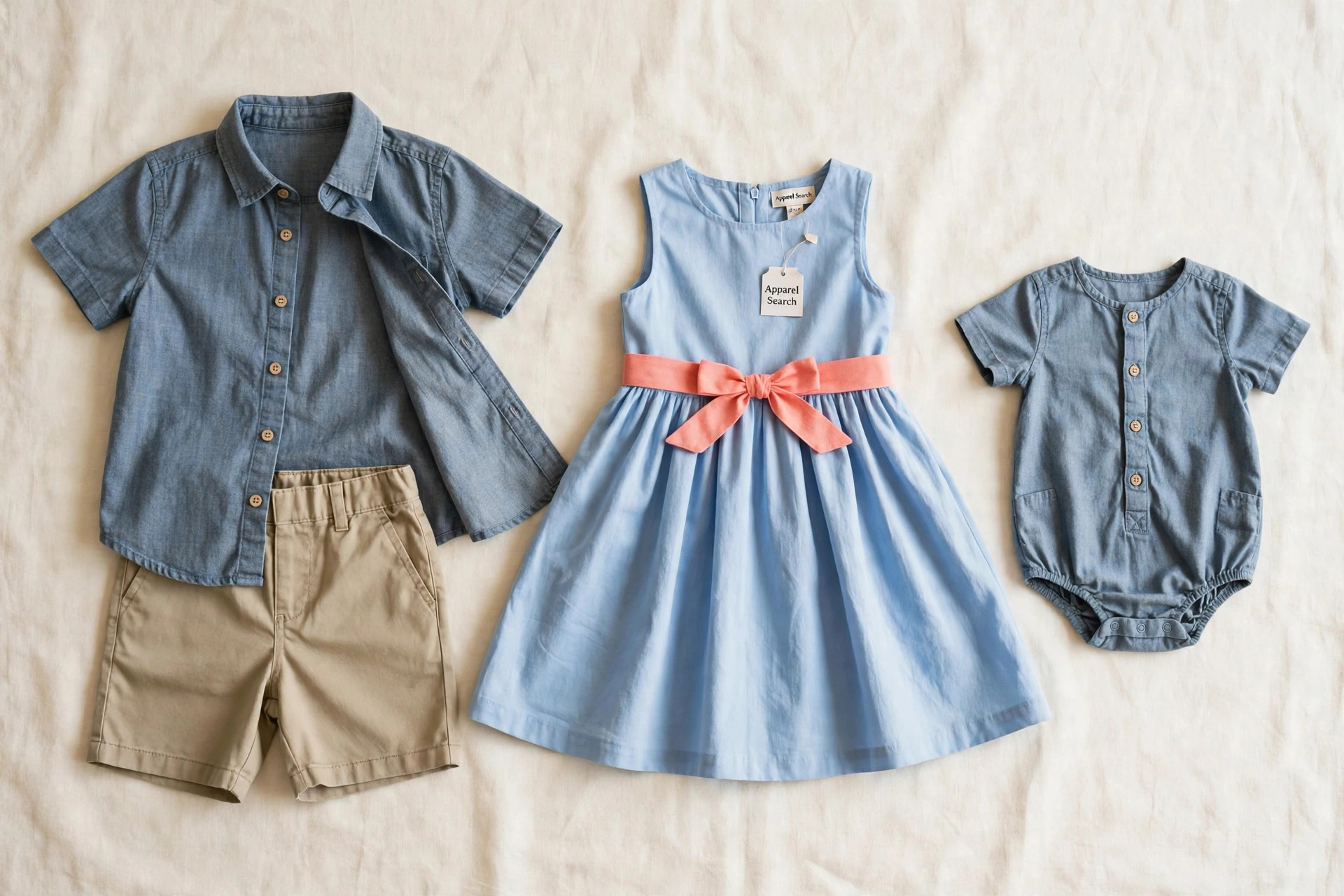
Sibling outfits come in two constructions. Identical sets put every child in the same garment in the same fabric: the same dress in two sizes, the same shirt and shorts, the same pajamas. They are the easiest to buy and the clearest in photographs, and they work best for children close in age and size. Coordinating sets share one element — a fabric, a colour, a stripe — across different garments: a chambray shirt for one child, a chambray romper for the baby, a dress in the palette's second colour with a sash in the first.
Coordinating is the practical default once the age gap widens. A twelve-year-old, a six-year-old and a baby rarely share a garment style, but they can always share a fabric story. The full family version, adults included, is covered in matching family outfits.
02 — Combinations
Brother-Sister and Same-Gender Sets
For brother-sister sets, the shared element usually travels through fabric or an accessory rather than the garment itself:
- Same fabric, different garments — a shirt and a dress cut from one cotton print or chambray.
- Shared colour, shared detail — different outfits tied by one colour and one repeated detail, such as a sash, bow tie, pocket square or trim in the same cloth.
- Same-gender sets — identical dresses or shirt sets in graded sizes; check the design still suits the oldest child, not just the youngest.
- Baby included — the baby's romper, sleeper or onesie in the set's fabric joins the group without needing a full outfit, as in the infant and toddler clothing sets guide.
03 — Sizing
Sizing Across an Age Gap
Every child in a sibling set is on a different chart: baby sizes by weight and length, toddler and children's sizes by height, older children's by height and chest. Measure each child rather than trusting age labels, and size up for anyone between sizes. Buy the whole set in one order so prints and dye lots match, and buy it close to the occasion: a set bought a season ahead for three growing children is three separate gambles. If one child's size has sold out, coordinate rather than match — a solid garment in the set's main colour keeps the group intact.
04 — Step by Step
Building a Sibling Set, Step by Step
Choose the link
Decide what the outfits share: one fabric, one colour, or one detail. That single decision drives every purchase after it.
Assign garments by age
Give each child the garment that suits their age in the shared fabric or colour: dress, shirt set, romper or pajamas.
Measure every child
Work from height, weight and chest against each range's chart. Size up between sizes and order everything together.
Do the flat-lay test
Lay the full set out flat before the day. The shared element should be obvious at a glance, with no orphan colour.
05 — Wear & Care
Hand-Me-Downs and Honest Wear
Sibling sets have a second life most occasion clothes do not: the identical dress or shirt bought for the younger child is often the garment the older one hands down into, and coordinating pieces separate into ordinary wardrobe staples. Wash the set together in cool water so shared colours fade evenly, and store it folded as one group. For the milestone end of sibling dressing, see first birthday outfits and the children's formal clothes guide; for sleepwear, siblings are the core of matching family pajamas.
Questions
Common Questions
Should siblings wear identical outfits or coordinating ones?
Identical sets suit children close in age and size. Coordinating sets, which share a fabric, colour or detail across different garments, work better across wide age gaps, because a teenager, a six-year-old and a baby can share a colour story even when no single garment style suits all three.
How do brother and sister outfits match if the garments differ?
Through the fabric or a repeated detail. A shirt and a dress cut from the same chambray or print read as a set, and so do different outfits tied by one shared colour in a sash, bow tie, trim or pocket square. The shared element, not the garment, carries the match.
How do I get the sizing right for several children at once?
Measure each child and use each size range's own chart: weight and length for babies, height for toddlers and children. Age labels are approximate. Size up for any child between sizes, and order the whole set together so the fabrics and dye lots match.
More to Explore
Search Apparel Search