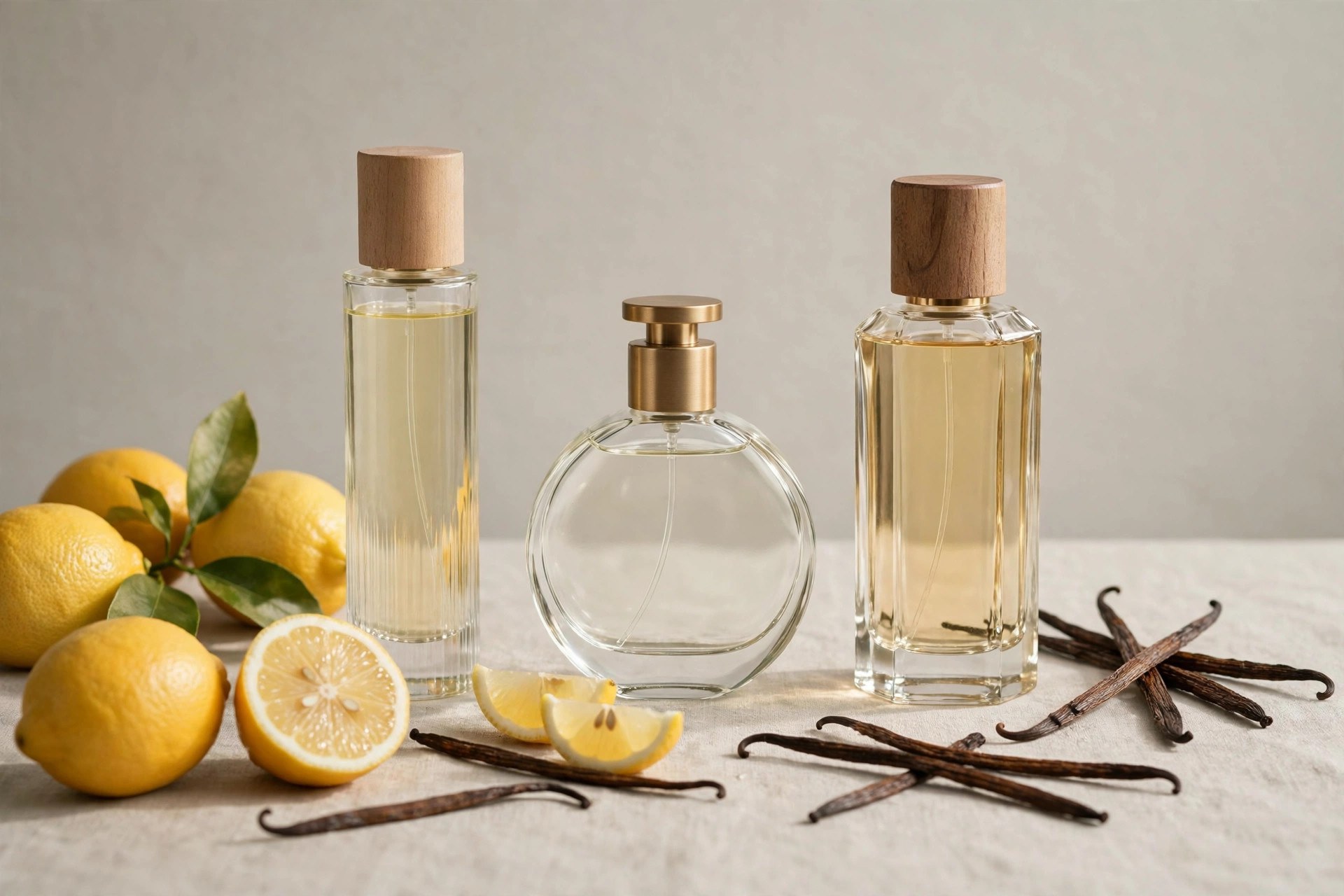
Perfume layering, also called scent stacking, means wearing two or more fragrances at the same time so they blend on the skin into a personal combination. Instead of accepting a single perfume exactly as its maker balanced it, you adjust it: deepening a light scent, brightening a heavy one, or adding warmth, freshness, or sweetness where you want it. Layering can rescue a perfume you like but do not love, stretch a small collection into many combinations, and create a signature that nobody else is wearing, because the exact pairing and proportions are yours.
A Practical Method and Pairings That Work
The reliable method is order: start with the heavier or longer-lasting scent, then add the lighter one over or beside it. Heavy base-rich fragrances, woods, resins, vanilla, and oud styles, form the foundation; spraying the delicate citrus or light floral first would bury it. Apply one or two sprays of the base scent, wait a moment, then add the lighter scent. You can spray both in the same spot for a merged blend, or use different pulse points for each scent when you want them to mingle in the air rather than fuse.
Some pairings are popular starting points, offered as beginnings rather than rules. Vanilla under citrus softens the citrus and helps it last; musk under florals gives them a clean, skin-like depth; rose with oud is a classic rich combination; and woods under fig or green notes add structure to freshness. Single-note or simple fragrances layer most predictably, while two complex perfumes at once can blur into muddle. Keep notes on combinations you try, because skin chemistry makes every pairing personal and memory is unreliable.
Lotion, Oils, Testing, and Making Scent Last
Layering does not start with perfume. A matching scented lotion under its perfume is the simplest form of stacking, and an unscented lotion works as a neutral base that gives fragrance something to hold onto; moisturized skin generally holds scent longer than dry skin. Perfume oils can serve as the base layer under an alcohol spray, adding depth at the pulse points. Apply lotion or oil first, let it settle briefly, then spray, so the layers sit in order rather than sliding together.
Test every new combination on skin before committing to it, and try one new pairing at a time so you know what caused a result you love or dislike. Wear the test for a few hours, since the first minutes show only the top notes and a pairing that starts beautifully can turn heavy later. To make a scent last, spray pulse points where warmth diffuses fragrance, add a light mist to fabric or hair only if the perfume is suitable for it, and reapply the lighter layer rather than the whole stack.
Common Questions
- How many fragrances can be layered at once?
- Two is the sensible starting point and enough for most combinations; three can work when one of them is a simple, single-note scent such as a plain musk or vanilla. Beyond that, perfumes tend to blur rather than blend, and it becomes hard to tell what each layer is doing. Master pairs first: a foundation scent and a modifier gives you control, and control is what separates layering from simply spraying everything at once.
- Should layered perfumes be sprayed in the same spot?
- Both approaches work and give different results. Spraying in the same spot, heavier scent first, merges the two into a single blended fragrance. Spraying different pulse points, for example the base scent at the neck and the lighter one at the wrists, lets the scents stay partly distinct and mingle as you move. Try the same-spot method first when learning a pairing, since it is easier to judge the true blend.
- Why does a layered scent smell different on me than on paper?
- Blotter paper shows a fragrance's opening but not how it develops with skin warmth and your own skin chemistry, which change how notes emerge and how long they last. A pairing that smells balanced on paper can turn sweeter, sharper, or heavier on skin. That is why testing on skin, and wearing the test for several hours before judging it, matters more for layering than for a single perfume.
- Can layering make a perfume I dislike wearable?
- Often, yes, and it is one of the best reasons to layer. A perfume that is too sharp can be softened under vanilla or musk; one that is too sweet can be freshened with a citrus layer; one that fades quickly gains staying power over a longer-lasting base. Change one thing at a time and keep the modifier simple, so you are steering the scent rather than covering it up.
Finishing Touches
The small, personal details that complete an outfit, from a jewel brooch to a signature scent.