There is no single right way to tie a scarf, but there are named methods that solve particular problems: warmth, neatness, showing a print, or finishing a coat. This page gives eight of them in short text steps, so set expectations plainly: these are written instructions to follow once or twice until the method is in your hands, with no video needed. Each method suits certain scarf shapes better than others, so the notes on sizes and shapes at the end will help you match the method to the scarves you already own.
Everyday Methods: Drape, Loop, Knot, and Wrap
The Classic Drape is the simplest: place the middle of a long scarf at the front of your neck, let both ends hang down your back, or reverse it with the middle at the back and ends hanging in front over a coat. The European Loop is the warm commuter standard: fold the scarf in half lengthways, loop the fold around your neck, and pull the loose ends through the fold, then tighten gently. The French Knot suits silk and lighter scarves: drape the scarf around your neck with ends in front, twist the two ends together once, then knot them at the side for a neat, asymmetric finish.
The Infinity Wrap turns a long scarf into a loop: wrap it twice around your neck and tuck the ends into the wraps so no tails show, then spread the loops to fill the neckline of a coat. The Belted Drape is a styling method rather than a knot: drape a long scarf down the front of an open coat or cardigan with ends hanging evenly, then belt over both the coat and the scarf at the waist, which holds the scarf in place and shows its pattern like a panel of fabric.
Squares, Shawls, Blanket Scarves, and Sizes
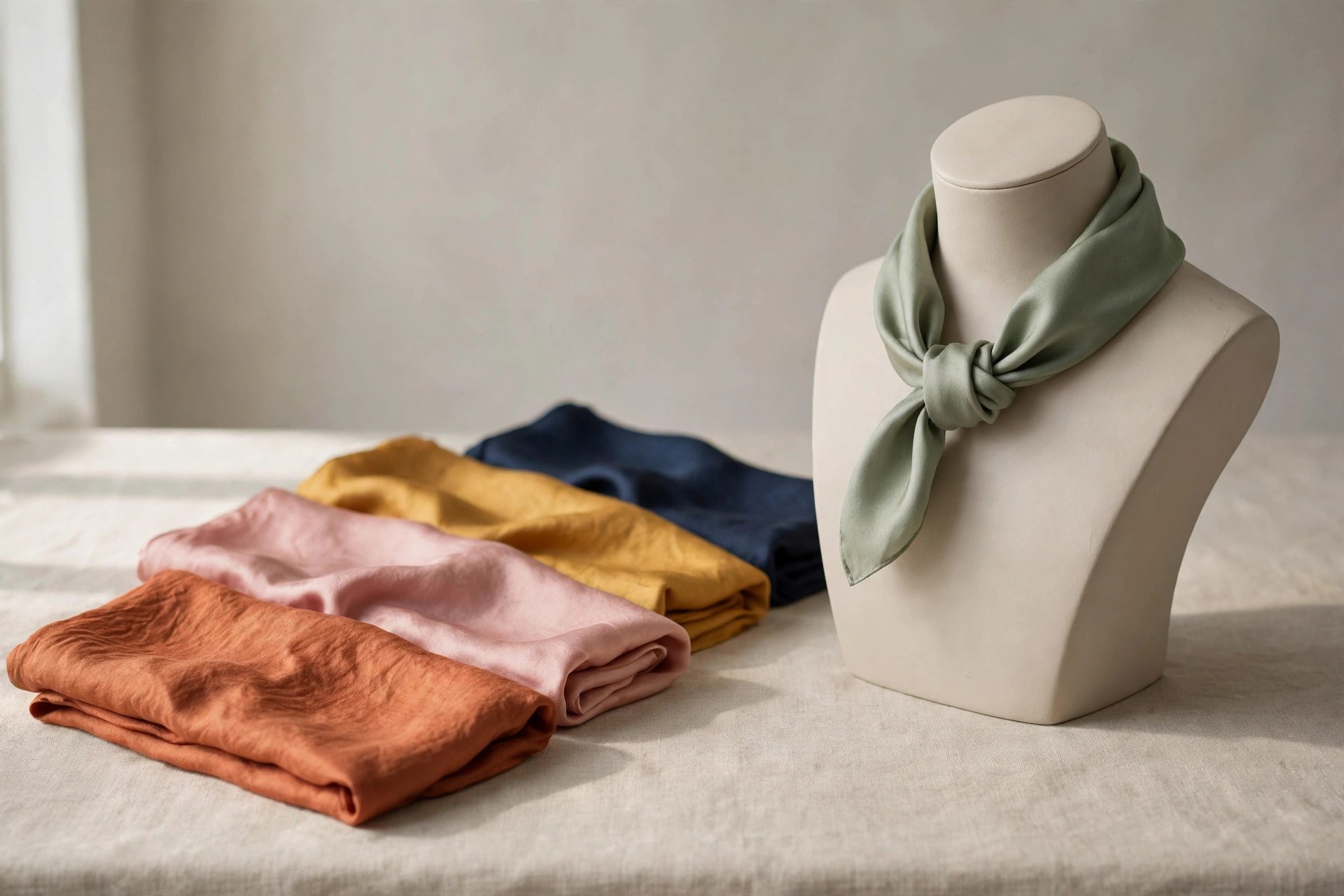
For a small square, the Neckerchief: fold the square diagonally into a triangle, roll or fold it from the long edge into a narrow band, place the band at the front of your neck, and knot the ends at the side or back. The Evening Shawl Wrap uses a wide wrap or cashmere shawl: open it fully across your shoulders like a cape, cross the ends loosely at the front, and let them fall, or pin with a brooch for security. The Blanket Scarf Triangle: fold a large square diagonally, place the point down at your front with the long edge at your neck, and wrap the ends around and back to the front, tucking them under the triangle.
Scarf shapes explain which methods are available. Long rectangular scarves, in wool for winter or lighter weaves for spring, handle the drape, loop, infinity, and belted methods. Silk squares, from small neckerchief sizes to large ninety-centimeter squares, fold into bands, triangles, and knots, and their prints are made to be displayed. Blanket scarves are oversized squares or rectangles meant to be worn almost like wraps. Cashmere wraps and shawls are the widest rectangles, suited to the shawl wrap and generous drapes over evening dress or coats.
Common Questions
- What is the warmest way to tie a scarf?
- The European Loop is the warmest of the simple methods, because the doubled scarf seals the neck with two layers and the pulled-through ends block the gap at the front of a coat. For very cold weather, follow it with the infinity style: wrap a long wool scarf twice around the neck and tuck the ends in, so no cold air reaches the neckline and no tails flap loose in the wind.
- How do I keep a silk scarf from slipping?
- Silk is smooth, so knots need help. Fold the scarf into a band and use a knot with a twist in it, like the French Knot, which grips better than a plain tie. Placing the knot at the side, wearing the scarf under a collar, or anchoring a corner with a small brooch also helps. Avoid over-tightening; silk creases, and a slightly looser knot that sits in the hollow of the neck tends to stay put.
- Which scarf size is most versatile?
- A long rectangular scarf in a medium weight is the most versatile single purchase, because it covers the drape, loop, infinity, and belted methods and works as a light wrap in a pinch. A large silk square is the most versatile of the squares, folding down to a neckerchief band or opening out to a triangle. If you buy only two scarves, one long wool scarf and one large silk square cover nearly every method on this page.
- Can I wear a scarf with a coat that has a high collar?
- Yes, but tie it inside the collar's line rather than over it. The European Loop sits neatly under a high or stand collar, and the infinity wrap fills the neckline without bulk spilling over the top. Bulky blanket scarves work better with open or lapel-front coats; with a high collar, choose a slimmer scarf and a compact method so the collar and scarf are not competing for the same space.
Finishing Touches
The small, personal details that complete an outfit, from a jewel brooch to a signature scent.