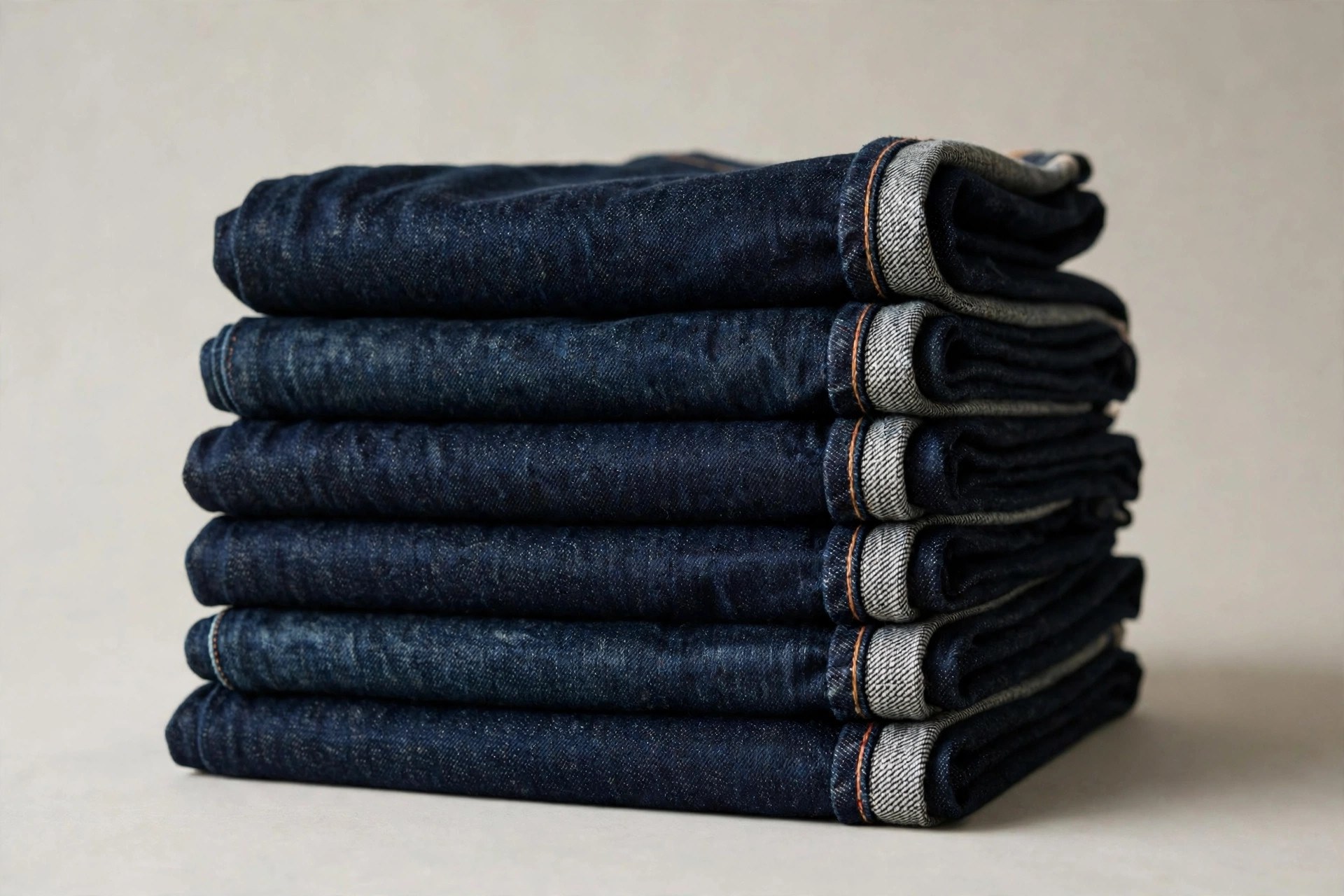
Raw denim is denim sold in its original state after dyeing, without the factory washing, softening, or pre-fading applied to most jeans. See the short raw denim definition for the glossary version. The cloth is woven with indigo-dyed warp yarns over natural white weft yarns, which is why it starts a deep, dark blue and lightens where it creases. New raw jeans feel stiff and boardy, and that stiffness is the appeal: the fabric is a blank starting point that softens, shrinks, and fades around the individual wearer.
Shrinkage, Weights, and Selvedge
The first buying decision is sanforized or unsanforized. Sanforized denim has been pre-shrunk, so the size you buy is close to the size you keep. Unsanforized denim will shrink noticeably in its first soak or wash, especially in length, so buyers commonly choose a longer inseam and sometimes a little extra room, expecting the jeans to come up shorter and closer fitting. Always check the maker's own shrink guidance for the specific fabric before ordering, because amounts vary by mill and weave.
Fabric weight is given in ounces per square yard. Lighter denims around twelve ounces feel closer to ordinary jeans and break in quickly; midweights around fourteen to sixteen ounces are the traditional raw denim territory, holding creases well; heavyweight cloth above that is stiffer, warmer, and slower to fade. Selvedge denim, in one sentence, is woven on older shuttle looms that produce a narrow cloth with a finished, self-edged border, often marked with a colored thread, visible when the cuffs are turned up.
Break-In, Fades, and Washing
During break-in, the stiff fabric softens and molds to the body. The waist typically gives up to about an inch with wear, knees ease, and creases set where you bend and sit. Those creases become the famous personal fades: whiskers at the front hips, honeycombs behind the knees, and stacks of lighter rings at the ankles where extra length settles. Because the indigo sits on the yarn surface, abrasion removes it gradually, so the pattern that emerges is genuinely a map of how the jeans have been worn.
Washing guidance from most makers is simple: wash infrequently, and when you do, turn the jeans inside out, use cold water and a gentle cycle or hand wash, and hang them to dry away from direct heat. Less washing preserves indigo and contrast in the fades; more washing gives a softer, more even, vintage-style lightening. Neither is wrong, but decide which look you want early, because the first washes shape the result. Spot-clean small marks between washes to stretch the intervals comfortably.
Price in raw denim mostly follows fabric and construction: shuttle-loom selvedge cloth, rope dyeing that gives deep indigo with a white core, chain-stitched hems, and hidden rivets all add cost, while simpler non-selvedge raw denim delivers the same break-in experience for less. Neither route is the correct one. Decide first whether you want high-contrast fades or a softer even color, choose the wash and shrinkage type that suits that plan, and then wear the jeans hard and often, because wear, not price, is what makes raw denim personal.
Common Questions
- How long does raw denim take to break in?
- Most pairs feel noticeably softer after the first few weeks of regular wear, and creases begin setting within the first month. Full break-in, where the jeans move easily and fades show clear contrast, usually takes several months of frequent wear. Heavier fabrics take longer than light ones, and daily wear breaks denim in far faster than occasional weekend use.
- Should I buy raw denim tight or loose?
- Buy it snug but wearable, not painful. The waist commonly stretches up to about an inch with wear, while length only ever shrinks with washing, never grows. If the jeans are unsanforized, allow for that shrinkage as well. Buttons should fasten without a struggle on day one; denim that starts unwearable rarely becomes comfortable, it just stays unwearable in more places.
- What is the difference between raw and selvedge denim?
- Raw describes the fabric's state: unwashed and untreated after dyeing. Selvedge describes how the fabric was woven: on a shuttle loom, producing a self-finished edge. A pair of jeans can be raw without being selvedge, selvedge without being raw, both, or neither. Selvedge is about weave and edge finish; raw is about the absence of washing and finishing.
- Can I wash raw denim in a machine?
- Yes, if you accept softer fades as the trade. Turn the jeans inside out, use cold water on a gentle cycle, use a small amount of mild detergent, and hang them to dry rather than tumble drying. Machine washing lightens indigo more evenly and reduces contrast between faded and dark areas, which some wearers prefer for a relaxed, vintage look.
Denim & Wardrobe Staples
Denim know-how alongside the structured classics that pair so well with a good pair of jeans.