Start Here
Dressing for the Drive, Not the Photograph
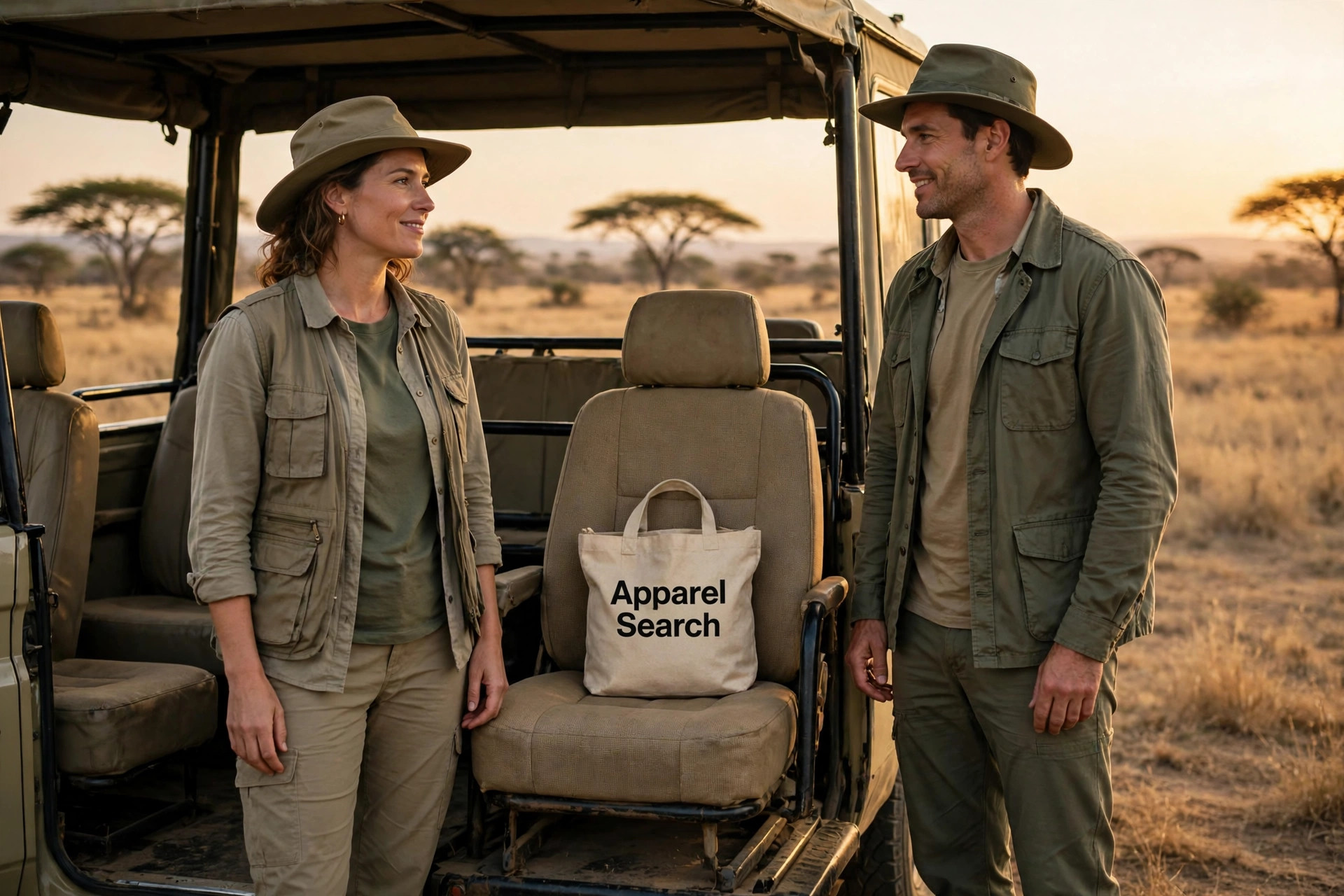
A safari outfit has one job: to keep you comfortable, covered and unremarkable from a cold dawn start to a hot midday finish, in an open vehicle, in dust, sun and wind. Everything else — the look, the pockets, the famous khaki — follows from that. Dress for the drive and the walking, and the classic safari style takes care of itself.
Safari dressing is a system, not a costume. It rests on four practical requirements. Neutral colors — khaki, tan, olive and stone — blend with dry bushland, hide dust and reflect heat. Sun protection means a wide-brim hat, long sleeves you can roll, and cover for the back of the neck. Layers handle the temperature swing: dawn drives in an open vehicle are genuinely cold, even where afternoons are hot. And closed shoes protect feet on rough ground, around camp and during any walking. Get those four right and almost any outdoor wardrobe works; get them wrong and no amount of themed clothing saves the day.
“Neutral, layered, covered, closed-toed — that is safari dressing in four words.”
Search Apparel Search
The Working Day
What a Game Drive Actually Demands
A typical drive leaves before sunrise, runs three or four hours, and repeats in the late afternoon. You sit exposed in an open or pop-top vehicle, in wind, with sun climbing fast and dust on every surface. Clothing has to work sitting still for long stretches, then handle short stops, walks to viewpoints and climbs in and out of a high vehicle. That is why safari regulars favor long trousers over shorts, sleeves over bare arms, and fabrics that breathe, dry quickly and do not rustle — quiet cloth matters when wildlife is close.
Two dedicated guides build the system out by wearer: Women’s Safari Outfits gives outfit formulas for drives, walks and lodge dinners, and Men’s Safari Outfits covers shirts, trousers, boots and hats for men. The companion page Safari Colors & Packing Rules explains the neutral palette in depth and works through a complete packing list that fits the soft-bag limits most safaris impose.
The Family
Two Garments That Gave Safari Its Look
Two established Apparel Search pages belong to this family and anchor it. The safari jacket — belted, four bellows pockets, light cotton drill or poplin — is the garment the whole style is named around; its definition page traces the pockets, the belt and the khaki cloth that made it field clothing first and fashion second. And no safari outfit is complete without the hat: the safari hat page covers pith, bush and crushable styles and the stores that sell them. Start with the jacket and the hat, and the rest of the outfit is supporting cast.
Style vs Function
Safari Style Is Not Safari Function
Safari style — the fashion version — borrows the palette and the details: khaki and olive, epaulettes, bellows pockets, belted jackets, animal-print accents. It is a legitimate, long-lived fashion language, and it looks at home in a city. Safari function is narrower and less forgiving. On an actual drive, prints and bright accents work against you, a purely decorative jacket without warmth fails at dawn, and open sandals fail on the first thorn. The honest test is simple: if a piece would still make sense after four dusty hours in an open vehicle, it is function; if it only makes sense in the photograph afterwards, it is style. Pack function first, then let style choose among the pieces that pass.
That distinction also explains the color discipline. As the khaki definition notes, khaki began as dust-colored military cloth — function before fashion from the very start. The same practical logic runs through the women’s outdoor apparel guide and the men’s outdoor apparel guide: cover, breathability and freedom to move come before decoration.
Before You Pack
The Short Version
- Colors: khaki, tan, olive, stone and soft brown; skip brights, pure white and, as guides commonly advise, very dark blue and black where biting flies are a concern.
- Layers: a warm fleece or jacket for dawn, a breathable shirt for midday, and a light outer layer for wind and dust.
- Cover: a wide-brim hat with a chin cord, long sleeves, and trousers you can walk in.
- Feet: closed, broken-in shoes or boots — never new footwear, never sandals for walking.
- Luggage: a soft bag, because many safaris limit size, weight and hard cases; the full rules are on the colors and packing page.
With the system clear, choose your spoke: the women’s and men’s guides turn these rules into day-by-day outfits.
Questions
Common Questions
What colors should you wear on safari?
Neutral, dust-toned colors — khaki, tan, olive, stone and soft brown — are the standard choice. They blend with dry bushland, show dust less than white, and are less likely to draw attention from wildlife than bright colors, black or navy, which can attract tsetse flies in some regions.
Can you wear shorts on a game drive?
Yes, for midday drives in warm weather, but long trousers are the safer default. Mornings and evenings in an open vehicle are cold, sun and insects reach exposed legs, and trousers protect against brush and seat heat — most travelers pack both and layer.
Do you need special clothes for a safari, or will outdoor clothes do?
Ordinary outdoor and travel clothes in the right colors do the job — you do not need a costume. What matters is the system: breathable layers, sun cover, closed shoes and nothing bright or noisy. A safari shirt or jacket helps because of its pockets and light cloth, but it is a useful garment, not a uniform.