How to Buy Jewelry: A Smart Shopping Guide
Metals, settings, clasps and care — how to buy pieces that last instead of pieces that tarnish.
Shop Women's Jewelry Now
Shop Women's Jewelry on eBay Shop Women's Jewelry on AmazonThe eBay and Amazon links on this page are affiliate links. If you make a purchase through them, Apparel Search may earn a commission.
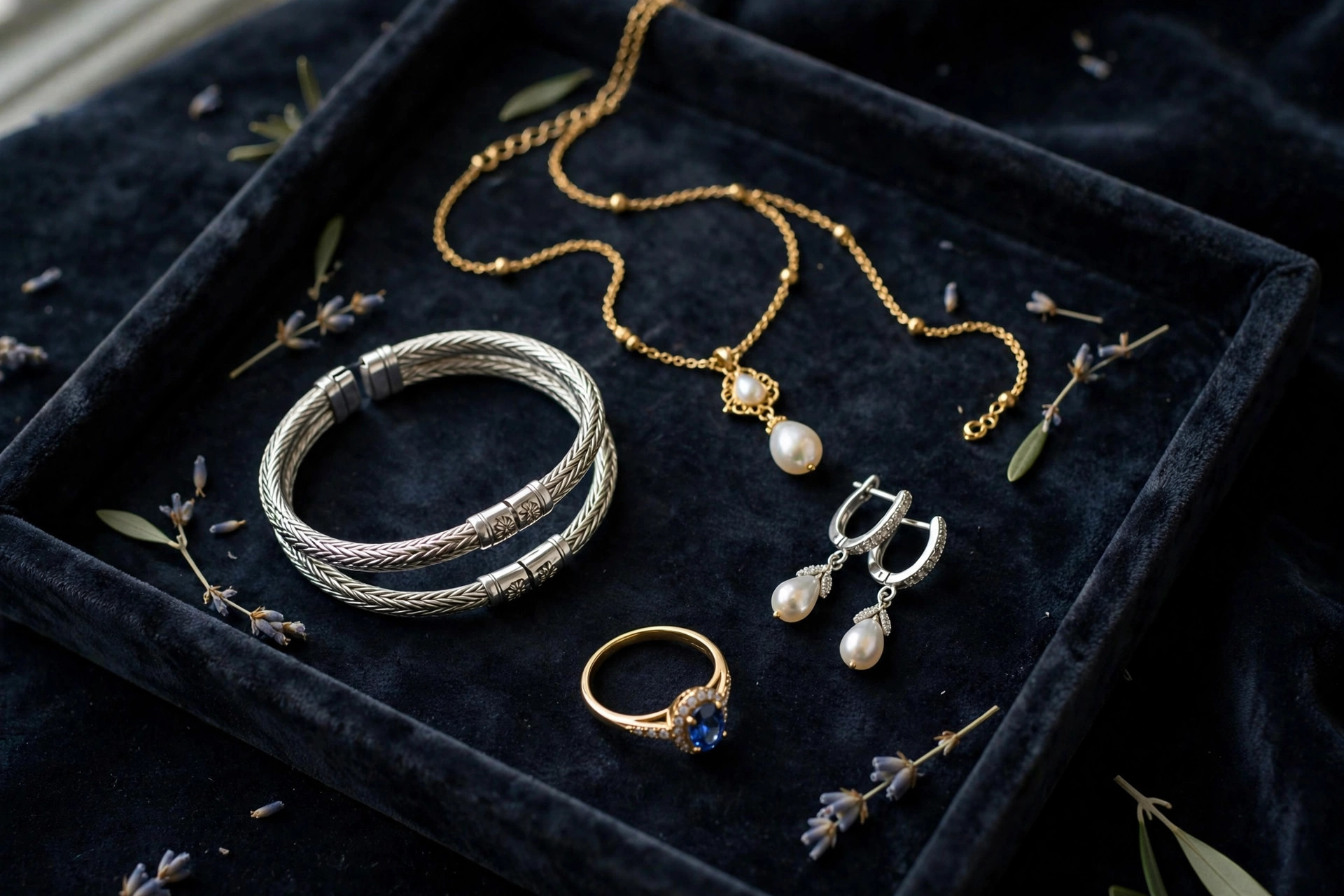
Jewelry fails in slow motion: the “gold” necklace that turns your neck green by spring, the stone that quietly loosens and vanishes, the clasp that opens in a crowd. Almost every disappointment traces back to something checkable before purchase — the metal, the setting, the clasp. Learn the markers once and every future jewelry purchase gets safer.
Gold-Filled vs. Plated vs. Vermeil
These three sound similar and perform nothing alike. Gold-filled pieces have a thick layer of gold mechanically bonded to a base metal — they resist tarnish and can last for years of regular wear. Vermeil is a thick gold layer over sterling silver — also durable, and a smart way to get the gold look at a fraction of solid-gold prices. Gold-plated (or “gold-tone”) jewelry uses a microscopically thin electroplated layer that wears through in months, sometimes weeks. For everyday pieces, gold-filled or vermeil is the value sweet spot; reserve plated pieces for occasional-wear fashion jewelry.
Sterling Silver and Other Metals
Look for the .925 stamp — it certifies sterling silver (92.5% pure silver). Unstamped “silver-tone” metal is usually plated base metal that will dull quickly. Solid gold pieces should be stamped with karat (14K, 18K) — higher karat means more gold but also softer metal, so 14K is the practical choice for daily wear.
Check the Settings and Clasps
Hold the piece and look closely: stones should sit level in their settings with no wobble when you press gently. Prong settings should have even, smooth prongs — bent or uneven prongs drop stones. Bezel settings (metal rimmed around the stone) are the most secure for active lifestyles. Test the clasp repeatedly: lobster clasps outlast spring rings, and a clasp that feels flimsy in the store will fail in your jewelry box.
Sensitive Skin
If earrings or necklaces irritate your skin, nickel is the usual culprit. Shop explicitly for nickel-free or hypoallergenic pieces, and favor sterling silver, gold-filled or solid gold for anything worn against skin all day. A pair of earrings is only a bargain if you can actually wear it.
Fair Price Tiers
Under $30 buys fashion jewelry — fun, but expect plating to fade within a season. $30–$150 covers quality gold-filled, vermeil and sterling silver pieces that last years with care. $150–$500 brings solid gold accents, better stones and artisan construction. Above that you're in fine-jewelry territory, where certification and craftsmanship justify the price.
Care and Storage
Jewelry lasts longest when stored piece-by-piece — tangled chains kink, and harder stones scratch softer metals. Keep pieces in separate pouches, add anti-tarnish strips for silver, and follow “last on, first off”: put jewelry on after perfume and lotion, and take it off before swimming or workouts. A soft cloth wipe after wearing takes ten seconds and adds years.
Looking for Stores?
This guide is about how to buy — judging quality, fit and value before you spend. When you are ready to browse where to buy, visit our women's clothing store directory.