How to Buy Women's Shoes
Construction, leather, and fit: how to buy shoes that last years instead of months.
Shop Women’s Shoes Now
Shop Women’s Shoes on eBay Shop Women’s Shoes on AmazonThe eBay and Amazon links on this page are affiliate links. If you make a purchase through them, Apparel Search may earn a commission.
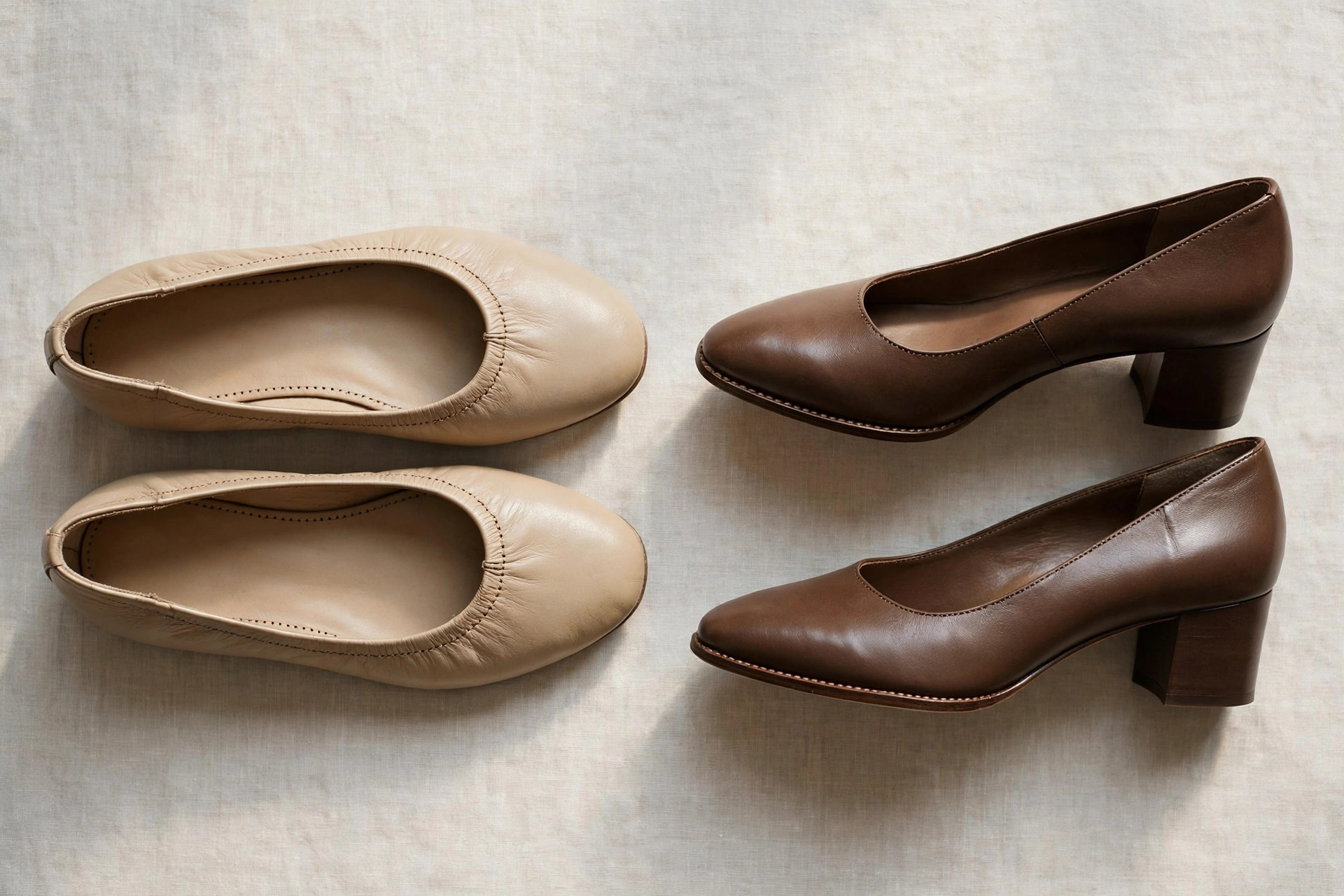
Shoes fail at the sole, the upper, or the fit — and each failure has a price tag attached. Understanding how a shoe is built tells you which pairs are worth $200 and which $200 pairs are worth avoiding.
Construction: Goodyear Welt vs. Cemented
The sole attachment method decides a shoe’s lifespan. Goodyear-welted shoes stitch the upper, welt, and sole together — a cobbler can resole them repeatedly, giving decades of wear. Blake stitching (common in Italian shoes) also allows resoling, though by fewer shops. Cemented (glued) construction is standard in most fashion footwear: lighter and cheaper, but when the sole wears through, the shoe is done. For everyday boots, loafers, and work shoes, stitched construction is worth real money; for delicate heels and sandals, cemented is normal and fine.
Leather Grades
Full-grain leather — the top layer of the hide — is the strongest and develops a rich patina; it is what quality shoes are made from. Top-grain is sanded and finished, a step down but still real leather. “Genuine leather” is a marketing grade, not a quality claim: it is typically the weaker lower layers, heavily processed. Bonded leather is leather dust glued to fabric and peels within a year — avoid it at any price. Press the upper with your thumb: good leather creases finely and springs back; cheap leather wrinkles harshly or stays dented.
Measure Both Feet, Shop in the Afternoon
Feet swell during the day, so a shoe that fits at 9 AM may pinch at 5 PM — always try shoes on in the afternoon. Measure both feet standing (most people have one foot slightly larger) and fit to the larger one. Walk, flex, and stand on your toes in the store: there should be about a half-inch of space ahead of your longest toe, no heel slip, and no pressure points. “They’ll stretch” is true only of quality leather, and only in width — never buy a shoe that is too short.
Price Tiers and Resoling Economics
Budget shoes ($20–$50) are fine for trend styles worn occasionally. The $80–$150 range covers well-made everyday shoes with real leather uppers and cushioned insoles. Above $150, you are paying for stitched construction and full-grain leather — shoes that can be resoled. Do the math: a $60 cemented boot replaced every two years costs more over a decade than a $220 welted boot resoled twice at $60 a resole. Buy the best construction you can for the shoes you wear daily; save the budget tier for the party heels.
Care That Pays for Itself
Rotate shoes — never wear the same pair two days running — so moisture evaporates and the footbed recovers. Use cedar shoe trees in leather shoes; they absorb moisture and hold the shape. Condition leather every few months, polish scuffs before they deepen, and take worn heels to a cobbler for new heel tips (a $15 repair) long before the heel wears into the structure. Good care easily doubles a shoe’s life.
Looking for Stores?
Find footwear retailers in our women’s clothing store directory, or browse our women’s shoes shopping guide for style-by-style browsing.