How to Buy Women's Shirts & Blouses
Cotton types, seam quality, and the perfect white shirt: what makes a blouse worth its price.
Shop Women’s Blouses Now
Shop Women’s Blouses on eBay Shop Women’s Blouses on AmazonThe eBay and Amazon links on this page are affiliate links. If you make a purchase through them, Apparel Search may earn a commission.
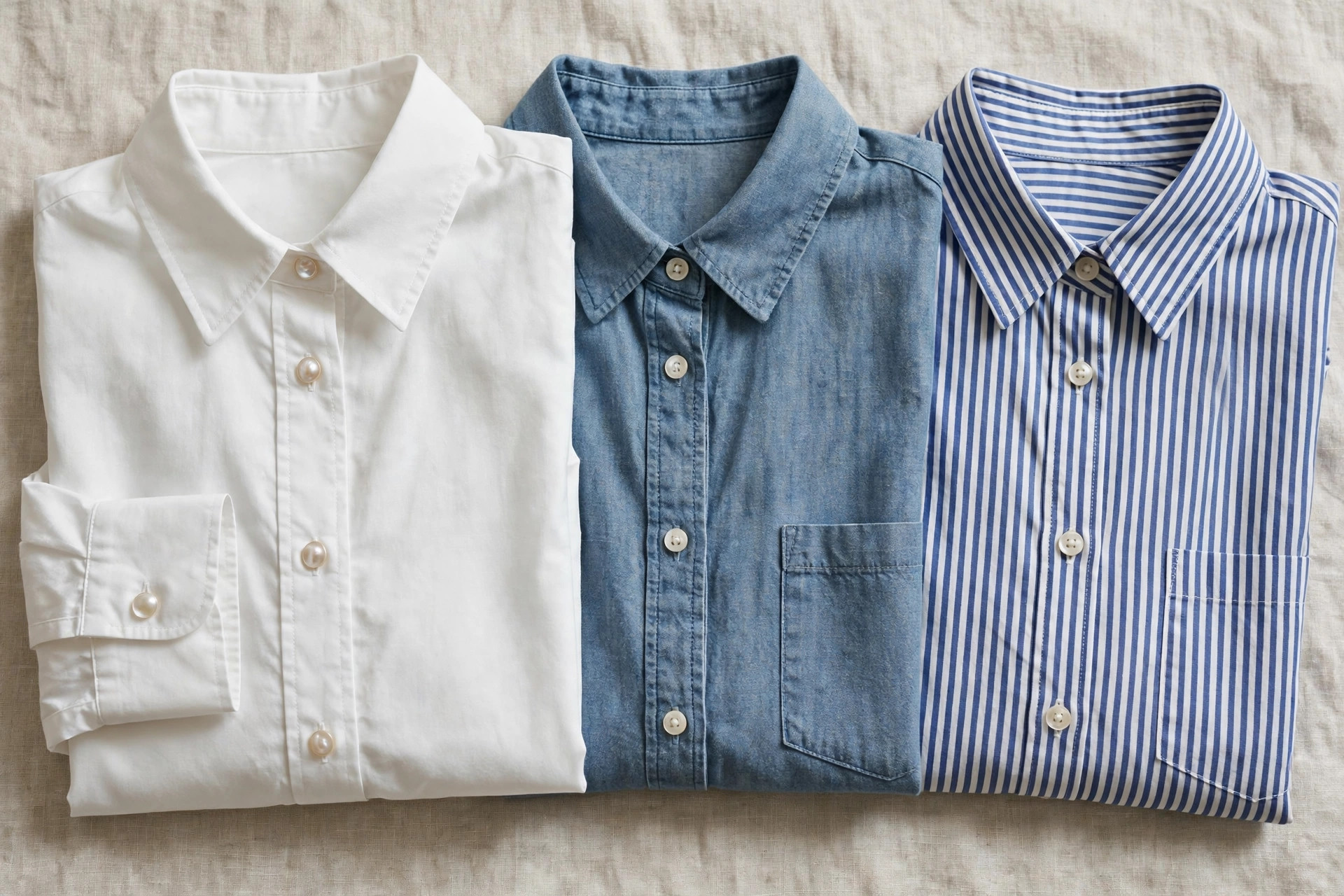
Shirts and blouses live in the middle of every outfit, so their quality shows constantly: puckered seams, gaping buttons, and see-through fabric are impossible to hide. The good news is that shirt quality is easy to judge before you buy — if you know what to check.
Cotton Types and Fabric Weight
Not all cotton is equal. Long-staple cottons (Egyptian, Pima, Supima) have smoother, longer fibers, which means softer fabric that resists pilling — worth seeking in shirts you will wear weekly. Fabric weight, measured in GSM (grams per square meter), tells you opacity and durability: around 120–150 GSM is a good balance for shirts, substantial enough not to show through, light enough to wear comfortably. Below 100 GSM, expect sheerness and faster wear; very heavy shirting wears like armor and wrinkles less.
The White-Shirt Opacity Test
Hold the shirt up to light — or better, hold your hand behind it. If you can clearly see your hand, the shirt will show your undergarments too. A quality white shirt passes this test without a camisole underneath. Check the product description for “double-layered” plackets or lined yokes, which makers add to fix opacity. This single test eliminates most disappointing white shirts before they reach your closet.
Seam Quality and Button Stitching
Look at the side seams and shoulder seams: stitching should be straight, tight, and even — 18 or more stitches per inch is a good sign — with no puckering. Flat-felled seams (the folded-over kind you see on quality denim shirts) are the strongest. Buttons should be sewn on firmly with a thread shank (a little stem of thread that lets the button sit above the fabric) and matched to the placket; spare buttons in a little bag signal a maker that stands behind the product. Cheap shirts reveal themselves here: loose threads, wavy seams, and buttons already hanging by a thread.
Shoulder Fit Is Everything
The shoulder seam should sit exactly where your shoulder ends — too far out looks sloppy, too far in pulls across the chest. Everything else about a shirt (sleeve length, body length) can be tailored cheaply; shoulders cannot. Button the shirt fully and check for the dreaded bust gap: if buttons pull, size up and have the waist taken in. For tucked-in shirts, a longer body length keeps them in place; for untucked, the hem should hit mid-hip.
Ironing and Care
Iron shirts slightly damp or use steam — cotton presses crisply when moist, and linen practically demands it. Wash in cool water and hang to dry; hot dryers shrink cotton and set wrinkles permanently. Non-iron finishes are convenient but the chemical treatment wears off over time, and the fabric is often thinner to compensate. A quality cotton shirt, properly cared for, outlasts three cheap ones — which is why the mid-range ($40–$80) is usually the smartest buy for shirts you wear constantly.
Looking for Stores?
Find shirt and blouse retailers in our women’s clothing store directory, or browse our women’s shirts and blouses shopping guide by style and detail.