How to Buy Women's Jackets
Shell fabrics, insulation, and hardware: how to pick a jacket that earns its price every winter.
Shop Women’s Jackets Now
Shop Women’s Jackets on eBay Shop Women’s Jackets on AmazonThe eBay and Amazon links on this page are affiliate links. If you make a purchase through them, Apparel Search may earn a commission.
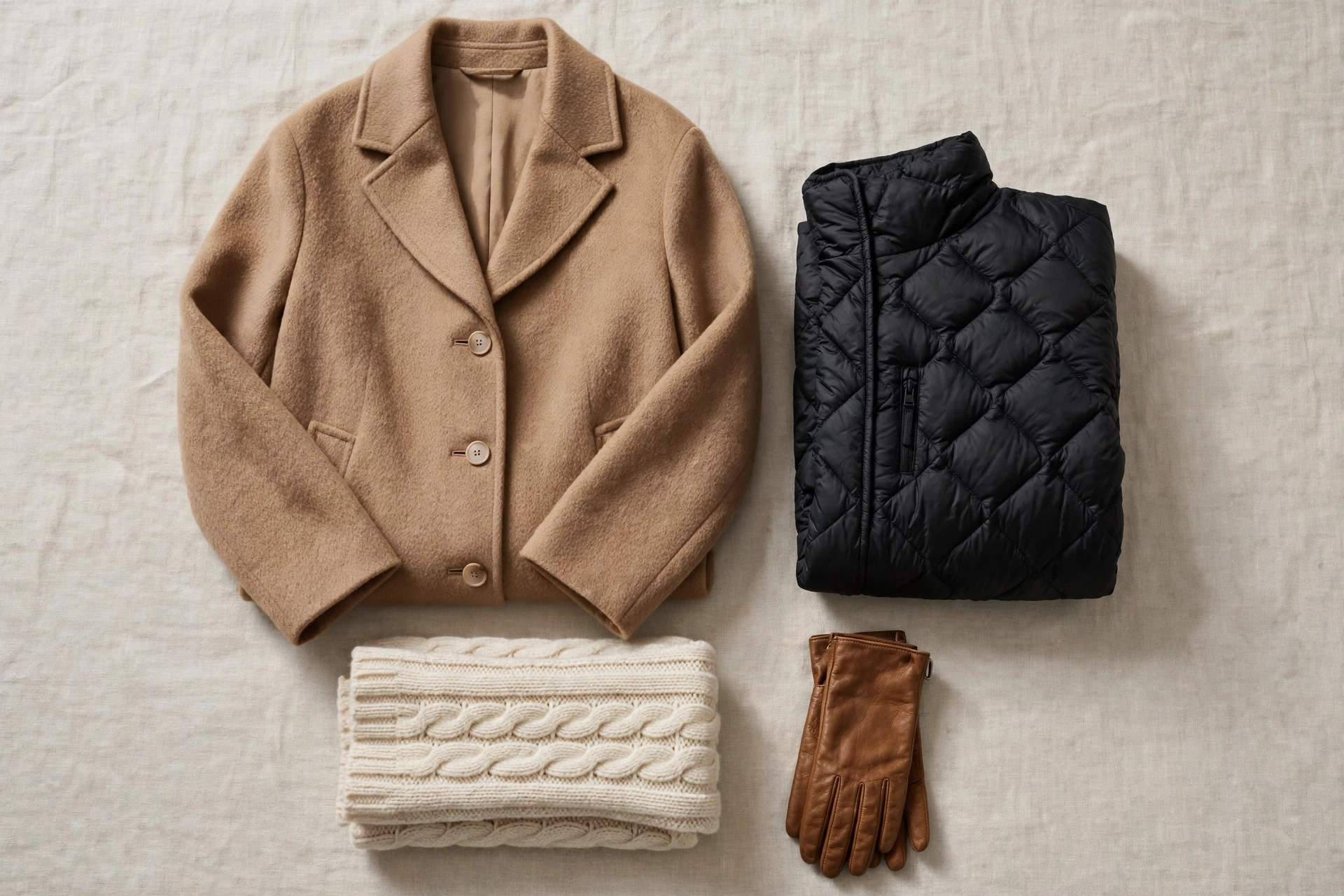
Outerwear is the most visible thing you own and, per winter, one of the most-worn. That makes a jacket the best candidate in your wardrobe for spending more — and the worst place to waste money on something that pills, loses its loft, or has a zipper that dies in February.
Read the Shell Fabric
For wool coats, look for at least 60–80% wool (with cashmere a welcome bonus); low wool content means pilling and a coat that never feels warm. Rain jackets should list a water-resistant or DWR coating, with sealed or taped seams if you will face real rain. Squeeze the shell — it should feel substantial — and look for a smooth acetate or satin lining; cheap polyester linings shred within a couple of seasons.
Insulation: Down vs. Synthetic
Down (look for 550–800 fill power; higher is warmer and lighter) offers the best warmth-to-weight ratio for cold winters but loses loft when wet and costs more. Synthetic fills (Primaloft and similar) keep insulating when damp, are easier to wash, and suit mild winters and rain-prone climates. For everyday cold, 600-fill down or a quality synthetic is plenty; beyond 750-fill you are paying for weight savings you may not notice on a commute.
Zippers and Hardware Tell the Truth
The zipper is the part that fails first on cheap jackets. Look for a name you recognize (YKK is the common good one), metal teeth for heavy coats, and a zipper that runs smoothly with no catching when you test it in store. Storm flaps over the zipper add real wind protection. Snaps should close firmly, buttons should be sewn through the shell with a shank (not glued), and drawcord toggles should lock without slipping.
Fit It Over Real Layers
Try jackets on wearing what you will actually wear underneath — a sweater, not a T-shirt. You should be able to hug yourself comfortably, raise your arms, and sit down without the zipper straining. Sleeves should end at the wrist bone with a sweater on. Shoulders are the one thing a tailor cannot easily fix, so buy the jacket whose shoulder seams sit exactly on yours.
Cost-Per-Wear Favors the Good Coat
A $300 coat worn 150 days a year for five years costs 40 cents per wear. A $90 coat that looks tired after two seasons and needs replacing costs more. Resale markets are full of barely-worn premium coats from people who bought the wrong size — patience there beats a discount-rack compromise.
Time Your Purchase
Full price in October, 30–50% off in January, up to 70% off in February and March. End-of-season sales are the smart buyer’s window for next year’s coat: colors you missed this winter will still look fine next winter, because outerwear colors cycle slowly. Buy one size with next year’s layering in mind, and check the return policy — some retailers shorten it on clearance.
Looking for Stores?
Compare coats, puffers, and rain jackets at retailers in our women’s clothing store directory.