How to Buy Women's Lingerie
Sizing, fit, and fabric: the details that make lingerie comfortable enough to wear every day.
Shop Women’s Lingerie Now
Shop Women’s Lingerie on eBay Shop Women’s Lingerie on AmazonThe eBay and Amazon links on this page are affiliate links. If you make a purchase through them, Apparel Search may earn a commission.
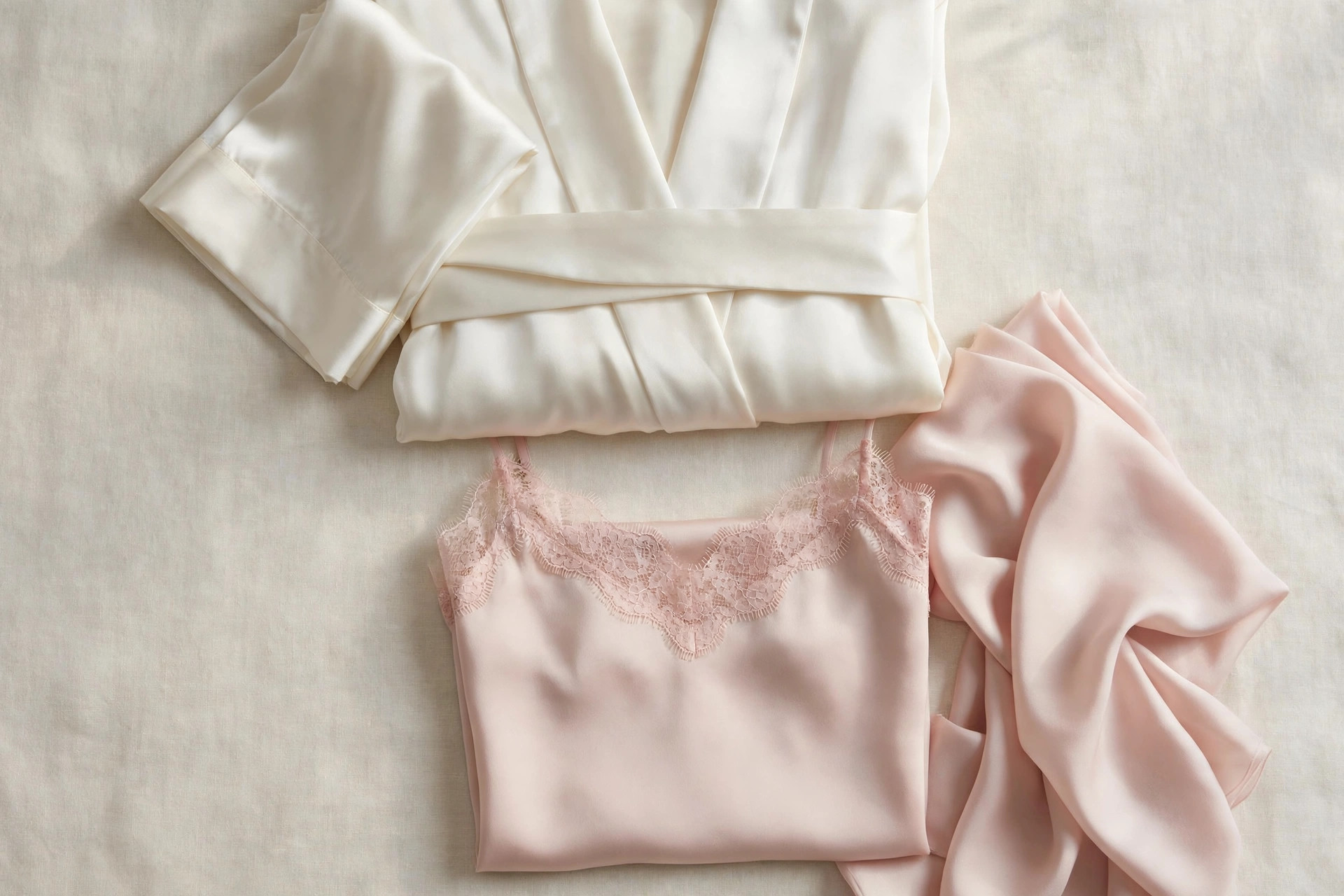
Lingerie sits closer to your skin than anything else you wear, so fit and fabric quality matter more here than in any other category. Most women wear the wrong bra size — often for years — simply because no one ever checked. Fix the fit first, and everything else gets easier.
Band and Cup: What the Numbers Mean
The band provides about 80% of a bra’s support; the cups just contain. A band that rides up your back is too big — try the next band size down and a cup size up (sister sizing). The center gore should sit flat against your sternum, straps should stay up without digging, and no tissue should spill from the top or sides. If the band feels right on the loosest hook, it is the correct starting size — you will tighten the hooks as the elastic ages.
Get a Professional Fitting
A trained fitter spots in seconds what you have tolerated for years: wrong band, wrong cup, wrong style. Book a fitting at a dedicated lingerie boutique — specialists measure and bring styles to try. Re-check your size after pregnancy, significant weight change, or every couple of years. One good fitting recalibrates every lingerie purchase you make afterward.
Fabric and Elastic Quality
Silk, quality cotton, modal, and fine microfiber breathe and feel good all day; scratchy synthetics will sit unworn in a drawer. Stretch the elastic gently: good elastic snaps back instantly, while tired or cheap elastic recovers slowly or not at all — that is what makes a bra stop supporting within months. If lace itches your inner wrist, it will itch everywhere.
Construction Checks Before You Buy
Look for multiple hook-and-eye rows (three or four on fuller bands), fully encased underwires that do not poke through, and cups whose seams lie smooth under a T-shirt. Padding should be even, not lumpy — removable pads fold and migrate in the wash. Inside, seams should be soft and flat — rough seam allowances chafe. For underwear, a cotton gusset is non-negotiable for everyday comfort.
Price vs. Longevity
Budget bras ($15–$25) are fine for trying a new style, but expect to replace them within months. The $40–$70 range is the everyday sweet spot: better elastic, truer sizing, and support that lasts a year or more. Above $70 you are paying for silk, fine lace, and couture-level finishing — worth it for pieces you love, not for basics. Rotate at least three everyday bras so each rests between wears; rotation doubles every bra's life.
Hand-Wash Care
Machine washing and hot dryers are what kill lingerie: they warp underwires, shred lace, and cook elastic. Hand-wash in cool water with a gentle detergent, press out water in a towel (never wring), and lay flat to dry. If you must machine-wash, use a lingerie bag on delicate. Never hang bras by a strap — it stretches the elastic — and store molded cups nested, not folded inside-out, to protect their shape.
Looking for Stores?
Find lingerie boutiques and retailers in our women’s clothing store directory, and see our women’s lingerie shopping guide for style-by-style browsing.