How to Buy Women's Jeans
Denim weight, stretch, and fit: how to find the pair you’ll reach for every week.
Shop Women’s Jeans Now
Shop Women’s Jeans on eBay Shop Women’s Jeans on AmazonThe eBay and Amazon links on this page are affiliate links. If you make a purchase through them, Apparel Search may earn a commission.
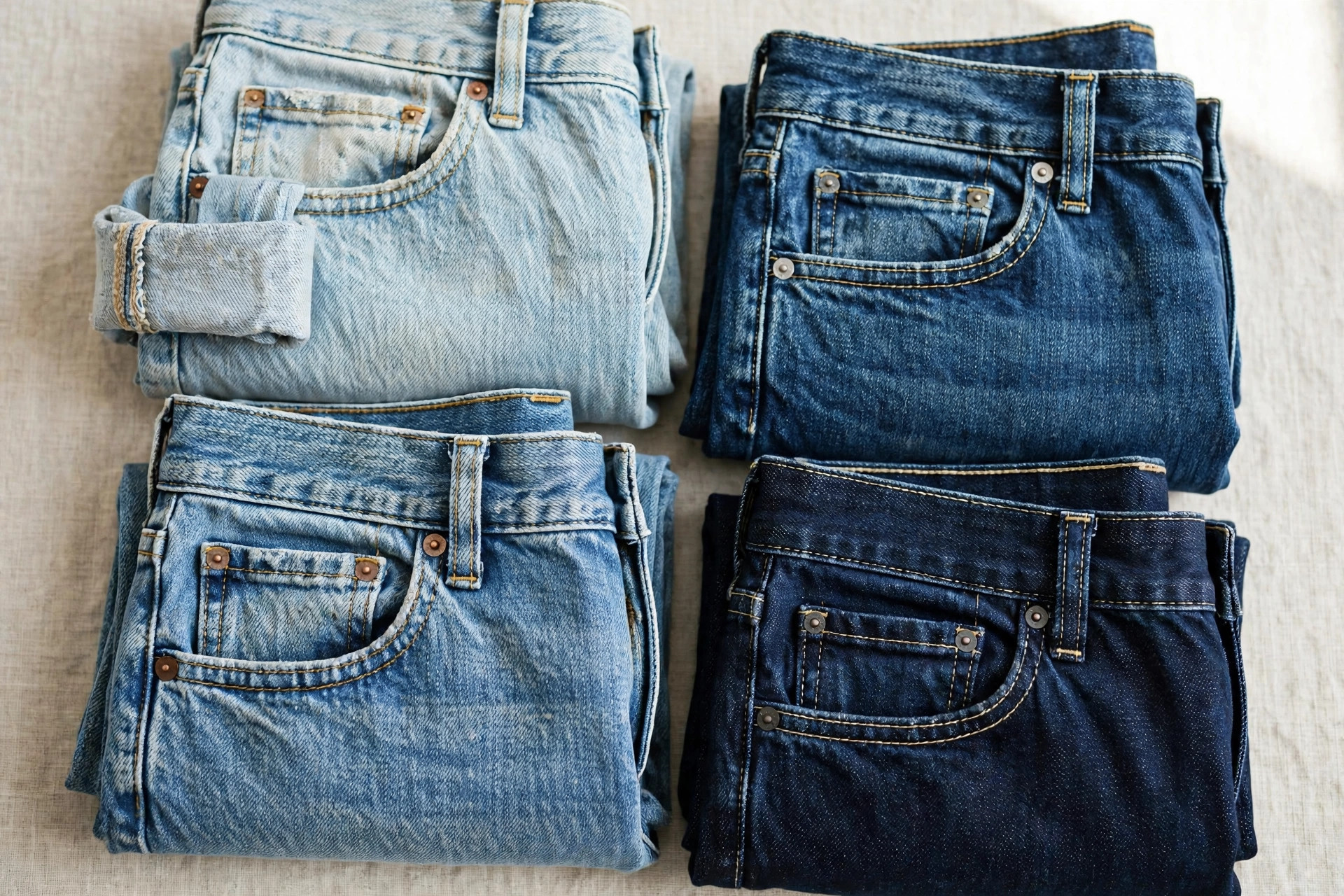
Jeans are the hardest-working item in most wardrobes — and the most frustrating to shop for. Fit varies wildly between brands, but quality markers do not. Once you know what the fabric tag is telling you, jean shopping gets dramatically easier.
Denim Quality Markers
Weight is your first clue: look for denim in the 10–14 oz range for jeans that hold their shape all day (the weight is often listed on quality brands’ sites). Feel the fabric — it should be dense and smooth, not thin and papery. Check the stretch percentage on the tag: 1–2% elastane gives comfort without bagging out; above 3%, knees and seat tend to stretch and sag by afternoon. Rivets at stress points and a sturdy metal shank button (not a cheap snap or thin plastic button) are signs the maker expects the jeans to last.
Selvedge and Construction
Selvedge denim — woven on old-style shuttle looms with a self-finished edge — signals a maker who cares about fabric, and it fades into those coveted high-contrast wear lines. It is not required for good jeans, but it is a reliable quality flag. Either way, turn the jeans inside out: seams should be flat, even, and firmly stitched with no loose threads, and the waistband should be cleanly finished. Reinforced belt loops and stress-point rivets separate durable jeans from disposable ones.
Choosing Rise and Fit for Your Body
Rise — the distance from crotch to waistband — decides comfort more than any trend. High rise anchors at the waist and stays put when you sit; mid rise suits most bodies for everyday wear; low rise works only if you like adjusting it. Fit is personal, but the test is universal: sit, squat, and walk in the fitting room. No pulling across the hips, no waistband gaping at the back, no yanking required. Buy the pair that fits your widest point — hems and waistbands are easy tailor fixes, hips are not.
Sizing With Stretch
Stretch jeans fit snugger in the store than after an hour of wear: very tight now means saggy later. Rigid (non-stretch) denim runs truer to the tag but breaks in over days, not minutes — buy it slightly snug and let it mold to you. Sizing is inconsistent across brands, so always check the actual waist and hip measurements in the size chart rather than trusting the number on the tag.
Price Tiers and Wash Care
Budget jeans ($20–$40) work for trend silhouettes you will wear a season. Mid-range ($50–$100) is where you find real denim weight, better hardware, and consistent sizing — the sweet spot for your everyday pair. Premium ($120+) buys selvedge, better fades, and construction that lasts years. Protect any pair by washing rarely, inside out, in cold water, and air-drying — heat is what destroys stretch and fades color. Never put good denim in a hot dryer if you want the fit to survive.
Looking for Stores?
Find retailers carrying your favorite denim brands in our women’s clothing store directory.