Fashion Portfolio
Apparel Search fashion summary — a short guide to fashion portfolio.
A portfolio can be a large, thin, flat case for loose sheets of paper such as drawings or maps, or a range of investments held by a person or organisation. In fashion, a portfolio is a body of work presented as evidence: a fashion design portfolio collects samples, illustrations and fabric swatches to show a designer's skills, and a modelling portfolio does the same for a model's range.
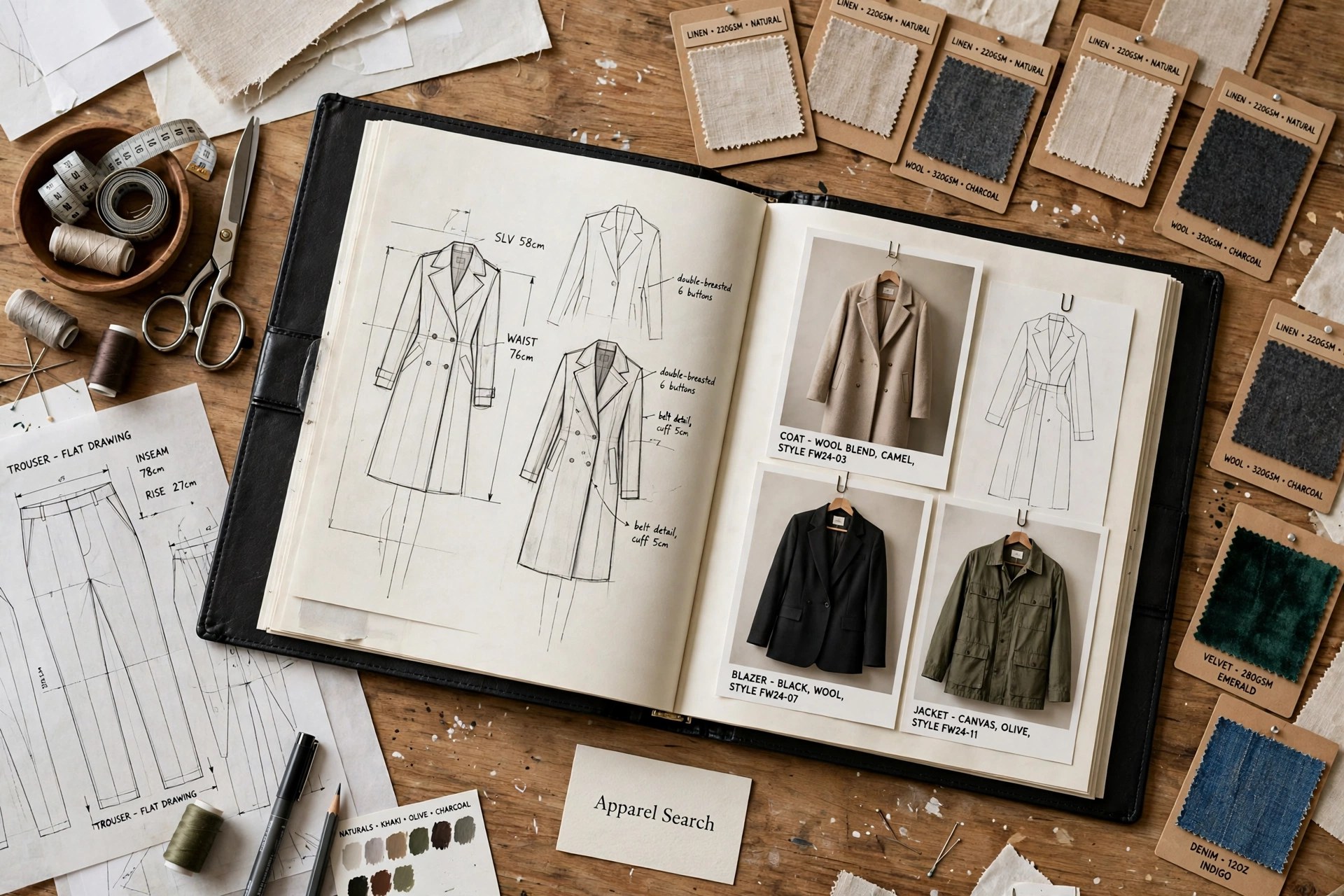
Fashion Portfolio — Explore & Resources
Design Portfolios: The Designer's Evidence
A fashion design portfolio is a collection of samples, illustrations, fabric swatches and photographs put together by a fashion designer to show off his or her skills to a prospective employer. Students use the same tool to show admissions officers when applying to college, and portfolios form part of a fashion designer's resume when applying for apparel industry jobs — in a field where ability is visual, the portfolio is the argument and the resume is only its covering letter.
A well-built one is curated, not accumulated: sketches, illustrations, photographs of completed garments, fabric swatches, technical drawings and mood boards chosen to show creativity, design aesthetic and expertise. Designers create them to present professionally, to showcase skills and style, to market their brand identity, and to win career opportunities — jobs, collaborations, freelance projects, internships and school admissions.
Modelling Portfolios and Building Your Own
A fashion modelling portfolio shows agencies and potential employers what a model can do: various photographs demonstrating a wide variety of previous work, together with statistics such as height, weight and eye colour. A beauty shot — a colour photograph of the model's face, generally from the shoulders up — shows the model in a natural state so an agency or client can judge the raw material before styling.
The expert guidance linked from this page agrees on the elements of success. Sew Heidi's portfolio examples show finished work; the Business of Fashion guide, drawing on educators and industry insiders from renowned fashion schools and brands, advises showing diversity and market awareness, developing a narrative, including non-traditional skills, communicating clearly and demonstrating originality. Trend boards — summaries of fashion concepts or collections — can support a portfolio, and the fashion illustrations and fashion photography summaries linked here cover two of its core crafts. Start with the best work, most recent first, and keep updating: a portfolio is a living document, not a graduation souvenir.
Digital Portfolios and the Physical Book
Most portfolios now live twice. The digital version — a website or PDF — travels ahead of its owner, answering applications and admissions at a distance, and must be ruthless in selection because a viewer alone with a screen gives weak work no advocate. The physical book still matters where fashion is tactile: fabric swatches, garment photographs at true scale and printed illustrations carry material evidence a screen flattens. Strong candidates keep both current, letting each do the work it does best — the screen for reach, the book for presence.
Photos

Common Questions
What is a fashion design portfolio?
A curated collection of a designer's work — sketches, illustrations, fabric swatches, technical drawings, mood boards and photographs of completed garments — used to show skills to employers, clients and college admissions officers.
What goes in a modelling portfolio?
A variety of photographs showing the model's range of previous work, plus statistics such as height, weight and eye colour, including a natural beauty shot of the face from the shoulders up.
How do I make a portfolio stand out?
Show diversity and market awareness, develop a narrative, include non-traditional skills, communicate clearly and demonstrate originality — and lead with your best, most recent work.