Fashion Illustration
Apparel Search fashion summary — a short guide to fashion illustration.
An illustration is a visualisation or depiction of a subject made by an artist — a drawing, sketch, painting or other graphical representation of things seen, remembered or imagined. A fashion illustration applies that art to clothing, shoes and fashion accessories: it is the communication of fashion ideas in visual form, also known as fashion sketching.
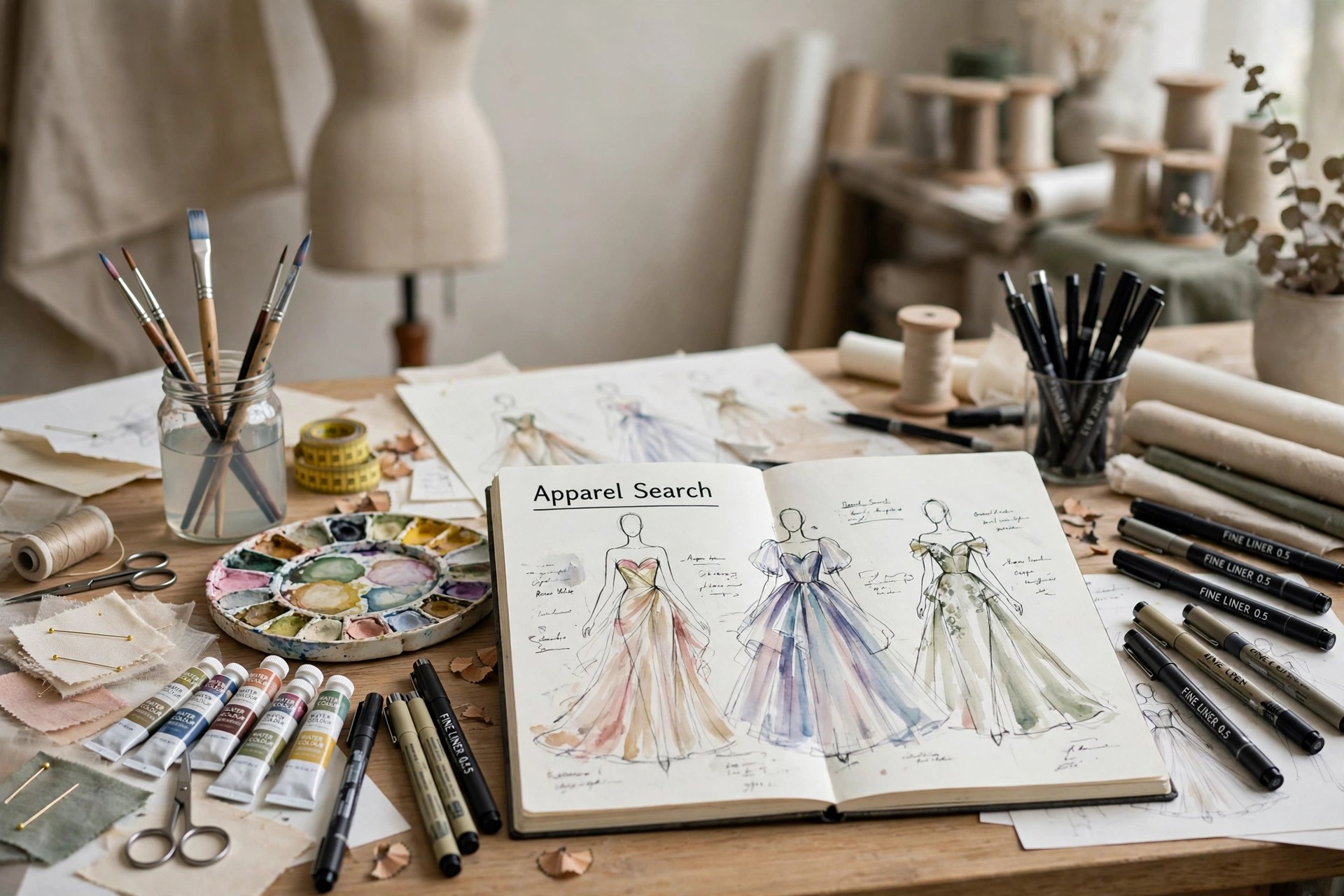
Fashion Illustration — Explore & Resources
The Working Tool of the Industry
Fashion illustration is first of all how designs begin. Before a garment is made, designers need to communicate concepts, style and detail to others, and illustrations bring those ideas to life on paper or screen. They are the starting point of design development: designers and illustrators refine designs and test variations together before any costly prototype exists, solving creative problems at the price of a sketch.
Illustrators also bridge the studio and the factory. Detailed sketches and technical drawings convey design specifications, measurements, fabric details and construction methods to pattern makers and manufacturers, keeping the finished product aligned with the designer's vision. The same drawing skill serves forecasting — illustrators visually capture emerging trends, styles and colours — and portfolios, where aspiring designers demonstrate creativity and skill to employers and partners.
Art, Marketing and the Historical Record
Beyond the studio, illustration is marketing: high-quality fashion illustrations appear in lookbooks, campaigns and promotional material, where a distinctive illustration style can become synonymous with a house or designer. Fashion plates — published illustrations of fashion — carried that role historically, spreading the look of new styles to readers long before photography took over the task.
Illustrations also document. They form a visual record of fashion trends and styles over time, and historians rely on them to study fashion's evolution and societal impact. In the present, illustrators help broaden representation, depicting diverse body types, skin tones and cultural influences so fashion imagery reflects the real world. For readers who want to go further, the fashion drawing summary covers the drawing side, and the illustrators directory linked from this page lists working fashion illustrators in the clothing industry.
Learning Fashion Illustration
Fashion illustration is a learnable craft with a recognisable curriculum. Students begin with the fashion figure — the elongated croquis that serves as the standard mannequin for design drawing — then proportion, movement and the rendering of fabric behaviour: how silk falls, how denim folds, how a print repeats across a seam. Colour work and mixed media follow, and digital illustration now sits alongside ink and watercolour as a standard medium. The fashion drawing summary and the design schools summary linked from this page cover the learning routes in more detail; the essential point is that good illustration is built from drawing discipline plus fashion knowledge, and neither half substitutes for the other.
Photos

Common Questions
What is fashion illustration?
The art of communicating fashion ideas in visual form — illustration, drawing, painting and sketching of clothing, footwear and accessories. It is used to visualise designs, guide production, forecast trends, market collections and document fashion history.
Why are fashion illustrators important to the industry?
They turn ideas into communicable images before garments exist, produce the technical drawings pattern makers and manufacturers work from, capture emerging trends, build designers' portfolios, and create the imagery used in marketing and historical records.
What is a fashion plate?
A published illustration of fashion — historically, the printed images through which new styles were spread to readers. Fashion plates are a traditional form of fashion illustration.