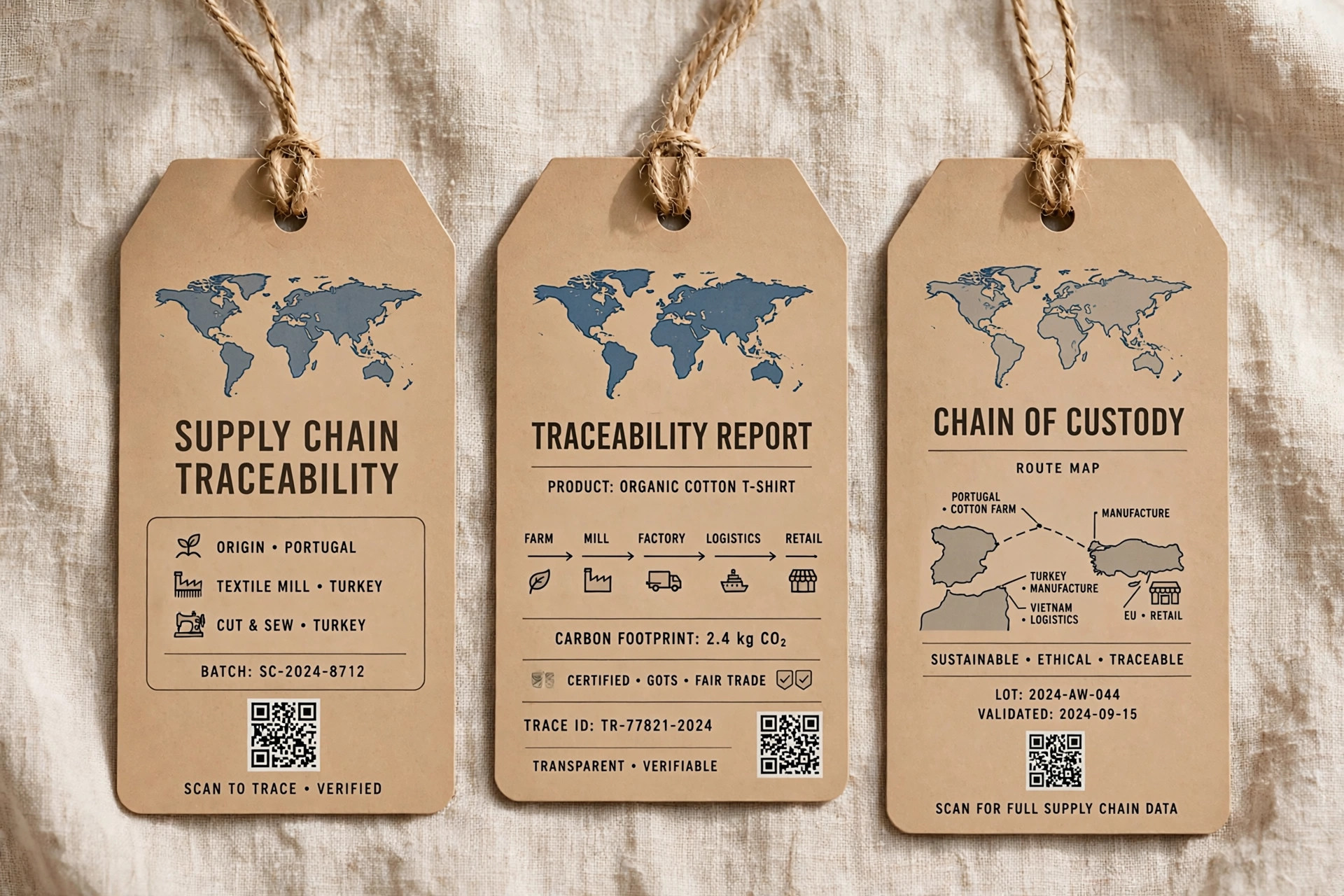
Supply chain traceability means being able to document every step a garment took — from fiber or farm, through spinning, weaving, dyeing, cutting, and sewing, to your warehouse. What was once a sustainability bragging point is fast becoming a legal requirement in major markets.
Why Traceability Matters Now
Regulations are tightening: the EU's due-diligence directives and the US Uyghur Forced Labor Prevention Act (UFLPA) require brands to demonstrate clean supply chains, with shipments detained when they can't. Beyond compliance, retailers and consumers increasingly demand proof behind 'sustainable' and 'ethical' claims.
How Brands Implement It
Start by mapping tier 1 (cut-and-sew) and tier 2 (fabric mills) suppliers — most brands are surprised how little they know past tier 1. Then require chain-of-custody documentation: purchase records, mill certificates, and transaction certificates for certified materials (GOTS, GRS, OEKO-TEX). Digital product passports are emerging as the standard format.
Technology Options
Options range from spreadsheet-based mapping (fine for small brands) to dedicated platforms that collect supplier data and flag risks, to physical tracers like forensic fiber markers. Match the tool to your scale — the discipline of collecting the data matters more than the software.
FAQs
- What is the difference between transparency and traceability?
- Transparency is publishing what you know; traceability is the underlying ability to track each product's journey. You need traceability before transparency means anything.
- How many tiers does a fashion supply chain have?
- Typically 4: tier 1 cut-and-sew, tier 2 fabric and trim, tier 3 yarn and processing, tier 4 raw fiber or agriculture. Most brands only know tier 1.
- Do small brands need traceability?
- If you sell into the EU or US, the same rules apply regardless of size. Start simple: document your tier 1 and 2 suppliers now.
- What is a digital product passport?
- A scannable record (often QR-based) carrying a product's materials, origins, and care data — being phased in under EU regulation.
Apparel Search: explore more production & sourcing resources for the fashion industry.