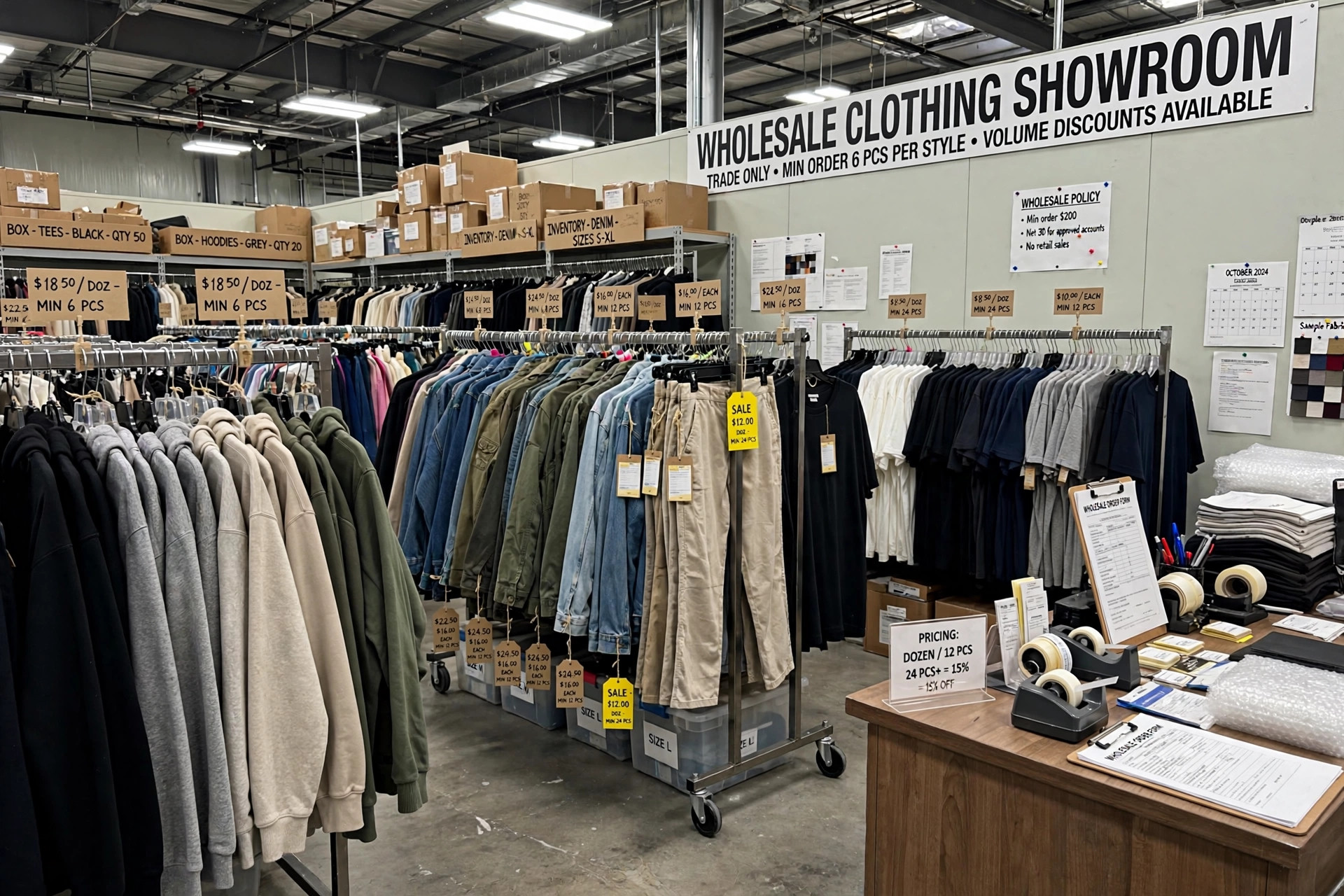
Wholesale pricing is the art of setting prices that give retailers their margin while leaving you profitable. Get it wrong and you're either unbuyable (too expensive for stores to mark up) or working for free. This guide covers the math and the strategy.
The Core Math
The traditional formula: wholesale ≈ 2× landed cost, and retailers then apply keystone (2×) markup to reach MSRP. A $15 landed garment wholesales around $30 and retails near $60. Your wholesale margin must cover design, sales, marketing, overhead, and profit — model it per style, not just per collection.
Line Sheets and Terms
Your line sheet lists styles, colors, sizes, wholesale prices, MSRPs, minimums, and delivery windows. Standard terms: Net 30 is common; new accounts often start prepaid or 50% deposit. Offer order minimums (e.g., $500 opening order) to keep small unprofitable orders out.
Pricing Psychology
Charm pricing ($58 vs. $60) works at retail; at wholesale, clean numbers build trust. Avoid frequent discounting to retailers — it trains them to wait. Instead of cutting price, add value: free freight thresholds, early-order discounts, or exclusive styles for key accounts.
FAQs
- What margin should a fashion brand make at wholesale?
- Aim for 50–65% gross margin on wholesale revenue (wholesale price minus landed cost, divided by wholesale price). Below 50% leaves little room for operating costs.
- What is keystone markup?
- Keystone means doubling the wholesale price to set retail — a 50% retail margin. It's the traditional benchmark, though many categories now run higher or lower.
- Should wholesale and DTC prices match?
- Your DTC price should generally match the MSRP you give retailers. Undercutting your own stockists destroys wholesale relationships.
- How do I price a new brand with no history?
- Cost-plus pricing (landed cost × your multiple) keeps you safe. Then sanity-check against competitors' wholesale-equivalent prices for similar quality.
Apparel Search: explore more production & sourcing resources for the fashion industry.