QR Codes for the Fashion Industry
Fashion Terms — the Apparel Search fashion terminology directory
A QR code is a two-dimensional barcode that carries information in both the vertical and horizontal directions, so it can hold several hundred times the data of an ordinary barcode and be decoded at high speed. Fashion businesses use that capacity on packaging, hangtags and garments to connect a physical product with digital information a phone can open instantly.
QR Codes For the Fashion Industry - Terms of Interest to the Fashion Industry
Fashion Terms Fashion Terms Directory Fashion Terms by Category Fashion Fashion Technology
Before we go to far into explaining the benefits of QR codes for the fashion industry, let's first figure out what the meaning of "QR Codes". So, what is a QR code?
According to the Denso Wave official website (November 2011), "The QR code was a kind of two dimensional symbology, and the DENSO WAVE (established under the name of DENSO) developed with a main objective of "Code read easily for the reader" in 1994. The QR code is that carry meaningful information in the vertical direction as well as the horizontal, hence the two-dimensional term. By carrying information in both directions, QR code can carry up to several hundred times the amount of data carried by an ordinary bar codes."
According to Wikipedia (November 2011 - https://en.wikipedia.org/wiki/qR_code), "A QR code (abbreviated from Quick Response code) is a type of matrix barcode (or two-dimensional code) first designed for the automotive industry. More recently, the system has become popular outside of the industry due to its fast readability and comparatively large storage capacity. The code consists of black modules arranged in a square pattern on a white background. The information encoded can be made up of any kind of data (e.g., binary, alphanumeric, or Kanji symbols). Created by Toyota subsidiary Denso Wave in 1994 to track vehicles during the manufacturing process, the QR code is one of the most popular types of two-dimensional barcodes. It was designed to allow its contents to be decoded at high speed."
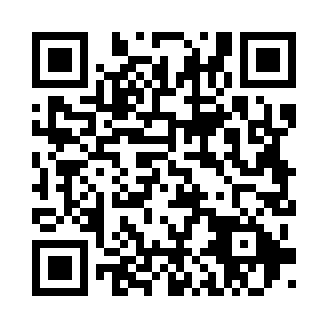

If you are interested, you are welcome to cut and past the above images onto your website as an example of QR codes.
Note: at the bottom of the pages that the scan leads
to, their is an advertising banner at the bottom.
That is NOT added by us. That is added by
the free service we used to make the QR code.
If you search the internet, you can find some websites that make QR codes (QR Code Generators). For example, PaperLinks, Unitag, BeQRious, or others.
Fashion Terms:
A
B
C
D
E
F
G
H
I
J
K
L
M
N
O
P
Q
R
S
T
U
V
W
X
Y
Z
Using QR Codes Well in Fashion
A QR code earns its place on a garment or package when the scan leads somewhere useful. A hangtag code might open care and fiber information that would never fit on the ticket itself, a size and fit guide for the exact style in the shopper's hand, or the story of how and where the item was made. A code on a gift box or shelf tray can lead to styling suggestions, reordering options or product registration. Printed on a t-shirt or sweatshirt, the code itself becomes part of the design, so it has to be planned with the artwork rather than added as an afterthought.
Placement and print quality decide whether any of that works. The code needs enough contrast between its black modules and the light background, enough quiet space around the square, and a size matched to the distance from which it will be scanned — a hangtag is read at arm's length, while a store display may be read from several feet away. Codes printed on fabric should be tested on the finished garment, not just on paper: stretch, curvature, washing and the texture of the material can all interfere with a clean read, and a code that fails in the customer's hand is worse than no code at all.
Businesses that want to try codes do not need specialized equipment. Online QR code generators — services such as PaperLinks and Unitag are named in the resources on this page, along with design guidance — can produce a code from a web address in minutes. The discipline is in the destination: use a stable page address that will still exist seasons later, test the printed code with more than one phone before a production run, and remember that the code is a doorway. What matters to the customer is the page, video or information waiting on the other side of the scan.
Common Questions
What does QR stand for in QR code?
QR stands for Quick Response. The code was designed by Denso Wave in 1994 so its contents could be decoded at high speed, and it stores data in both directions as a type of matrix, or two-dimensional, barcode.
Where can the fashion industry use QR codes?
QR codes work on packaging such as gift boxes and shelf trays, on hangtags and price tickets, and even printed directly on certain clothing such as t-shirts and sweatshirts, where they can still be read properly.
How much information can a QR code hold?
Because a QR code carries meaningful information in the vertical direction as well as the horizontal, it can carry up to several hundred times the amount of data carried by an ordinary barcode.