Cloth
Fabric Definitions — fabric and textile definitions from Apparel Search
Search Apparel Search
At a Glance
Definition: Cloth is a flexible material made up of a network of natural or artificial fibres — thread or yarn — formed by weaving or knitting, or pressed into felt.
Also known as: Fabric; material (in the textile assembly trades)
Category: Fabric Definitions
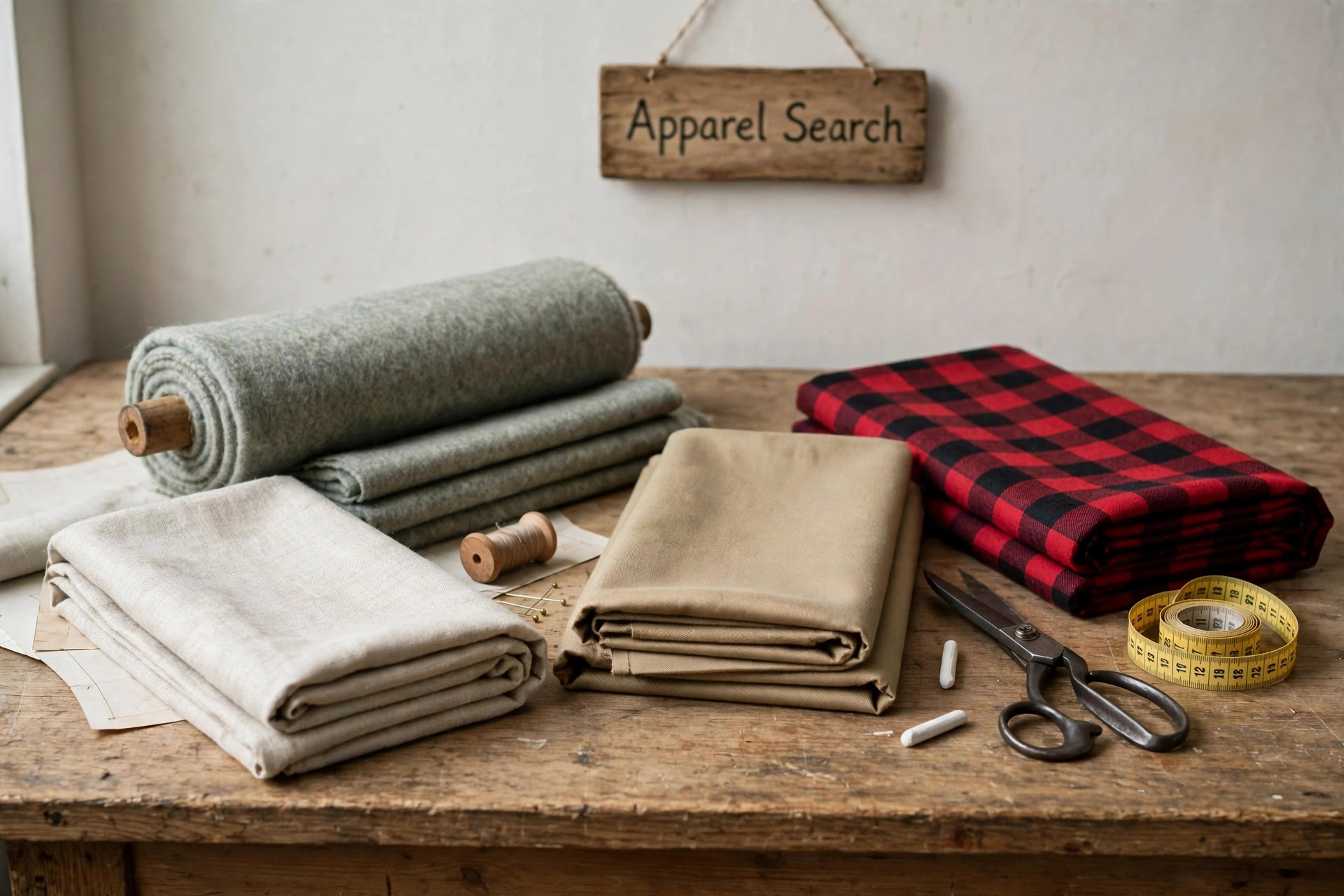
Cloth, or fabric, is a flexible material built from a network of natural or artificial fibres — thread or yarn — formed by weaving or knitting (textiles), or pressed into felt. In the textile assembly trades such as tailoring and dressmaking, fabric and material are commonly used as synonyms for cloth, although all three words carry wider meanings outside the trade. Cloth is used most often to make clothing, household furnishings and art such as tapestry — and before woven cloth existed, furs and skins did the work textiles do now.
From Skins to Fibre Networks
The history of cloth is a replacement story. Furs and skins once covered, insulated and carried everything textiles cover, insulate and carry today, and cloth took those jobs over only as spinning and weaving made fibre networks cheap and reproducible. For most of that history every fibre in the network was natural: plant sources such as cotton, flax and hemp, and animal sources such as wool, hair and silk. The 20th century supplemented them with artificial fibres such as polyester and rayon. That changed what cloth could be asked to do — wrinkle resistance, permanent pleats and waterproof-breathable membranes all arrived with the new fibres — without changing what cloth is, since its basic structures of weave, knit and felt are thousands of years old.
Colour, Strength and Fineness
Cloth is most often dyed, and fabrics are available in every colour. Coloured designs can be built into the cloth itself by weaving strands of different colours together, as in plaid, added to finished fabric as coloured stitches, as in embroidery, or applied to the finished fabric by any of the various printing processes. The material's range of strength is just as wide, running from the finest gossamer fabrics to sturdy canvas sailcloths. Fineness is measured rather than guessed: the relative thickness of the fibres in a cloth is given in deniers, and microfiber names fibres made of strands thinner than one denier.
Cloth in the Workroom
In tailoring and dressmaking, cloth is not an abstraction but the physical stock the work is planned around, and the trade's vocabulary reflects that. A cloth is judged by hand — its weight, drape, resilience and surface — before it is judged by specification. It is bought by the length, checked for flaws and shade variation, laid with its grain aligned to the pattern, and matched at checks and stripes across seams. The long list of named cloths is a workroom shorthand: to say a jacket is to be made in a worsted or a flannel settles weight, warmth, surface and behaviour in a single word. That is why cloth names survive every change in fibre technology — a polyester broadcloth and a cotton broadcloth differ in care and cost, but the name still tells the cutter what the material will do.
Named Cloths
Most named cloths are defined by their weave, their fibre or their finish, and each has its own entry in this glossary. The everyday woven staples include burlap, calico, cambric, chino cloth, crepe, denim, gabardine, gingham, madras, muslin, poplin, scrim, serge and twill.
A second group is named for its surface or its wool content: corduroy and the other cord fabrics, flannel, lamé, satin, velvet, whipcord, woolen and worsted, together with patterned and specialist cloths such as tartan, tweed and aida cloth. Taken together the list is the working vocabulary of the fabric trade — which is why this page, the head term for the folder, keeps it.
Common Questions
Is there a real difference between cloth and fabric?
In the trades they are used as synonyms, and this site treats them together. In careful general usage, cloth is the older, more concrete word — a piece of cloth, a type of cloth — while fabric came to be preferred for the material as an industrial product. Tailoring and dressmaking use cloth, fabric and material interchangeably for the yardage on the table.
How is the thickness of cloth fibres measured?
In deniers: the relative thickness of fibres in cloth is measured in denier, a unit of fibre fineness. Microfiber refers to fibres made of strands thinner than one denier — finer than silk — which is why microfiber cloths feel unusually soft and absorbent for their weight.
What are the main types of cloth?
Named cloths are usually defined by weave, fibre or finish: broadcloth, burlap, calico, cambric, canvas, chino cloth, corduroy, crepe, denim, felt, flannel, gabardine, gingham, linen, madras, muslin, organza, poplin, satin, scrim, serge, twill, velvet, whipcord, woolen and worsted among them — each defined separately in this glossary.