Spinning
Miscellaneous Definitions — the process that twists raw fibers together into strong, long yarn, from Apparel Search
Search Apparel Search
At a Glance
Definition: Spinning is the process of creating yarn — or thread, rope or cable — from various raw fiber materials, by twisting several fibers together to bind them into a strong, long yarn.
Category: Miscellaneous Definitions
Spinning is the process of creating yarn (or thread, rope, cable) from various raw fiber materials. Several fibers are twisted together to bind them into a strong, long yarn. The characteristics of the yarn vary based on the material used, fiber length and alignment, the quantity of fiber used and the degree of twist. The earliest spinning probably involved simply twisting the fibers in the hand; later the spindle and the spinning wheel made the work continuous and faster, and modern powered spinning is vastly faster still. This page covers why twist works, the four variables every spinner controls, the long progression from fingers to powered machinery, and the plant, animal and synthetic materials that can all be spun.
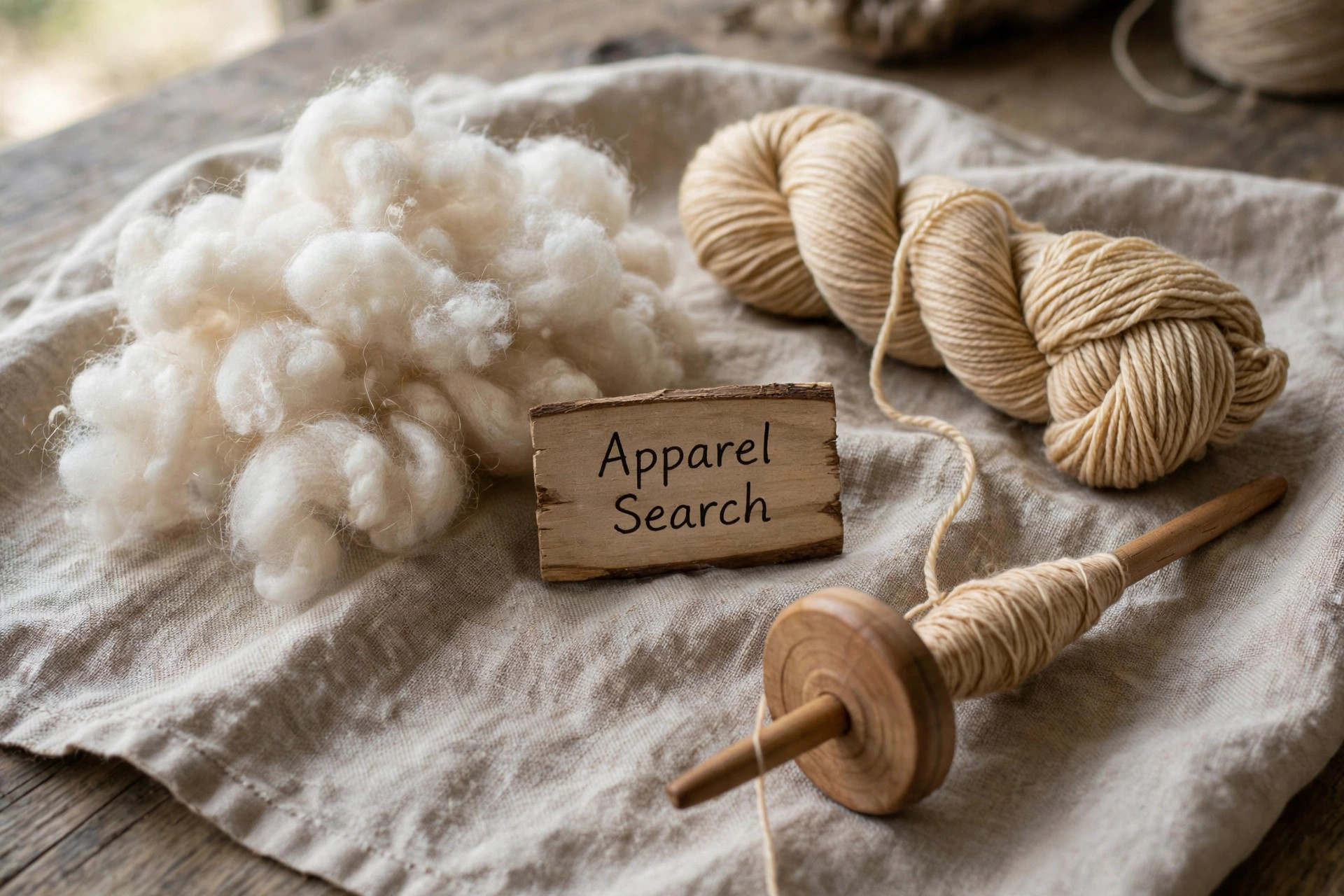
Twist Is What Turns Fiber Into Yarn
Loose fibers, however long the pile, are not yet useful for weaving or knitting. They slide past one another, drift apart and have no continuous strength. Spinning solves that problem with a single action: twist. Several fibers are twisted together so they bind into a strong, long yarn. As twist is inserted, each short fiber is pressed against its neighbours at an angle, friction multiplies along thousands of contact points, and the strand can be drawn out longer while new fiber is fed in at the same time.
The result — yarn, and at other scales thread, rope or cable — is continuous in a way no single natural fiber is. A cotton fiber is short, a wool fiber is longer but still finite; a spun yarn can run for hundreds or thousands of yards because twist keeps handing strength from one fiber to the next. Every later textile process depends on that continuity: there is no weaving, knitting or sewing thread until loose fiber has first been spun.
The Four Variables That Govern the Yarn
Four variables govern what kind of yarn emerges, and a spinner controls all four, by hand or by machine setting. The material used sets the starting character: cotton, flax for linen, hemp, wool, silk and synthetics each behave differently. Fiber length and alignment decide how smoothly fibers lie together and how strong and even the strand can be. The quantity of fiber used sets thickness.
The degree of twist sets hardness, strength and elasticity: too little twist leaves a soft but weak yarn that falls apart, while more twist makes a firmer, stronger yarn up to the point where over-twisting makes it harsh and lively. Every yarn you have ever handled is a particular balance of those four choices — which is also why a grade such as spinning count, which forecasts how fine a wool can spin, matters before spinning begins.
From Fingers to Spindle, Wheel and Power
The history of spinning is the history of making twist faster without losing control of it. The earliest spinning probably involved simply twisting the fibers in the hand. Later, the use of a stick to help twist the fiber was introduced. Drop spinning refined the stick into a spindle — a stick with a whorl or weight to stabilize the spinning of the stick. The spindle is spun, and hangs supported by the yarn as more fiber is introduced; this introduced fiber picks up the twist and becomes yarn.
Later the spinning wheel was developed, which allowed a continuous and faster yarn production. Spinning wheels are either foot or hand powered. The multiplication then went further: the spinning jenny worked many spindles at once by hand, and the spinning frame mechanized the drawing and twisting under external power. Modern powered spinning, originally done by water or steam power but now done by electricity, is vastly faster than hand-spinning — but it performs the same sequence: prepare fiber, draw it out, insert twist, wind the finished yarn away, ready for the loom.
What Can Be Spun: Plant, Animal, Synthetic — and Mineral
Materials that can be used to create yarn fall into three broad classes: plant, animal and synthetic. Plant materials include cotton, flax (to produce linen), hemp, raffia, yucca and coconut husk. Animal materials include wool, goat — angora or cashmere goat — rabbit (angora), llama, alpaca, dog, camel and silk. Synthetic materials include nylon, rayon, acetate and Mylar. A fourth class appears in the original list only with a warning: mineral fiber — asbestos, but not very often, and the original advises researching the safety concerns about asbestos.
The breadth of the list underlines what spinning fundamentally is: not a machine, but a process. The principle does not depend on the material. Wherever short fibers need to become a long, strong, usable strand, twisting them together is the answer, and that act is spinning — the spun yarn then goes forward to become fabric.
Hand Spinning Today: Control, Self-Sufficiency and the Meditative Craft
Hand spinning has not disappeared, and its reasons are instructive. Hobby spinners spin their own yarn in order to control specific yarn qualities and produce yarn not commercially available. They also may spin for self-sufficiency, a sense of accomplishment, or a sense of connection to history and the land — and, of course, for the meditative qualities of spinning.
Those motives explain the craft's survival alongside mills that outproduce it beyond comparison. A hobby spinner chooses the fiber, the preparation, the thickness and the twist for one particular project, accepting slowness as the price of control; the mill optimizes the same four variables for consistency across thousands of pounds. Both are doing the identical defined act — twisting several fibers together to bind them into a strong, long yarn — at opposite ends of the scale the process has always spanned, from a pair of hands to a powered factory floor.
Common Questions
What is spinning?
Spinning is the process of creating yarn, or thread, rope or cable, from various raw fiber materials. Several fibers are twisted together to bind them into a strong, long yarn.
What affects the characteristics of spun yarn?
Characteristics vary based on the material used, fiber length and alignment, the quantity of fiber used and the degree of twist applied during spinning.
What materials can be spun into yarn?
Materials fall into plant, animal and synthetic classes. Examples include cotton, flax, hemp and wool, angora, alpaca and silk, plus synthetics such as nylon, rayon and acetate.
What is drop spinning?
Drop spinning uses a stick with a whorl or weight to stabilize its spinning, called a spindle. The spindle is spun and hangs supported by the yarn as more fiber is introduced; the introduced fiber picks up the twist and becomes yarn.