Underwear
Clothing Definitions — definitions of garments and clothing terms from Apparel Search
Search Apparel Search
At a Glance
Definition: Underwear is clothing worn next to the skin, usually under other clothes, so that outer garments can be worn repeatedly without needing to be cleaned — worn for hygiene, warmth, comfort, support and modesty.
Also known as: Undergarments; intimate clothing
Category: Clothing Definitions
Undergarments, also called underwear or sometimes intimate clothing, are clothes worn next to the skin, usually under other clothes. Wearing and changing underwear permits outer garments to be worn repeatedly without needing to be cleaned. Beyond protecting outer clothes, undergarments are worn for warmth, comfort and hygiene, and they can serve modesty or religious purposes — such as the special temple garment worn by followers of the LDS Church. This is the headword page for the subject: the definition, the purposes and the history up to the industrial age. The twentieth-century story continues in Underwear Definition Part 2.
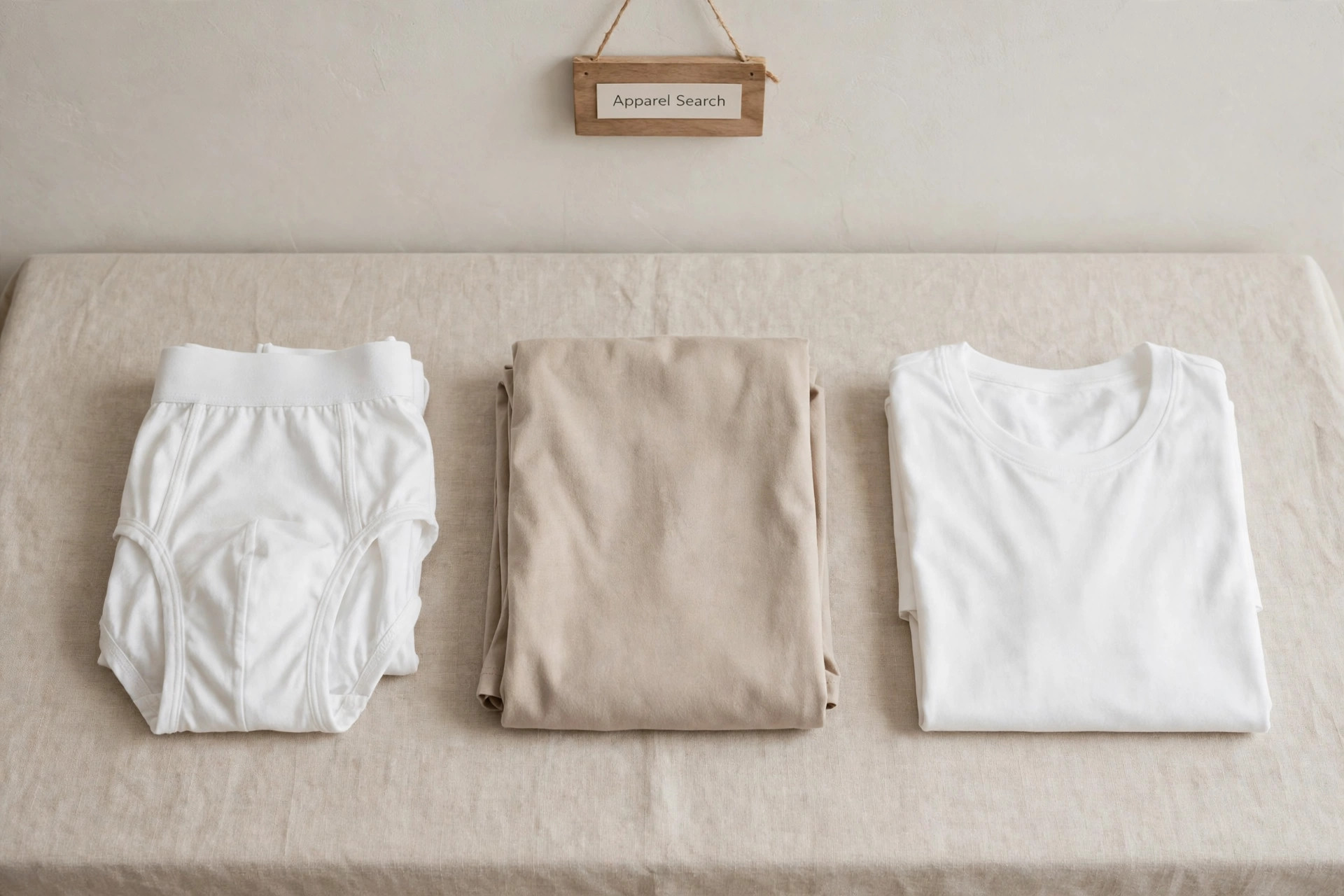
Function First: Warmth, Comfort and Hygiene
Underwear earns its place on practical grounds. A soft layer next to the skin absorbs perspiration and body oils before they reach a suit, a dress or a pair of trousers, so the outer garment stays presentable for more wearings between cleanings — a real economy when the outer garment is dry-clean-only or made of delicate fabric. In cold weather the same layer traps warmth; in hot weather a light cotton or moisture-managing knit keeps skin comfortable and reduces chafing where seams and waistbands would otherwise rub.
Fit matters more here than in any other category, because the garment is in contact with the skin all day. Waistbands should hold without digging, leg openings should stay in place without riding, and fabrics should be smooth enough not to show or chafe under close-fitting outer clothes. Rotating several sets so each can be washed and fully dried between wearings is the basic hygiene habit the whole category is built around. The same drawer can hold purely functional pieces and garments with entirely different jobs — thermal underwear is work clothing for cold conditions, a temple garment carries religious meaning for its wearer, and lingerie is designed with appearance in mind even though it sits under clothes.
From Loincloth to Braies
The loincloth is the simplest form of underwear, and it was probably the first undergarment worn by human beings. It takes two major forms: a long, triangular piece of fabric with strings tied around the waist, the cloth brought up between the legs and fastened to the band; or a skirt-like cloth wrapped around the hips several times and fastened with a girdle. In warmer climates the loincloth may be the only clothing worn; in colder ones it formed the basis of dress beneath other garments. In most ancient civilizations it was the only undergarment available — Tutankhamun was buried with 145 of them — and it continues to be worn around the world. Greek and Roman women often wore straps of cloth across the breasts for support, and many Roman women wore legless garments around the hips.
In the Middle Ages, underwear became looser fitting, made of soft materials such as cotton. The loincloth was replaced by loose, trouser-like braies, which the wearer stepped into and laced or tied around the waist and legs at about mid-calf; wealthier men also wore chausses, which covered only the legs. By the Renaissance the chausses had become form-fitting, like modern hose, and the braies shorter. Braies were usually fitted with a front flap that buttoned or tied closed — the codpiece — which Henry VIII famously padded, starting a trend of ever larger codpieces that lasted to the end of the 16th century. The modern men's shirt appeared in this era as an undergarment, and Renaissance noblemen adopted the doublet, a vest-like garment tied in front and worn under other clothing. Women wore a close-fitting underdress, and noblewomen began wearing the farthingale, an underskirt with hoops sewn into it.
Industry, the Union Suit and the Corset
The inventions of the spinning jenny and the cotton gin in the second half of the 18th century made cotton fabrics widely available. Factories could mass-produce underwear, and for the first time people bought undergarments in stores rather than making them at home. The standard undergarment of the 19th century for men, women and children was the union suit, which provided coverage from the wrists to the ankles — the one-piece style more commonly known today as long johns — usually of knitted material, with a drop flap in the back.
In the 18th century women began wearing stays, which wrap around the torso and tie in front; stiffened in the 1750s and 1760s, they became known as the corset. The corset remained popular well into the 19th century, when it was modified to fit much more tightly, laced with whalebone or steel in pursuit of a tiny waist. It was usually worn over a thin cotton or muslin garment called a shift. The other major female undergarment of the period was the crinoline petticoat, which kept skirts full by means of stiff fabrics and numerous layers rather than hoops, and was inexpensive enough for commoners and aristocrats alike. The bustle, a frame or pad worn at the back to enhance the silhouette, reached the height of its popularity in the 1880s and went out of fashion for good in the 1890s.
Present-Day Types and Shifting Boundaries
Underpants are in British English also called pants; women's underpants are also called knickers in British English or panties in American English. The two major types of men's underpants are the boxer short — shorts-length and loose — and the brief — smaller and tighter — combined in the boxer brief, long and tight. Most underpants are made flexible enough that the front can simply be lowered, whether or not a fly is present.
The boundary of the category moves. Historically, T-shirts were considered underwear, and it was once unacceptable to be seen in public in one; today the T-shirt is outerwear, and only one shirt is worn in public. Being seen wearing only underwear sits in most social settings between being acceptably dressed and being nude — acceptable in a changing room or cooling off in water on a hot day, where a swimsuit serves the same coverage, but not as ordinary street dress. The garments themselves, though, are stable: a washable layer next to the skin, in a small set of types refined over two centuries. The mass-production era that created those types is the subject of Part 2.
Common Questions
What is underwear?
Underwear is clothing worn next to the skin, usually under other clothes. It is also called undergarments or intimate clothing, and changing it regularly lets outer garments be worn repeatedly without needing to be cleaned.
Why do people wear underwear?
The most common reasons are warmth, comfort and hygiene, along with keeping outer garments from soiling. Undergarments are also worn for modesty, and some have religious significance, such as the temple garment worn by followers of the LDS Church.
Where can I read the rest of the underwear story?
The Underwear Definition Part 2 page continues the subject with the history of the mass-produced undergarment industry through the twentieth century, decade by decade.