Fruit of the Loom Women's Fashion Brand
This brand's colourful T-shirts and underwear are known by consumers in all corners of the globe, and their name is synonymous with providing quality, value and style. Staying true to their roots and close to their heritage, their collections are authentic, timeless and unmistakably Fruit of the Loom. The scale behind that familiarity is stated plainly: Fruit of the Loom is one of the largest manufacturers and marketers of women's and girls' underwear, printable T-shirts and fleece for the activewear industry, casualwear, women's jeanswear and childrenswear.
Shop Women's Fruit of the Loom Now
Shop Women's Fruit of the Loom on Amazon Shop Women's Fruit of the Loom on eBayThe Amazon and eBay links on this page are affiliate links. If you make a purchase through them, Apparel Search may earn a commission.
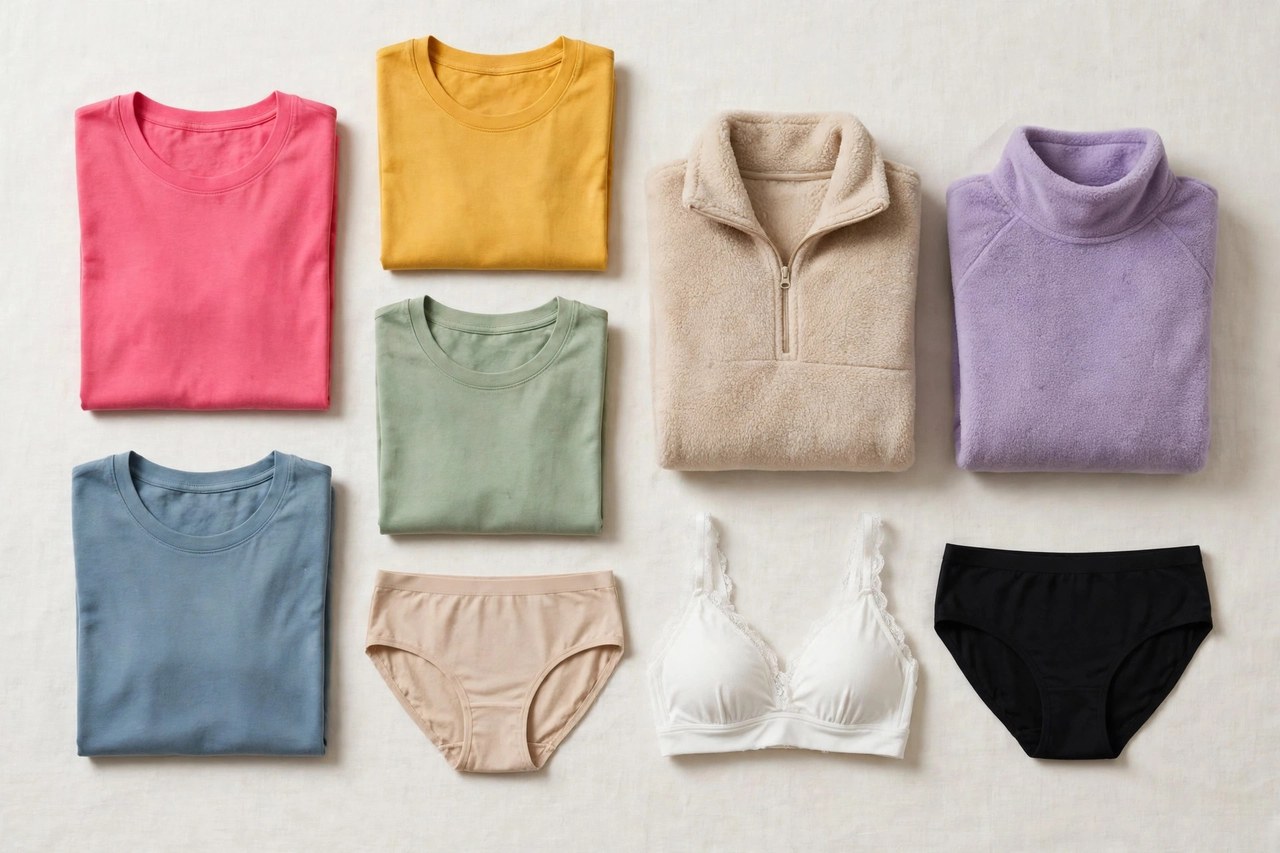
This brand's colourful T-shirts and underwear are known by consumers in all corners of the globe, and their name is synonymous with providing quality, value and style. Staying true to their roots and close to their heritage, their collections are authentic, timeless and unmistakably Fruit of the Loom. The scale behind that familiarity is stated plainly: Fruit of the Loom is one of the largest manufacturers and marketers of women's and girls' underwear, printable T-shirts and fleece for the activewear industry, casualwear, women's jeanswear and childrenswear.
This page treats those products strictly as products - fabrics, construction, sizing and care - which is how basics should be judged. Underwear, T-shirts and fleece are the foundation garments a wardrobe is built on, bought in multiples, washed constantly and replaced on condition rather than on fashion. A brand that is among the largest makers of them, with a name synonymous with quality and value, asks to be tested exactly there: on the tenth wash, not the first wearing.
An Apple Painted on a Bolt of Cloth, 1851
The Fruit of the Loom brand dates back to 1851 in Rhode Island, when Robert Knight, a textile mill owner, visited his friend Rufus Skeel. Skeel owned a small shop in Providence that sold cloth from Knight's mill. Skeel's daughter painted images of apples and applied them to the bolts of cloth - and the ones with the apple emblems proved most popular. Mr. Knight thought the labels would be the perfect symbol for his trade name, Fruit of the Loom, an expression referring to clothes. It is one of the great trademark origin stories because every element of it is practical: a label that helped a shopper identify cloth she liked, kept because it worked.
The mark itself is described with a grocer's precision: the company's familiar logo comprises a red apple, leaves, green grapes, currants, and purple grapes, forming a widely recognizable trademark. Note that the famous logo is a fruit grouping, not a lone apple - the daughter's painted apples grew into a full cornucopia on the label. For a basics shopper, a 1851 trademark kept recognisable ever since is its own quality signal: a maker whose mark is the asset cannot afford cloth that shames it.
Buying Basics: Fabric, Fit and Care
Shop foundation garments by specification. For underwear, judge fabric hand and recovery - waistbands and leg openings should stretch and return without curling - and seams that sit flat against skin, since a basic worn daily fails at its edges first. Check sizing against the maker's own chart rather than habit, and buy the cut that stays in place through a full day's movement. For printable T-shirts and fleece, judge weight and evenness of cloth, how a collar or cuff is finished, and whether the garment is cut square so it will not twist after washing.
Care is the whole lifespan of a basic: wash as labelled, sort so fleece and tees are not abraded by rougher loads, and replace pieces when elastic or fabric recovery is gone rather than when fashion changes - that replacement rule is what quality, value and style means in practice at a fair price. From a Providence shop in 1851, where a painted apple outsold plain bolts of cloth, to one of the largest manufacturers and marketers of women's underwear, T-shirts and fleece in the world: Fruit of the Loom's record is the basics business itself, done at global scale under a fruit label a mill owner's friend's daughter painted.
Common Questions
When does the Fruit of the Loom brand date back to, and how did its name arise?
To 1851 in Rhode Island, when mill owner Robert Knight saw that bolts of his cloth labelled with apples painted by Rufus Skeel's daughter proved most popular, and took Fruit of the Loom - an expression referring to clothes - as his trade name.
What does the Fruit of the Loom logo comprise?
A red apple, leaves, green grapes, currants, and purple grapes, forming a widely recognizable trademark.
What is Fruit of the Loom one of the largest makers of?
Women's and girls' underwear, printable T-shirts and fleece for the activewear industry, casualwear, women's jeanswear and childrenswear.
More in Women's Fashion Brands F
The F letter hub and related F brands:
Photos

More to Explore on Apparel Search
Looking for Women's Clothing Stores?
This profile helps you research the Fruit of the Loom women's fashion brand. To browse where to buy, visit our women's clothing store directory, where you can find retailers that carry women's clothing.