Children's Leotards Guide
A leotard is a unisex, skin-tight one-piece garment that covers the torso but leaves the legs free. It is the working uniform of dance class, gymnastics, acrobatics and skating practice, because it stays exactly where it is put while a child bends, stretches, turns and balances, with no loose fabric to catch, ride up or hide the line of the body that a teacher needs to see. Styles for adults and children are similar, but for children they obviously come in children's sizes, with softer elastic, easier necklines and fabrics chosen to survive weekly classes and weekly washing.
Shop Children's Leotards Now
Shop Children's Leotards on Amazon Shop Children's Leotards on eBayThe Amazon and eBay links on this page are affiliate links. If you make a purchase through them, Apparel Search may earn a commission.
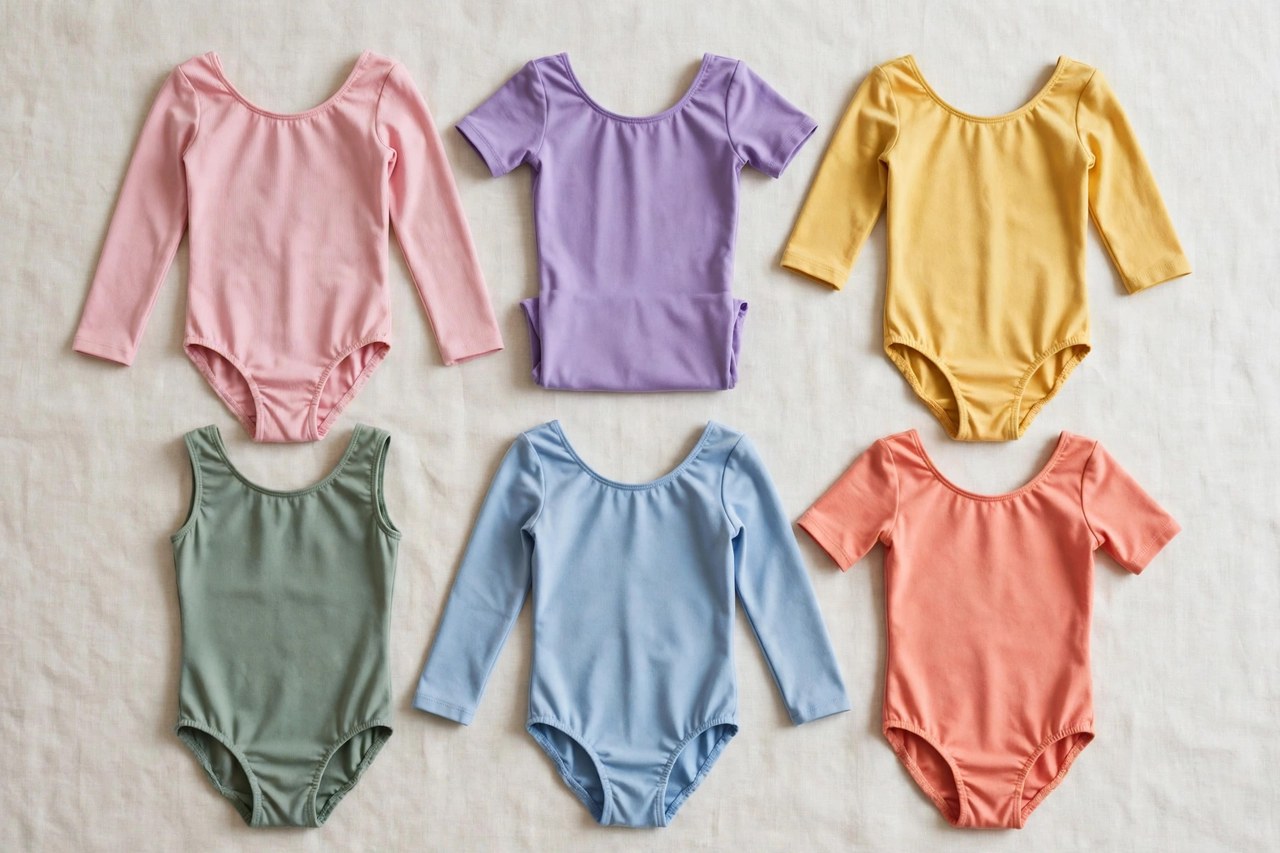
A leotard is a unisex, skin-tight one-piece garment that covers the torso but leaves the legs free. It is the working uniform of dance class, gymnastics, acrobatics and skating practice, because it stays exactly where it is put while a child bends, stretches, turns and balances, with no loose fabric to catch, ride up or hide the line of the body that a teacher needs to see. Styles for adults and children are similar, but for children they obviously come in children's sizes, with softer elastic, easier necklines and fabrics chosen to survive weekly classes and weekly washing.
The garment is named for the French acrobatic performer Jules Léotard (1838–1870), who made the close-fitting costume famous in the circus ring. That history matters for buyers because the design has barely changed since: a fitted bodice-and-brief in one piece, cut high or low on the leg, with a scoop, V or square neckline. When a class or studio sets a dress code, it is usually specifying exactly those details — colour, sleeve length and neckline — so check the code before buying multiples.
Sleeve Lengths, Necklines and the Unitard Variation
There are sleeveless, short-sleeved and long-sleeved leotards, and each has a job. Sleeveless and tank styles are the warm-studio and summer choice and give the freest shoulder movement. Short sleeves add a little coverage and warmth without heat. Long sleeves are the winter class, competition and modest-dress-code choice, and they protect arms in floor work. Necklines run from practical high scoops that stay put in inversions to lower backs chosen for older dancers and performance, where the teacher's requirements should lead.
A close variation is the unitard, which also covers the legs, making a single full-length piece. Unitards suit acrobatics, aerial work, skating practice and children who prefer full coverage, and they remove the separate tights decision entirely. The other common pairing is the leotard worn with tights, a skirt, shorts or warm-up layers over it — buy the leotard to fit the torso first, then add those layers in the studio's colours, rather than sizing the base garment to fit over clothes it was never meant to cover.
Fabrics, Fit and Sizing for Growing Dancers
Classic leotards were cotton with a little stretch; most modern children's leotards blend nylon or polyester with elastane, which holds its shape class after class, dries faster after washing and resists the sagging seat and bagging knees of older knits. Cotton blends feel softer and breathe well for short recreational classes, while full synthetic stretch fabrics suit long rehearsals and gymnastics, where the garment is worked hardest. Velvet, matte and subtly shiny finishes are surface choices only — the stretch and recovery underneath decide how long the leotard keeps fitting.
Fit is measured by girth — the loop from shoulder, down the torso and back up — more than by height alone, because two children of the same height can have very different torso lengths. A correct leotard lies smooth with no pulling at the shoulder or digging at the leg line, and the child can raise both arms, bend fully and sit cross-legged without anything shifting. Between sizes, growing children usually do better in the larger size for recreational classes, but follow a studio or team sizing chart where one is given, and try competition garments early enough to exchange them.
Care, Value and Building a Class Rotation
Stretch fabrics last longest washed cool, inside out, and dried away from direct heat, which degrades elastane; fabric softener can coat stretch fibres and reduce recovery, so many makers advise skipping it. Check leg elastic and shoulder seams termly — those fail before the body fabric does — and keep a plain, dress-code-correct spare in the class bag so a forgotten or damaged leotard never costs a child their lesson.
Value in leotards is cost per class, not the ticket price: a well-made garment worn weekly for a year is cheaper than three that twist, fade and lose stretch by half-term. Start with one dress-code leotard and one practice leotard, add colours only when the rotation is working, and pass sound outgrown leotards on — the fitted, durable design that makes them good to dance in also makes them excellent hand-me-downs when the elastic is still lively.
Common Questions
How should a children's leotard fit?
By girth more than height: smooth across the torso with no shoulder pulling or leg-line digging, staying in place when the child raises their arms, bends and sits. Between sizes, size up for recreational classes and follow studio sizing charts for team or competition wear.
What is the difference between a leotard and a unitard?
A leotard covers the torso and leaves the legs free, usually worn with tights. A unitard is the variation that also covers the legs in one full-length piece, suiting acrobatics, skating practice and children who prefer full coverage.
Which fabric is best for dance and gymnastics leotards?
Nylon or polyester blended with elastane holds its shape, dries quickly and survives weekly washing, suiting long or frequent sessions. Cotton blends feel softer for short recreational classes but can sag sooner with heavy use.
More in Children's Clothes Guide L
The L letter hub and the other L guides:
Looking for Children's Clothing Stores?
This guide helps you choose children's leotards. To browse where to buy, visit our children's clothing store directory, where you can find retailers that carry them.