Children's Long Sleeve Shirts Guide
A long sleeve shirt covers the arm to the wrist, and that single fact organises a surprising amount of children's dressing: sun and chill protection, a layer that works under jumpers and jackets without bunching at the elbow, and a smarter line than a short sleeve for occasions. The honest starting point is simple: wear short sleeves when it is hot outside and long sleeves when it is colder — then refine that simple rule with fabric, fit and the layers around the shirt.
Shop Children's Long Sleeve Shirts Now
Shop Children's Long Sleeve Shirts on Amazon Shop Children's Long Sleeve Shirts on eBayThe Amazon and eBay links on this page are affiliate links. If you make a purchase through them, Apparel Search may earn a commission.
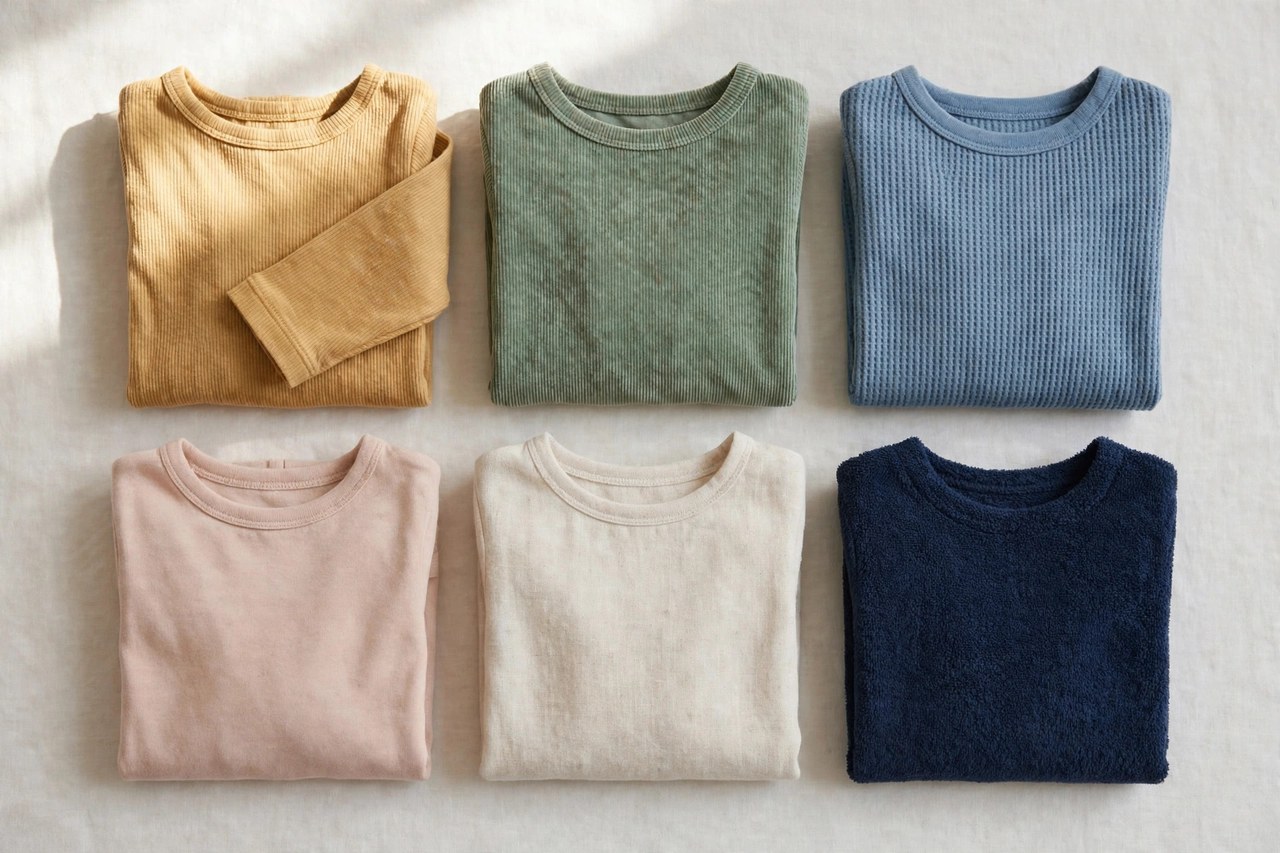
A long sleeve shirt covers the arm to the wrist, and that single fact organises a surprising amount of children's dressing: sun and chill protection, a layer that works under jumpers and jackets without bunching at the elbow, and a smarter line than a short sleeve for occasions. The honest starting point is simple: wear short sleeves when it is hot outside and long sleeves when it is colder — then refine that simple rule with fabric, fit and the layers around the shirt.
Children's long sleeve shirts span jersey tees, polo shirts, oxford and dress shirts, henleys, flannels and thermal base layers, so 'long sleeve' describes a sleeve, not a style. Choosing well means first deciding the shirt's job — everyday top, school shirt, layering piece or smart occasion shirt — and then matching fabric weight and cuff style to that job, rather than buying one shirt and hoping it does all four.
The Main Types and When Each Works
Long sleeve jersey tees are the everyday default: soft, washable, and made to be worn alone in mild weather or under dungarees, cardigans and hoodies when it turns cold. Henleys add a button placket that dresses the same jersey up a step. Long sleeve polos bridge play and smart-casual, holding a collar through a school day. Oxford and dress shirts are the formal end — smoother fabrics, structured collars and cuffs that take cufflinks on the oldest children's sizes — while flannel shirts bring brushed warmth that works as a light overshirt.
Thermal and base-layer long sleeves are a different tool again: close-fitting knits, sometimes with brushed backs or wool blends, worn under everything else for outdoor winter days. They should fit snugly without restricting arm movement, with flat seams that do not rub under straps and layers. If you are interested, you can learn more about various types of shirts in our fashion industry terms section, where the shirt family is defined style by style.
Fabrics, Fit and the Layering Test
Cotton jersey breathes and feels kind on skin but holds moisture when a child runs hot; cotton-polyester blends dry faster, keep colour and resist the neckline stretch that pure cotton suffers. For the shirt itself, check three fits: shoulders seated at the child's shoulder, sleeves ending at the wrist bone with arms down (not halfway down the thumb), and enough body length to stay tucked or to cover the waistband untucked, depending on how it will be worn. Cuffs should close snugly enough to stay at the wrist when arms are raised, without elastic so tight it marks skin.
Always run the layering test before removing tags: put the intended jumper, hoodie or jacket over the shirt and have the child raise both arms, bend the elbows fully and twist. Long sleeves that are too wide bunch painfully inside a fitted jumper; sleeves that are too short ride to mid-forearm under every layer. A shirt that passes the test disappears under layers and stands alone equally well — that versatility is exactly what a family is paying for in this category.
Care, School Rules and Building the Drawer
Most children's long sleeve shirts wash at family temperatures; the enemies are hot tumble drying, which shrinks cotton and curls collars, and hanging heavy wet knits, which stretch shoulders out of shape — fold knits, hang woven shirts. Treat cuffs and collars for the usual playground and meal marks before washing, and button dress shirts before the machine so plackets keep their line. For school, check whether long sleeves are required, permitted or seasonal under the uniform policy, and whether logos or graphics are allowed.
A working drawer needs fewer long sleeve shirts than families expect: two or three everyday jersey tops, one polo or smart shirt, and one thermal base layer cover most climates from autumn through spring, rotated with short sleeves as the weather turns. Buy the layering workhorses in colours that go under and over what the child already owns, keep one plain white or pale shirt for formal moments, and let prints and graphics live on the everyday tees, where replacement is cheapest when tastes change overnight.
Common Questions
When should children wear long sleeve rather than short sleeve shirts?
Short sleeves when it is hot, long sleeves when it is colder. Long sleeves also protect arms from sun and scratches, and layer cleanly under jumpers and jackets without bunching at the elbow.
How long should a child's long sleeve shirt sleeves be?
With arms down, sleeves should end at the wrist bone — not halfway down the thumb — and cuffs should stay at the wrist when arms are raised, without marking the skin. Test the shirt under its intended jumper or jacket before removing tags.
What long sleeve shirts does a child actually need?
Two or three everyday jersey long sleeve tees, one smarter polo or dress shirt, and one close-fitting thermal base layer for cold outdoor days cover most needs from autumn to spring, rotated with short sleeves in warm weather.
More in Children's Clothes Guide L
The L letter hub and the other L guides:
Looking for Children's Clothing Stores?
This guide helps you choose children's long sleeve shirts. To browse where to buy, visit our children's clothing store directory, where you can find retailers that carry them.