Children's Shirts Guide
Children's shirts are the whole family of tops with a defined structure — a collar or finished neckline, a front that buttons, pulls or polos on, and sleeves of some length — sitting between the t-shirt and the blouse in formality. The family is organised by its members — start with the different types of shirts and different types of t-shirts: this guide maps the shirt types, then covers fabrics, fit and care for the family as a whole. The sleeve-length member has its own page in this letter.
Shop Children's Shirts Now
Shop Children's Shirts on Amazon Shop Children's Shirts on eBayThe Amazon and eBay links on this page are affiliate links. If you make a purchase through them, Apparel Search may earn a commission.
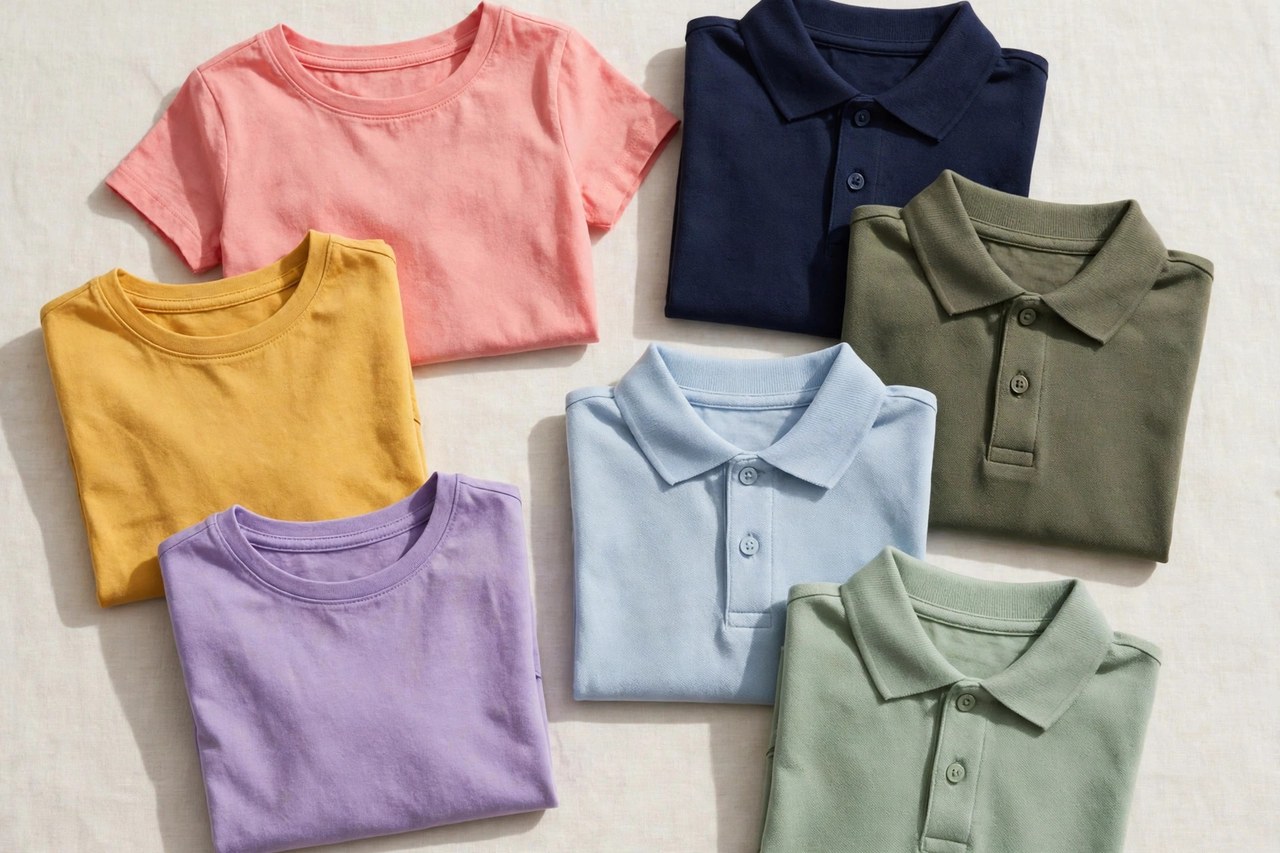
Children's shirts are the whole family of tops with a defined structure — a collar or finished neckline, a front that buttons, pulls or polos on, and sleeves of some length — sitting between the t-shirt and the blouse in formality. The family is organised by its members — start with the different types of shirts and different types of t-shirts: this guide maps the shirt types, then covers fabrics, fit and care for the family as a whole. The sleeve-length member has its own page in this letter.
Most children's wardrobes run on a small rotation of shirts: school shirts, a polo or two, one smarter button-front for occasions, and casual shirts for weekends. Whatever type of shirt your kids are wearing today is very trendy for sure — the useful work is matching each shirt type to its job so no drawer holds five of one kind and none of another.
The Shirt Family: Polo, Button-Front, Dress and Casual
Polo shirts, with their soft collar and short button placket, are the bridge garment: smart enough for many school uniforms and restaurants, comfortable as a tee, and covered in depth by the polo guide. Button-front shirts in cotton or cotton blends are the general-purpose smart shirt for photographs, family events and school concerts. Dress shirts are the formal end — finer fabric, stiffer collar, made to take a tie or sit under a blazer — and the kids' dress shirts guide in this directory covers them.
Casual shirts fill the rest of the drawer: flannel and brushed-cotton shirts for cold weekends, denim and chambray shirts that shrug off wear, printed shirts with patterns scaled for children, and camp or Hawaiian styles for holidays. The printed shirts, printed t-shirts and printed tees guides each take one pattern family in depth. Across the family, judge a shirt by the same three tests: does it fit at neck and shoulder, can the child fasten it, and does the fabric suit the washing it will actually get?
Fabrics, Collars and Fastenings Children Can Manage
Cotton and cotton-polyester blends dominate for good reason: breathable, washable, and soft enough for all-day wear. Easy-iron and non-iron finishes save real time on school shirts washed weekly; pure cotton wrinkles more and irons slower. Flannel and brushed fabrics add warmth without a second layer. Check the collar construction — a collar that curls after three washes makes a shirt look tired long before it wears out — and look for a back yoke and a little room across the shoulders for movement.
Fastenings decide independence. Buttons should be big enough for the child's fingers, sewn firmly, with a spare in the side seam; the top button of a school shirt is the one most children struggle with, and a shirt worn with it open should still sit neatly. Polos reduce the job to two or three buttons. Snaps suit younger children. Whatever the fastening, practise it at home in no hurry rather than at the school door in a rush, and choose pull-on styles without apology for children who are still learning.
Fit, Sizing and Care for a Shirt Rotation
Fit a shirt by neck, chest and shoulder together. The collar should admit two fingers when fastened; shoulders should end at the child's shoulders, not down the arm; the body should tuck in and stay tucked through a reach and a sit. Sleeves on long-sleeve shirts end at the wrist bone. Children's sizes are not standardised between makers, so measure the child and use each maker's chart, especially when changing brands for school shirts bought in multipacks.
Care follows the fabric: school whites wash hot enough to keep them bright if the label allows, colours separately at first, shirts buttoned or unbuttoned consistently to protect buttons in the drum, and hung on hangers straight from the wash to cut ironing to the collar and front. Check buttons monthly — a lost button found early is a two-minute sew; found on concert morning it is a crisis. Rotate at least three school shirts so no single shirt takes every wash, and the whole rotation lasts the school year.
Common Questions
What types of shirts should a child's wardrobe include?
A working rotation for most children: school shirts if required, one or two polo shirts as the bridge between tee and smart, one button-front or dress shirt for occasions, and casual shirts such as flannel or denim for weekends. The polo, printed and dress shirt guides cover each family member in depth.
How should a children's shirt fit at the collar?
The fastened collar should admit two fingers comfortably. Shoulders should end at the child's own shoulders, the body should stay tucked through a reach and a sit, and long sleeves should end at the wrist bone. Measure the child and use the maker's chart, since sizes are not standardised.
What fastenings can children manage alone?
Large, firmly sewn buttons are manageable for most school-age children with practice; the top button is the hardest. Polo plackets of two or three buttons are easier, snaps suit younger children, and pull-on styles are a sound choice while fastening skills are still developing.
More in Children's Clothes Guide S
The S letter hub and related S guides:
Looking for Children's Clothing Stores?
This guide helps you choose children's shirts. To browse where to buy, visit our children's clothing store directory, where you can find retailers that carry them.