Children's Polo Shirts Guide
A children's polo shirt is the collared knit shirt with a short button placket: smarter than a t-shirt, softer than a woven shirt, and the hardest-working top in many school uniforms. Start with a simple question - what are polo shirts? - and this guide answers it in buying terms: the pique knit and collar that define the style, the fabrics and fits that separate a polo that lasts the school year from one that twists and fades by half-term, and the care that keeps a collar lying flat.
Shop Children's Polo Shirts Now
Shop Children's Polo Shirts on Amazon Shop Children's Polo Shirts on eBayThe Amazon and eBay links on this page are affiliate links. If you make a purchase through them, Apparel Search may earn a commission.
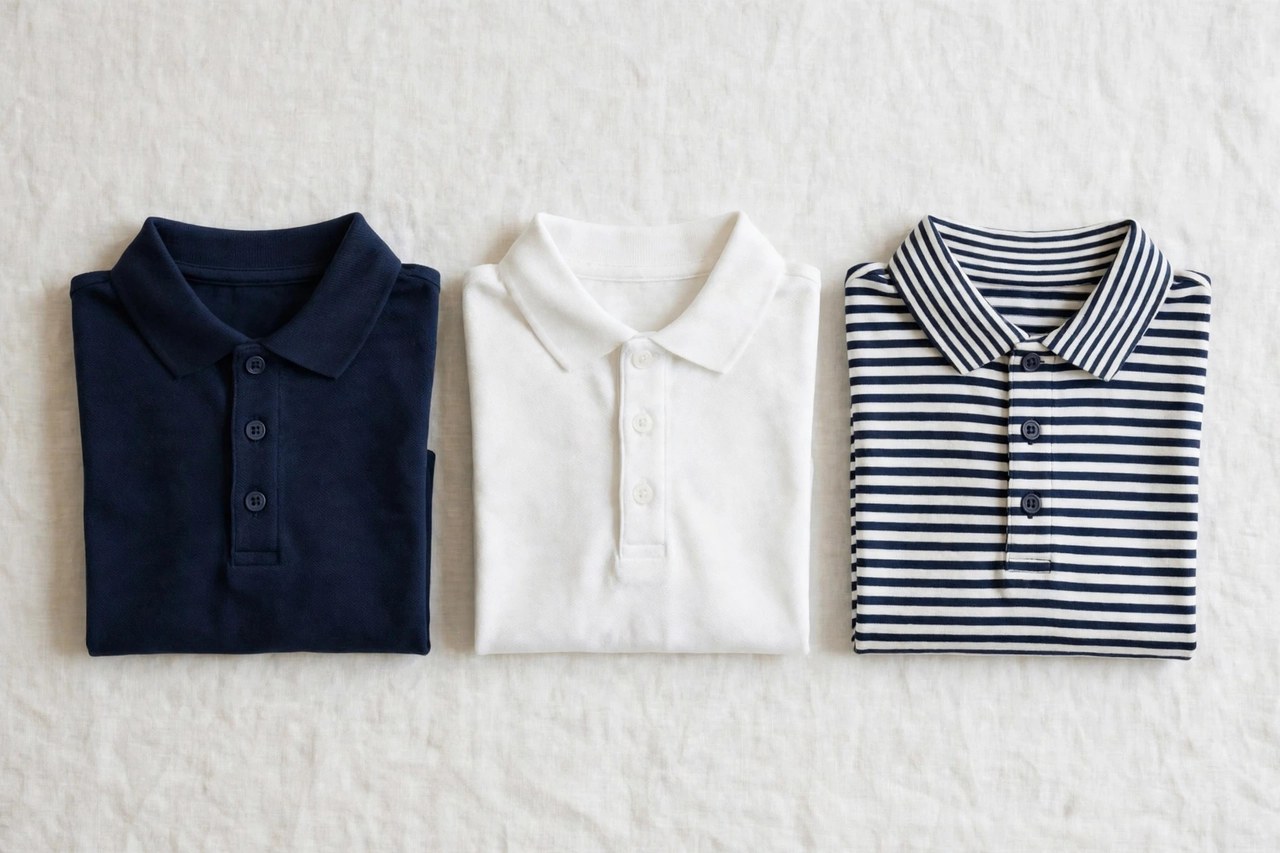
A children's polo shirt is the collared knit shirt with a short button placket: smarter than a t-shirt, softer than a woven shirt, and the hardest-working top in many school uniforms. Start with a simple question - what are polo shirts? - and this guide answers it in buying terms: the pique knit and collar that define the style, the fabrics and fits that separate a polo that lasts the school year from one that twists and fades by half-term, and the care that keeps a collar lying flat.
The polo earns its place by covering two dress codes at once. It reads tidy enough for school photos, performances and family occasions, and it is comfortable enough - a soft knit with room to move - for the playground immediately afterwards. No other children's top does both jobs in one garment, which is why uniform lists specify it and why non-uniform wardrobes keep one or two anyway.
Anatomy of a Polo: Pique Knit, Collar and Placket
The classic polo fabric is cotton pique, a textured knit whose small raised pattern hides wrinkles, breathes well and holds its structure through washing; smoother jersey polos exist and feel more like a t-shirt with a collar, trading some crispness for softness. The collar is ribbed knit, designed to lie flat and frame the neck, and the placket - usually two or three buttons - lets the shirt go over the head comfortably and vents on warm days. Side vents at the hem and a slightly longer back hem are traditional details that keep the shirt tidy tucked or untucked.
Quality shows at the joins. Collar ribbing should feel firm enough to spring back when folded, placket stitching should be straight and reinforced at its base, and buttons should be stitched tight with no loose threads. Short sleeves dominate for children; long-sleeved polos cover cooler months and smarter dress codes. Stripes, colour-block panels and small chest emblems are the common variations - for uniform wear, check the school list before buying any of them, because many specify plain colours only.
Fit, Sizing and Uniform Buying
A polo should sit at the shoulder seam, button without pulling across the chest - the top button is often left open, but the shirt must be able to close - and end around the hip so it stays put through a school day. Knit polos relax slightly with wear, so a shirt that starts strained will not improve; one that starts neat with a finger's ease at the chest is the right buy. For growing room, length gives longer than width: a slightly long polo still looks tidy, a wide one looks borrowed.
Uniform buying is a numbers game: most families find three to five polos the working rotation - enough for a full week with a wash mid-week and a spare for accidents. Buy them together in the same colour batch where possible, because whites and navies shade-shift between dye lots, and label every one: a cloakroom of identical polos is a lost-property problem waiting to happen. Size by chest and body length against the maker's chart, and keep one in the next size from mid-year, when growth spurts meet worn collars at the worst moment.
Care: Keeping Collars Flat and Colours True
Wash polos inside out, cool or warm, with similar colours, and button the placket before washing to help the collar and placket hold their shape. Reshape the collar while the shirt is damp and dry flat or on a hanger; a collar tumble-dried into a curl can be coaxed back with a cool iron, but prevention is easier. Whites stay white by being washed only with whites - the classic pink-polo accident is a dye-transfer lesson every household learns exactly once.
Retire a polo when the collar has lost its spring, the knit has thinned at the elbows and front, or fading has taken it visibly off the uniform shade - a faded polo next to new ones reads as the wrong colour. Sound outgrown polos hand down well, because the knit forgives and the style does not date. Buy the pique, check the collar, rotate three to five, and the smartest shirt in the drawer is also the easiest - which is the entire point of the polo.
Common Questions
What makes a polo shirt different from a t-shirt?
The collar and button placket. A polo is a knit shirt - classically cotton pique - with a ribbed collar designed to lie flat and a short two- or three-button opening at the neck, which makes it read smarter than a t-shirt while staying just as soft and easy to move in.
How many polo shirts does a child need for school?
Three to five is the working rotation for most families: enough for a full school week with a mid-week wash and a spare for accidents. Buy them in the same colour batch where possible, since whites and navies shade-shift between dye lots, and label every shirt.
How do I keep a polo shirt collar lying flat?
Button the placket before washing, wash inside out, then reshape the collar while the shirt is still damp and dry it flat or on a hanger. A collar dried into a curl can be pressed back with a cool iron, but reshaping while damp prevents most curling.
More in Children's Clothes Guide P
The P letter hub and related P guides:
Looking for Children's Clothing Stores?
This guide helps you choose children's polo shirts. To browse where to buy, visit our children's clothing store directory, where you can find retailers that carry them.