Children's Printed Shirts Guide
A printed shirt is any children's shirt carrying a design worked over its fabric - printed shirts can be stripes, polka dots, or any other design. This page is the umbrella guide to that whole category: woven button shirts and knit shirts alike, all-over patterns and placed designs, and the pattern questions - scale, placement, coordination - that apply whichever shirt carries the print. The two narrower pages in this letter cover the tee-shaped members of the family, and this guide points to both.
Shop Children's Printed Shirts Now
Shop Children's Printed Shirts on Amazon Shop Children's Printed Shirts on eBayThe Amazon and eBay links on this page are affiliate links. If you make a purchase through them, Apparel Search may earn a commission.
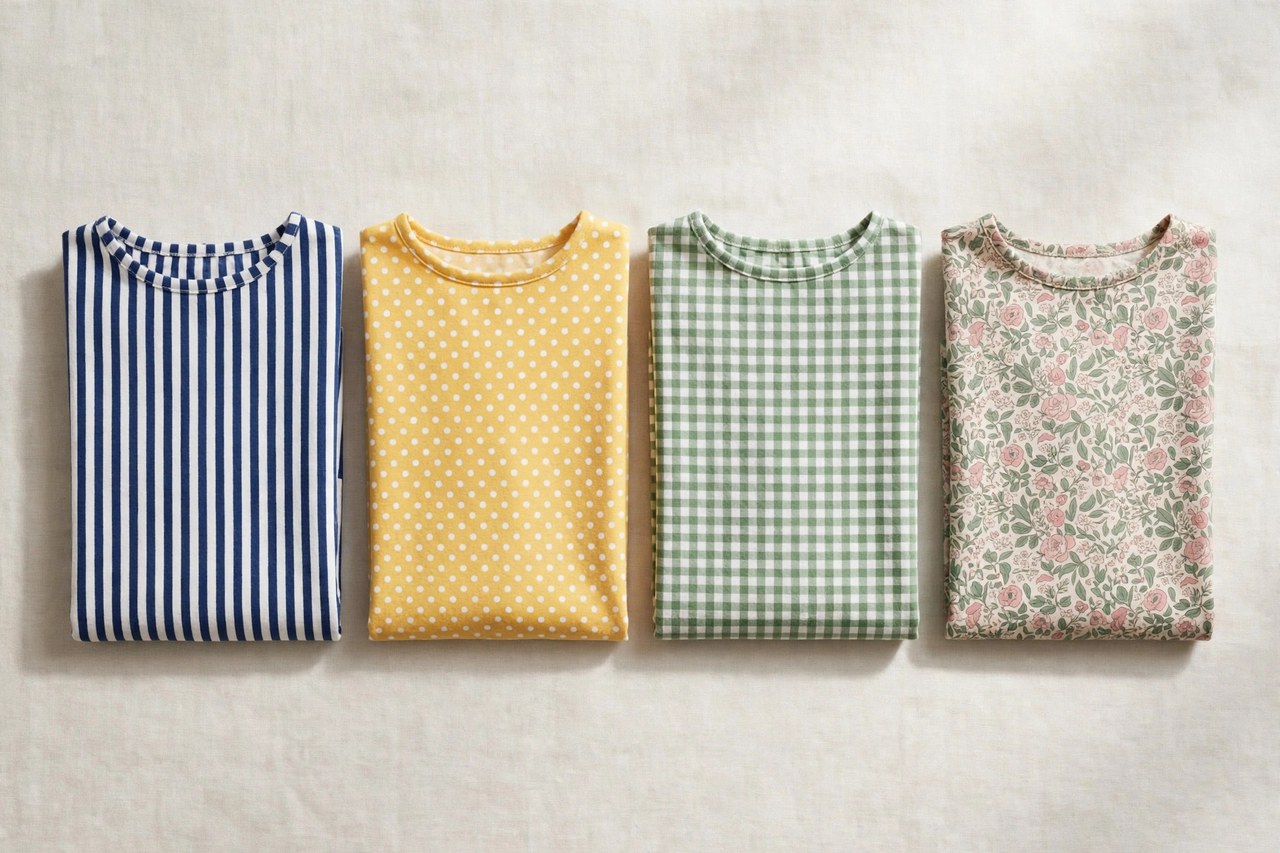
A printed shirt is any children's shirt carrying a design worked over its fabric - printed shirts can be stripes, polka dots, or any other design. This page is the umbrella guide to that whole category: woven button shirts and knit shirts alike, all-over patterns and placed designs, and the pattern questions - scale, placement, coordination - that apply whichever shirt carries the print. The two narrower pages in this letter cover the tee-shaped members of the family, and this guide points to both.
Umbrella first, because the word printed describes a surface, not a garment. A striped woven shirt for an occasion, a polka-dot blouse-style top, a checked flannel-style shirt and a floral camp-style shirt are all printed shirts, and they share buying logic: how big is the pattern, where does it sit, what does it go with, and how was it put on the fabric? Answer those four and any printed shirt on any rail can be judged in a minute.
Pattern Types and Scale: Stripes, Dots, Checks and All-Overs
The pattern families repeat across children's rails. Stripes run vertical, horizontal or diagonal and read the smartest of the prints; polka dots and spots are the playful classic, from pin dots to bold coin spots; checks and plaids bring a woven, outdoorsy feel; florals, geometrics, animals and novelty all-over repeats cover the fun end of the range. All-over prints cover the whole garment evenly, while a placed print puts one design in one position - the chest, a pocket, a hem - and leaves the rest plain.
Scale is the decision parents most often get wrong in the shop and right at home too late. Small-scale patterns - pinstripes, mini dots, ditsy florals - read almost as a texture from a distance and pair with almost anything, including other quiet patterns. Large-scale patterns are the outfit: they need plain partners and a child who enjoys being noticed in them. Hold the shirt at arm's length, then across the room - if the pattern still reads clearly at distance, it is a large print and should be bought, and worn, as the main event.
Printed On or Woven In, and How Each Wears
Some designs are printed onto finished fabric - surface prints, pigment prints and digital prints - and some patterns, like many stripes and checks, are woven or knitted into the cloth itself from coloured yarns. The difference matters for wear: a woven-in pattern cannot crack, peel or fade off the surface, because it is the fabric; a surface print can, and its life depends on print quality and washing care. Neither is automatically better - surface printing carries the photographic and novelty designs children love, and a good surface print outlasts the child's size in it - but the distinction tells you what to inspect.
Inspect like this: stretch a surface print gently - it should move with the fabric without crazing into white cracks; rub a dark print with a damp white cloth in an unobtrusive spot if you are buying in person and allowed - heavy colour transfer warns of fading ahead; and check pattern matching at seams on woven shirts, because stripes and checks that align at the front and sleeves mark the better-made garment. On any shirt, the print should be even edge to edge, with no patchy or blurred areas.
Putting Printed Shirts Into Outfits
The one-pattern rule keeps printed shirts easy: one printed piece per outfit, partnered with plains that pick up a colour from the print. A printed shirt over plain trousers, leggings or a plain skirt needs nothing else; double-print outfits work only when the two patterns differ clearly in scale - a fine stripe with a bold spot, never two similar scales competing. Wearing funny t-shirts or novelty t-shirts that are printed is common for kids - the same appetite drives novelty printed shirts, and the answer is the same: let the fun print be the outfit's one loud voice.
Keep two or three printed shirts in rotation - one quiet, small-scale shirt that dresses up, and one or two bold ones for weekends and holidays - and the category covers occasions without crowding the drawer. The sister guides in this letter cover the family members with their own rules: the classic printed t-shirt and the everyday printed tee. Read this umbrella for pattern judgment, read those for tee construction, and every printed top a child owns has been bought with its eyes open.
Common Questions
What counts as a children's printed shirt?
Any shirt with a design over its fabric: stripes, polka dots, or any other design. That includes woven button shirts and knit shirts, all-over patterns that cover the whole garment, and placed prints that put one design in one position on an otherwise plain shirt.
What is the difference between a printed pattern and a woven-in pattern?
A surface print is applied to finished fabric and can eventually crack or fade, so its life depends on print quality and washing care. Stripes and checks are often woven in from coloured yarns instead - that pattern is the fabric itself, so it cannot peel, though it carries simpler designs.
How do I choose the right pattern scale for a child?
Small-scale prints - pinstripes, mini dots, ditsy florals - read as texture and pair with almost anything. Large-scale prints are the outfit itself and need plain partners. Judge at arm's length and across the room: if the pattern reads clearly at distance, buy it as the main event.
More in Children's Clothes Guide P
The P letter hub and related P guides:
Looking for Children's Clothing Stores?
This guide helps you choose children's printed shirts. To browse where to buy, visit our children's clothing store directory, where you can find retailers that carry them.