Children's Sleep Sack Guide
Wearable blankets that stay in place all night: how TOG ratings work, how the sizes run, and the fit checks that keep a sleep sack safe and comfortable.
Shop Baby Sleep Sacks Now
Shop Baby Sleep Sacks on Amazon Shop Baby Sleep Sacks on eBayThe Amazon and eBay links on this page are affiliate links. If you make a purchase through them, Apparel Search may earn a commission.
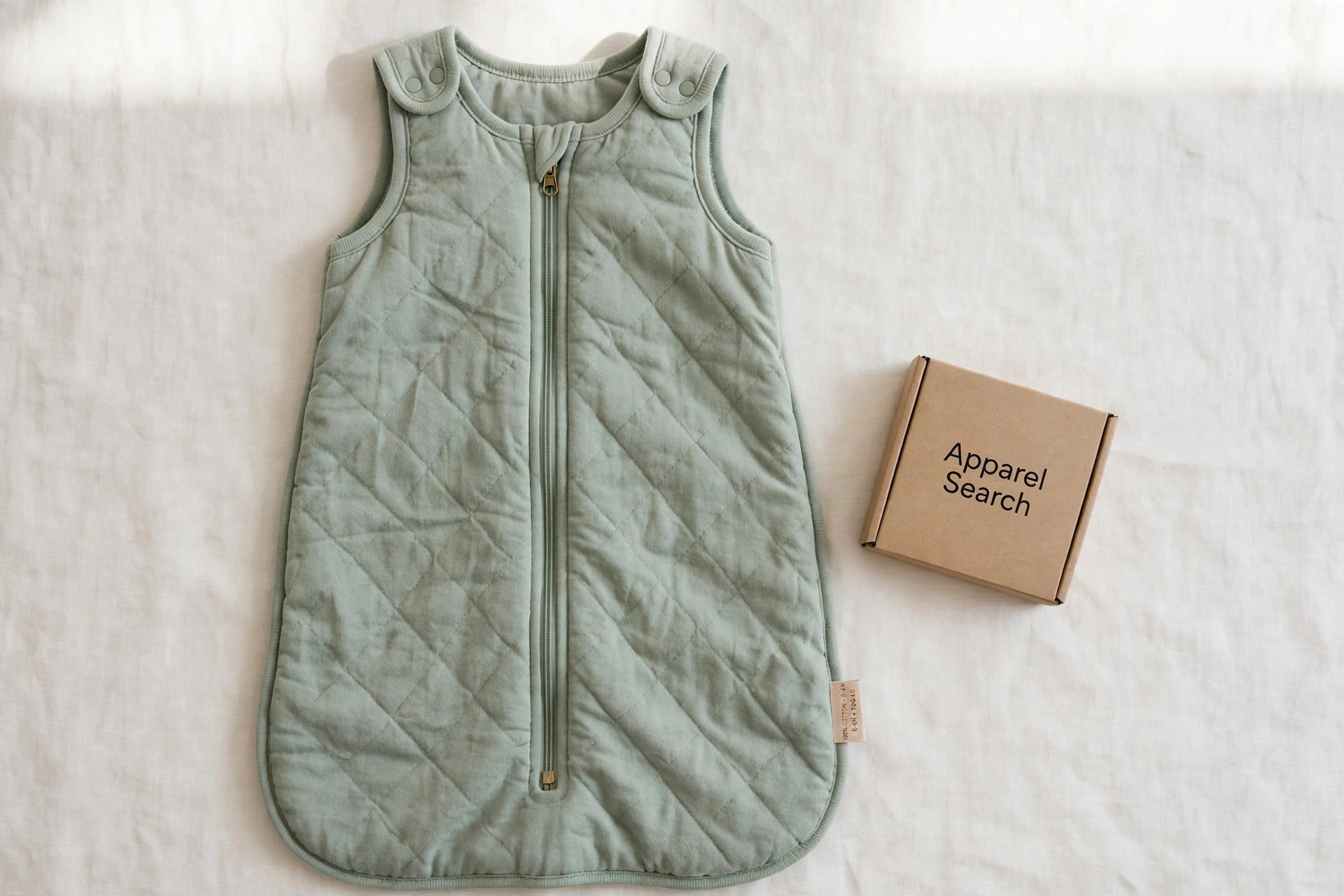
A sleep sack, also sold as a wearable blanket, is a sleeveless or long-sleeved garment shaped like a roomy pouch: fitted at the shoulders and chest, loose through the body and legs, and closed with a zipper or shoulder snaps. It replaces loose blankets in the crib, which safe-sleep guidance advises keeping out of the sleep area. The sack stays in place all night, with nothing to kick off or pull over the face.
Choosing one is mostly a matching exercise: match the TOG rating to the nursery temperature, match the size to the baby's weight and length, and check the fit at the neck and armholes. This guide explains each step, and it sits alongside our infant and toddler sleepwear guide for the wider sleepwear picture, from pajamas to footed sleepers.
TOG Ratings: Matching Warmth to Room Temperature
TOG is a measure of thermal insulation — the higher the TOG, the warmer the garment. Sleep sacks are commonly sold in three bands. A 0.5 TOG sack is a light single layer for warm rooms, roughly 75°F (24°C) and above. A 1.0 TOG sack suits mild rooms around 69–73°F (21–23°C). A 2.5 TOG sack is quilted or padded for cooler rooms around 61–68°F (16–20°C). Brands print room-temperature charts on the packaging; use those charts, together with what the baby wears underneath — usually a bodysuit or sleeper — rather than guessing from thickness alone.
The goal is a baby who is warm but not overheated. A practical check is feeling the chest or back of the neck: comfortably warm is right; hot or sweaty means one layer too many. Because a sleep sack has no loose fabric, adjusting warmth is simple — move one TOG band, or change the layer worn underneath — and a room thermometer in the nursery makes the choice repeatable night after night.
Sizing, Neck and Armhole Fit, and Closures
Sleep sack sizes are labelled by age but, as with bodysuits, weight and length are the reliable guides. Typical bands run small (about 7–12 lb), medium (about 12–18 lb) and large (about 18–24 lb and up), with length growing at each step so the legs keep room to kick. The critical safety fit is at the top: the neck opening must be small enough that the baby cannot slip down inside the sack, and the armholes should sit snugly under the arms rather than gaping at the chest. If the head could pass through the neck opening, the sack is too big, whatever the age label says.
Closures come in three common forms. Two-way front zippers open from the bottom for diaper changes without removing the sack, and a fabric zipper guard at the top keeps the pull away from the chin. Shoulder snaps make the sack easy to lay a sleeping baby into, and some designs combine snaps with a zipper. Adjustable shoulder fasteners and underarm snaps on some models let one size fit longer by closing down the armholes on a smaller baby. Whichever closure you choose, it should lie flat, sit covered, and work quietly in a dark room. For babies who are still being swaddled, our swaddle guide covers the wrap stage that usually comes before a sack.
Fabrics, When to Stop, and Care
Shell fabrics are usually cotton, cotton muslin or fleece, with the higher-TOG versions adding a polyester fill between layers. Muslin sacks breathe well in warm rooms; fleece and quilted sacks hold heat in cool ones. Look for smooth linings, bound armholes and no loose threads inside. Buy sacks sized and labelled for infants, follow the maker's weight limits, and stop using any sack whose neck or armhole fit the baby has outgrown.
Two transitions are worth planning for. Babies who begin to roll are usually moved out of swaddle wraps and into an arms-free sleep sack, and older babies who can climb are often moved to toddler sleepwear — both changes are covered in our infant and toddler sleepwear guide. Care follows the label: most cotton sacks machine wash warm, zip closed before washing, and tumble dry low; quilted sacks may need an extra rinse cycle so the fill dries fully and evenly.
Common Questions
What TOG sleep sack should I buy?
Match the TOG to the nursery temperature, using the maker's chart: about 0.5 TOG for warm rooms at 75°F (24°C) and above, 1.0 TOG for mild rooms around 69–73°F, and 2.5 TOG for cooler rooms around 61–68°F. Then adjust the layer worn underneath — a bodysuit in warm rooms, a full sleeper in cool ones.
How should a sleep sack fit at the neck?
Snugly enough that the baby cannot slip down inside the garment. The head must not be able to pass through the neck opening, and the armholes should sit close under the arms without gaping at the chest. Size by the maker's weight and length chart, not by age alone, and move up only when the length is outgrown while the neck fit stays correct.
Is a sleep sack safer than a blanket in the crib?
A wearable blanket is designed for the sleep environment that safe-sleep guidance describes: a bare crib without loose blankets. Because the sack is worn rather than loose, it cannot be kicked over the face, and it keeps the baby covered all night. Use a correctly sized sack, follow the maker's weight limits, and keep other loose bedding out of the crib.
More Children's Baby & Infant Basics Guides
The other guides in this cluster — bodysuits, sleep sacks, swaddles, the layette checklist, and first walker shoes:
More to Explore on Apparel Search
Before the sleep sack comes the wrap: continue to the swaddle guide for blanket fabrics, wrap styles and sizes.
Next: Children's Swaddle Guide: Blankets, Wraps, Fabrics & Sizes »Looking for Children's Clothing Stores?
This guide helps you choose the right sleep sack TOG, size and closure for the nursery temperature. To browse where to buy, visit our childrens clothing store directory, where you can find retailers that carry them.