Children's Infant & Toddler Sleepwear Guide
Sleepwear is the whole night wardrobe - sleepers, pajamas, sleep sacks, nightgowns and robes at the edges - and it is the most regulated clothing category in this guide, because it is worn unsupervised, for the longest continuous hours, by the youngest children. The pajamas page in this folder covers the two-piece garment family; this page covers the category and its safety system, which every parent of an infant or toddler should understand before buying anything with a sleeve for the night.
Shop Children's Infant & Toddler Sleepwear Now
Shop Children's Infant & Toddler Sleepwear on Amazon Shop Children's Infant & Toddler Sleepwear on eBayThe Amazon and eBay links on this page are affiliate links. If you make a purchase through them, Apparel Search may earn a commission.
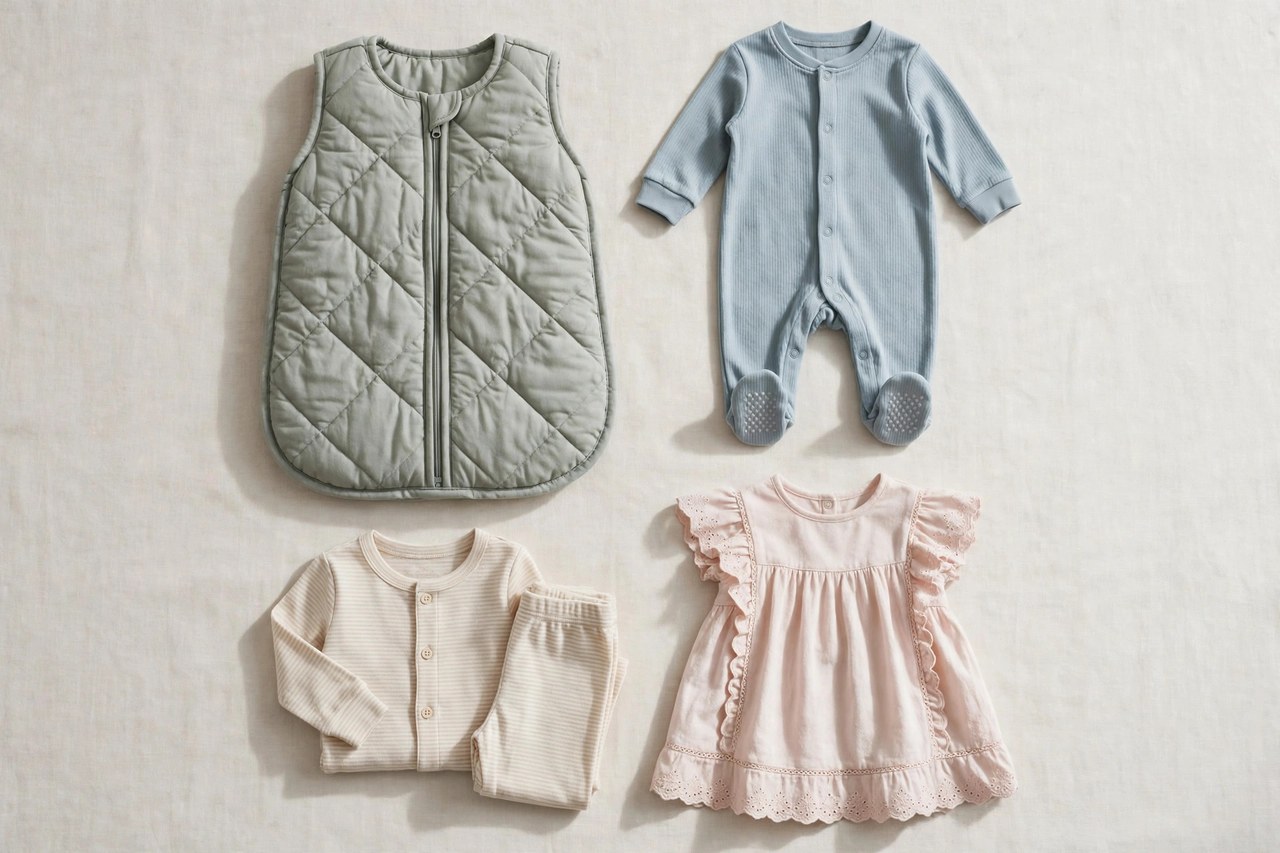
Sleepwear is the whole night wardrobe - sleepers, pajamas, sleep sacks, nightgowns and robes at the edges - and it is the most regulated clothing category in this guide, because it is worn unsupervised, for the longest continuous hours, by the youngest children. The pajamas page in this folder covers the two-piece garment family; this page covers the category and its safety system, which every parent of an infant or toddler should understand before buying anything with a sleeve for the night.
The system has two pillars. First, flammability: children's sleepwear must be snug-fitting or flame-resistant by law, which is why cotton sleepwear fits close and carries its yellow tag. Second, the sleep environment: for infants, official safe-sleep guidance pairs a bare sleep space with a wearable blanket - the sleep sack - instead of loose covers, and sleepwear choices are made inside that guidance, not beside it.
The Garments of the Night Wardrobe
The footed sleeper is the infant standard: a one-piece with a two-way zip or snap line, worn alone in warm rooms and under a sleep sack in cool ones. The sleep sack itself is a zippered wearable blanket, sized by weight and length, in weights (TOG ratings) matched to room temperature - the parent's nightly calculation is room temperature first, garment weight second, and the baby's chest (warm, not sweaty) as the check.
Toddlers graduate to two-piece pajamas, footless bottoms with grip socks, and - for some girls - nightgowns, which must meet the same snug or flame-resistant standard and are safest in their modern, closer fits. Robes are a waking layer, never a sleep garment. Each transition is driven by the child's mobility in bed, which increases monthly and redesigns the wardrobe as it goes.
Temperature, TOG and the Overheating Rule
Overheating is the night risk parents control least intuitively, because the instinct is to add. The working rules: dress the baby for the room, not the season; one layer more than an adult's comfort is the ceiling, not the floor; hands and feet run cool and prove nothing, while a hot, sweaty chest or neck proves too much. Sleep sacks publish TOG tables against room temperatures - use the maker's table for the sack you own rather than a general chart.
Footed versus footless, sleeve versus sleeveless, all resolve into that one calculation. In practice most households settle on two sacks - a light and a warm - and two or three sleeper weights, and the nightly wardrobe assembles itself from the thermometer. Consistency is the safety feature: a system the most tired caregiver can reproduce without invention.
Care and the Retirement Rules
Sleepwear washes hot and often, and its retirements are non-negotiable: a sleep sack with a failing zip, a sleeper whose snaps gap, any garment whose fabric has thinned to transparency at the knees and elbows. Grip dots on feet wear smooth and are checked monthly - a toddler's 2 a.m. corridor walk is not the moment to discover the hallway has become a rink.
Never add fabric softener to flame-resistant sleepwear, whose finish it strips, and treat snug-fit cotton's slight first-wash shrink as the arrival of its intended fit. Bought by the chart, washed plainly, and retired on inspection rather than on sentiment, sleepwear does the quietest and most important job in the wardrobe - which is exactly why this category, alone in the folder, begins with rules instead of styles.
Common Questions
What is a sleep sack and why use one?
A zippered wearable blanket that keeps a baby warm without loose covers in the sleep space, in line with safe-sleep guidance. Choose its weight (TOG) by room temperature using the maker's table.
Why is children's sleepwear snug-fitting?
By flammability law it must be snug-fitting or flame-resistant. A close fit contacts flame less readily and burns less easily - buy the current size rather than sizing up.
How can you tell if a baby is too hot at night?
Feel the chest or back of the neck: warm is right, hot and sweaty is too much. Hands and feet normally run cool and are not a reliable guide.
More in Children's Clothes Guide I
The I letter hub and the guides closest to this one:
Looking for Children's Clothing Stores?
This guide helps you choose children's infant & toddler sleepwear. To browse where to buy, visit our children's clothing store directory, where you can find retailers that carry them.