Children's Infant & Toddler Pajamas Guide
Pajamas are the two-piece branch of children's sleepwear, Start with the definition: pajamas - also spelled pyjamas, and often shortened to PJs, jimmies, jimjams or jammies - are loose-fitting two-piece garments for women, men and children, made from cotton, silk, satin or synthetic materials or blended fibres, derived from the original traditional garment and worn chiefly for sleeping, but sometimes also for lounging. More generally, the word covers several garments, for both daywear and nightwear, derived from traditional pajamas with variations of style and material.
Shop Children's Infant & Toddler Pajamas Now
Shop Children's Infant & Toddler Pajamas on Amazon Shop Children's Infant & Toddler Pajamas on eBayThe Amazon and eBay links on this page are affiliate links. If you make a purchase through them, Apparel Search may earn a commission.
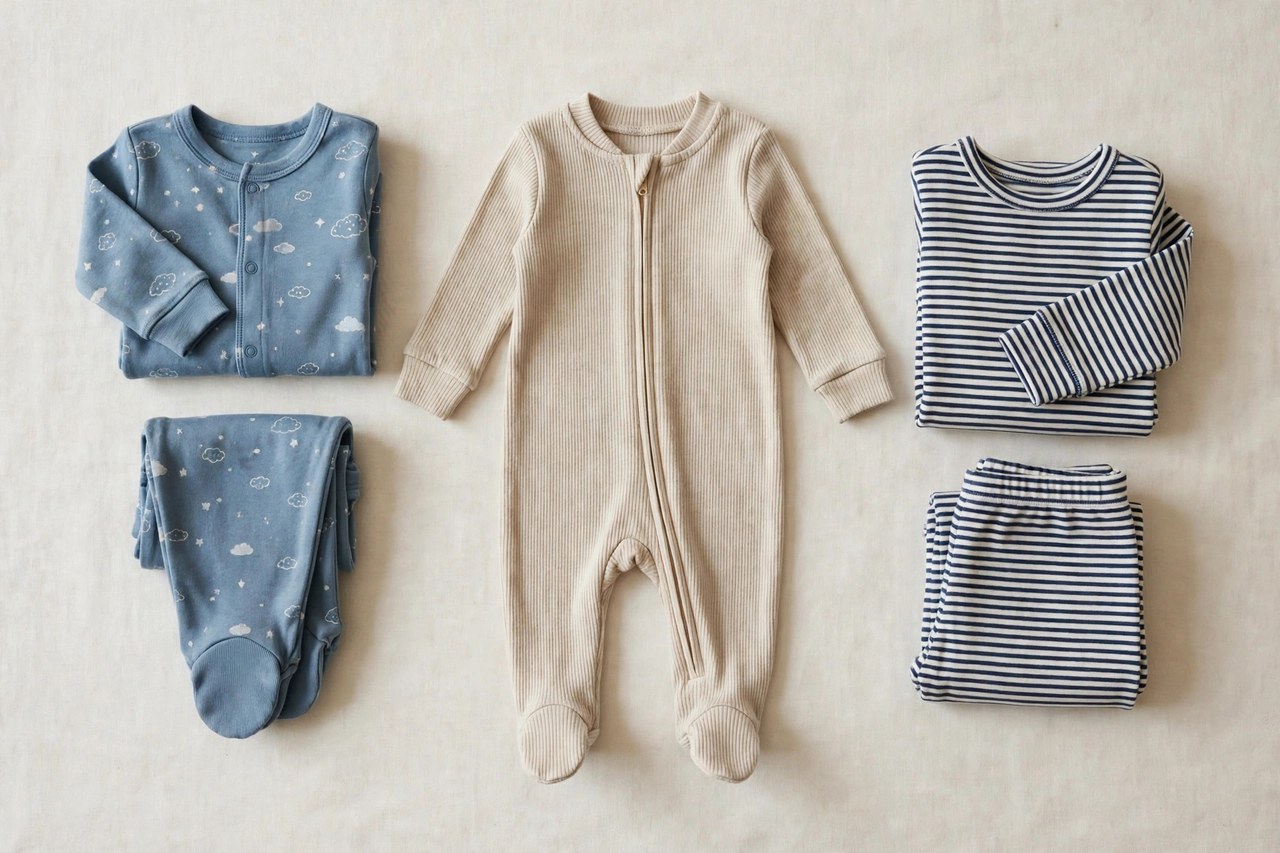
Pajamas are the two-piece branch of children's sleepwear, Start with the definition: pajamas - also spelled pyjamas, and often shortened to PJs, jimmies, jimjams or jammies - are loose-fitting two-piece garments for women, men and children, made from cotton, silk, satin or synthetic materials or blended fibres, derived from the original traditional garment and worn chiefly for sleeping, but sometimes also for lounging. More generally, the word covers several garments, for both daywear and nightwear, derived from traditional pajamas with variations of style and material.
In baby sizes, pajamas proper - the separate top and bottom - take over from the one-piece sleeper as the child grows, usually across the second year, though footed two-piece sets blur the border. The pajama page and the sleepwear page in this folder divide the night wardrobe between them: pajamas here as a garment family, sleepwear there as the whole category including gowns, sacks and the safety rules.
Pajama Styles for the Youngest Sleepers
Infant pajama sets pair a long or short-sleeved top with footed or plain bottoms in cotton interlock or jersey; the footed bottom is the transitional form, keeping the sleeper's covered feet while adding the two-piece convenience that makes a midnight change a bottom-half-only operation. Toddler pajamas add the design element children choose by: prints, characters and glow details, in snug fits that dominate modern ranges for reasons the next section explains.
Federal flammability rules shape the whole category: children's sleepwear must either be snug-fitting - close to the body, so it is less likely to contact a flame and burns less readily - or made of flame-resistant fabric. The loose, flowing pajama of the dictionary definition survives in baby sizes mainly in flame-resistant polyester. The yellow snug-fit tag on cotton pajamas is not a sizing warning; it is the safety standard telling you the garment is meant to fit close.
Fit: Snug Is the Specification
Parents instinctively size pajamas up for growing room, and with snug-fit cotton pajamas that instinct defeats the design. Buy the current band, expect a close fit, and let the stretch of the knit provide the comfort. Bottoms should stay up by their waistband through a night of rotation - a toddler sleeps in every position a bed allows, and pajamas are tested in all of them.
For infants in two-piece sets, the top must be long enough to overlap the bottom's waistband when the baby is lifted, so no cold gap opens at the back. Footed bottoms need the same toe room as a sleeper; when feet cramp, the whole set retires, which is why many families move to footless bottoms with socks or grip slippers for the walking toddler.
Care and the Night Rotation
Pajamas wash after every wear or two and live at the hot end of the baby laundry with the bodysuits. Cotton snug-fit sets shrink slightly at the first wash - buy them feeling a touch generous in the shop, and they will arrive at their true, intended fit. Avoid fabric softener on flame-resistant polyester sets, whose finish it degrades, and check grip dots on footed bottoms, which wear smooth and turn a hallway into a rink.
Quantities follow the night math: three to four sets cover a wash cycle with a spare for the inevitable 2 a.m. full change. Pajamas are also the safest gift in the folder - sized by the chart, useful in any household, and the one garment where a size ahead is genuinely welcome, since next winter's pajamas are a certainty every parent appreciates receiving early.
Common Questions
What does PJ stand for, and what are pajamas?
PJs - also jimmies, jimjams or jammies - is short for pajamas (pyjamas): loose-fitting two-piece garments for sleeping or lounging, in cotton, silk, satin or synthetics, derived from a traditional garment.
Why are children's cotton pajamas sold snug-fitting?
Flammability safety. Children's sleepwear must be either snug-fitting or flame-resistant; a close fit is less likely to contact flame and burns less readily. Buy the current size - sizing up defeats the design.
How many pajama sets does a toddler need?
Three to four sets cover a laundry cycle plus a spare for a middle-of-the-night full change.
More in Children's Clothes Guide I
The I letter hub and the guides closest to this one:
Looking for Children's Clothing Stores?
This guide helps you choose children's infant & toddler pajamas. To browse where to buy, visit our children's clothing store directory, where you can find retailers that carry them.