Children's Swaddle Guide
Swaddle blankets and ready-made wraps compared: muslin, cotton and jersey fabrics, the sizes that actually fold well, and when babies move on to sleep sacks.
Shop Swaddle Blankets & Wraps Now
Shop Swaddle Blankets & Wraps on Amazon Shop Swaddle Blankets & Wraps on eBayThe Amazon and eBay links on this page are affiliate links. If you make a purchase through them, Apparel Search may earn a commission.
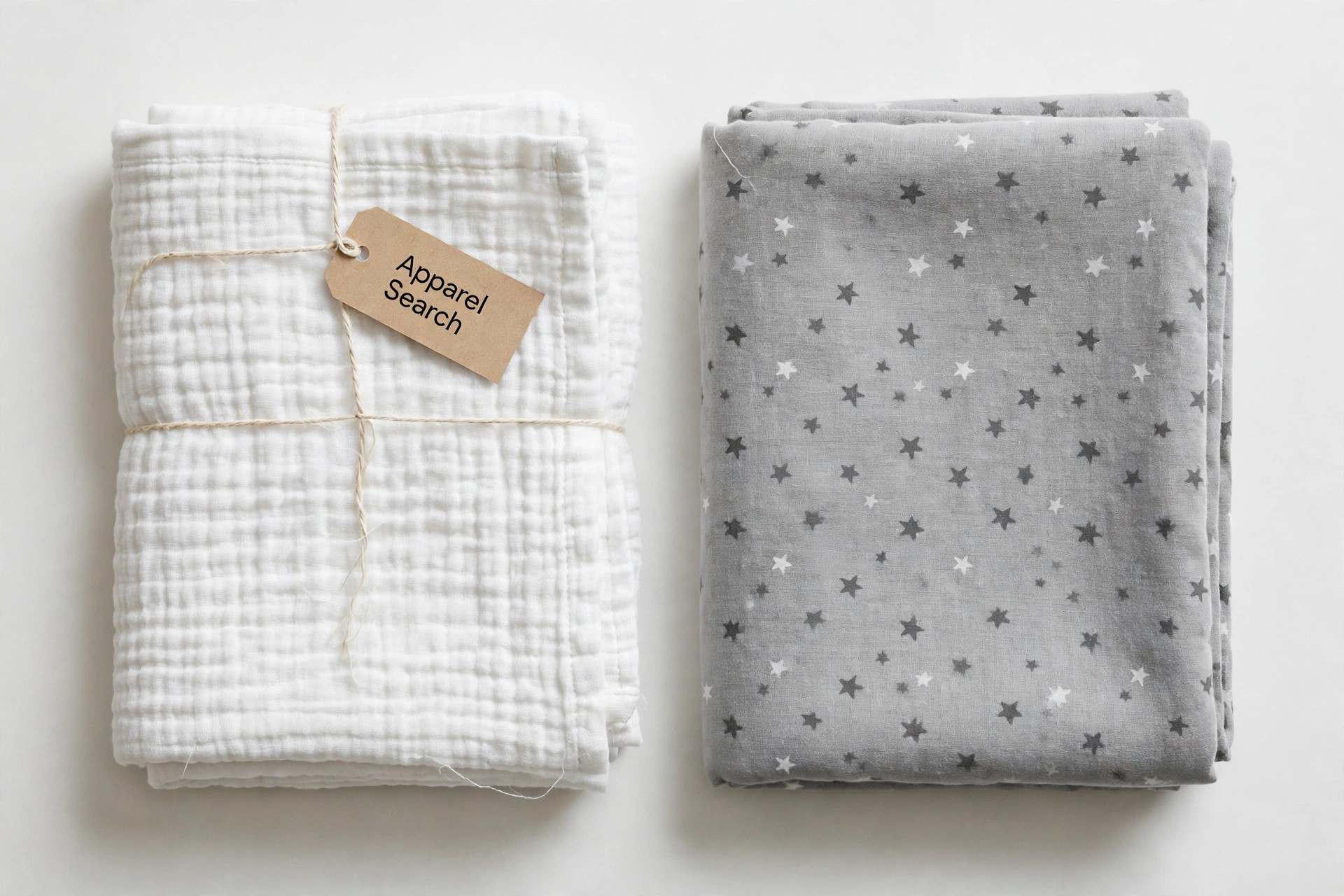
Swaddling wraps a baby snugly in a thin blanket or a purpose-made wrap, giving the contained, secure feeling many newborns settle with. The products divide into two families: the traditional swaddle blanket, a large square of light fabric that the caregiver folds and tucks, and the ready-made swaddle wrap, a shaped pouch with hook-and-loop wings or a zipper that fastens without folding skill. This guide compares fabrics, sizes and closure styles so the choice is a product decision, not guesswork.
Swaddling is a first-months stage: current safe-sleep guidance is to stop swaddling once a baby shows signs of rolling, and to keep any wrap snug at the top with room at the hips and legs. After that stage, most babies move to an arms-free sleep sack. A large swaddle blanket also earns its keep afterwards as a stroller shade, tummy-time mat and light summer blanket.
Blankets vs Ready-Made Wraps: Folds, Wings and Zips
A swaddle blanket is the versatile original: one square of fabric, folded into a wrap, with the snugness set entirely by the caregiver. It takes a little practice, works at any size the blanket allows, and has no fasteners to outgrow or to make noise at 3 a.m. A hook-and-loop wrap shapes the swaddle in advance — the baby lies in a pouch and two wings fold across and fasten — so the wrap is repeatable between caregivers and stays put on a strong kicker; check that the fasteners land on their matching panels and sit covered, away from the chin. A zip-up swaddle pod is a stretchy pouch with a two-way zipper — the fastest to use, with a bottom zip that allows changes without unwrapping.
Sizing differs by family. Blankets are sized by dimension (covered below), while wraps are sized like garments, by weight — commonly small/medium for roughly 7–14 lb and large for roughly 14–18 lb, with the maker's chart governing. A wrap that is too large cannot hold a snug chest fit; one that is too small rides down or strains its fasteners. Either way, the answer is the next size, not a tighter fold.
Fabrics and Blanket Sizes That Fold Well
Cotton muslin is the best-known swaddle fabric: an open, breathable weave that softens with every wash, grips itself lightly so folds hold, and works in every season as a single layer. Cotton jersey and interlock add stretch, forgiving in a fold and useful for zip pods. Bamboo-derived viscose blends feel silky and drape closely, often blended with a little elastane in wraps. Flannel receiving blankets are warmer and thinner in dimension — better as a light cover than as a full swaddle for a growing baby. Whichever fabric you choose, it should be thin and breathable rather than padded: warmth is managed with room temperature and the layer underneath, such as a bodysuit, not a heavy wrap.
For a blanket to swaddle well it must be large and square. The sizes that fold generously are about 44 × 44 inches to 47 × 47 inches (roughly 112–120 cm): enough fabric to tuck securely around a newborn and still work at two or three months. Receiving blankets around 30 × 30 inches swaddle only the smallest newborns, though they remain useful as burp cloths and covers. A thin blanket in the larger size is the single most versatile purchase in this category — it is also a staple line on the newborn layette checklist.
Safe-Use Basics, Washing and Moving On
Product-level safe use is consistent across makers: lay the baby on the back for sleep, keep the wrap snug across the chest with the arms secured, and loose at the hips and legs so the legs can bend and move; keep fabric away from the face, and stop swaddling at the first signs of rolling attempts. Use the size the weight chart specifies, retire wraps with worn fasteners, and never add loose blankets over a swaddled baby — warmth layers belong underneath the wrap.
Care is simple: muslin and cotton blankets machine wash warm and tumble dry, growing softer each cycle; close hook-and-loop wings before washing so they do not grip other garments, and wash zip wraps zipped. Keep three to four swaddle blankets or two wraps in rotation, with a spare for the diaper bag. When rolling begins, transition wraps with removable arm wings smooth the change to an arms-out sleep sack.
Common Questions
What size swaddle blanket is best?
A large square, about 44 × 44 inches to 47 × 47 inches, folds and tucks most securely and keeps working as the baby grows through the swaddling months. Smaller receiving blankets around 30 inches square outgrow wrapping quickly, though they stay useful as burp cloths, covers and light layers.
Which is better, a swaddle blanket or a velcro wrap?
They solve different problems. A blanket is versatile, silent, sized generously and doubles as a cover or mat afterwards, but its snugness depends on the caregiver's fold. A hook-and-loop or zip wrap gives the same fast, repeatable fit for every caregiver and resists kicking loose, but it is weight-sized and outgrown sooner. Many households own one of each.
When should babies stop being swaddled?
Stop swaddling when the baby shows signs of attempting to roll, which is the point current safe-sleep guidance gives for ending swaddle use. The usual next step is an arms-free wearable blanket: see our sleep sack guide for TOG ratings and the neck-fit checks for that stage.
More Children's Baby & Infant Basics Guides
The other guides in this cluster — bodysuits, sleep sacks, swaddles, the layette checklist, and first walker shoes:
More to Explore on Apparel Search
See where swaddles sit in the whole first wardrobe: continue to the layette guide and its complete newborn checklist.
Next: Children's Layette Guide: The Complete Newborn Clothing Checklist »Looking for Children's Clothing Stores?
This guide helps you choose the right swaddle fabric, blanket size and wrap style for the first months. To browse where to buy, visit our childrens clothing store directory, where you can find retailers that carry them.