Children's White T-shirts Guide
The children's white t-shirt is the simplest garment in the wardrobe and the one that gets bought most often - in multipacks, at the last minute, for school, sport, art class and under everything. The colour itself: white is the lightest color and is achromatic, having no hue; it is the color of fresh snow and milk; and white objects fully reflect and scatter all the visible wavelengths of light. That physics is the shirt's whole personality - a white tee reflects light, looks clean and bright, goes with everything, and shows every mark life leaves on it.
Shop Children's White T-shirts Now
Shop Children's White T-shirts on Amazon Shop Children's White T-shirts on eBayThe Amazon and eBay links on this page are affiliate links. If you make a purchase through them, Apparel Search may earn a commission.
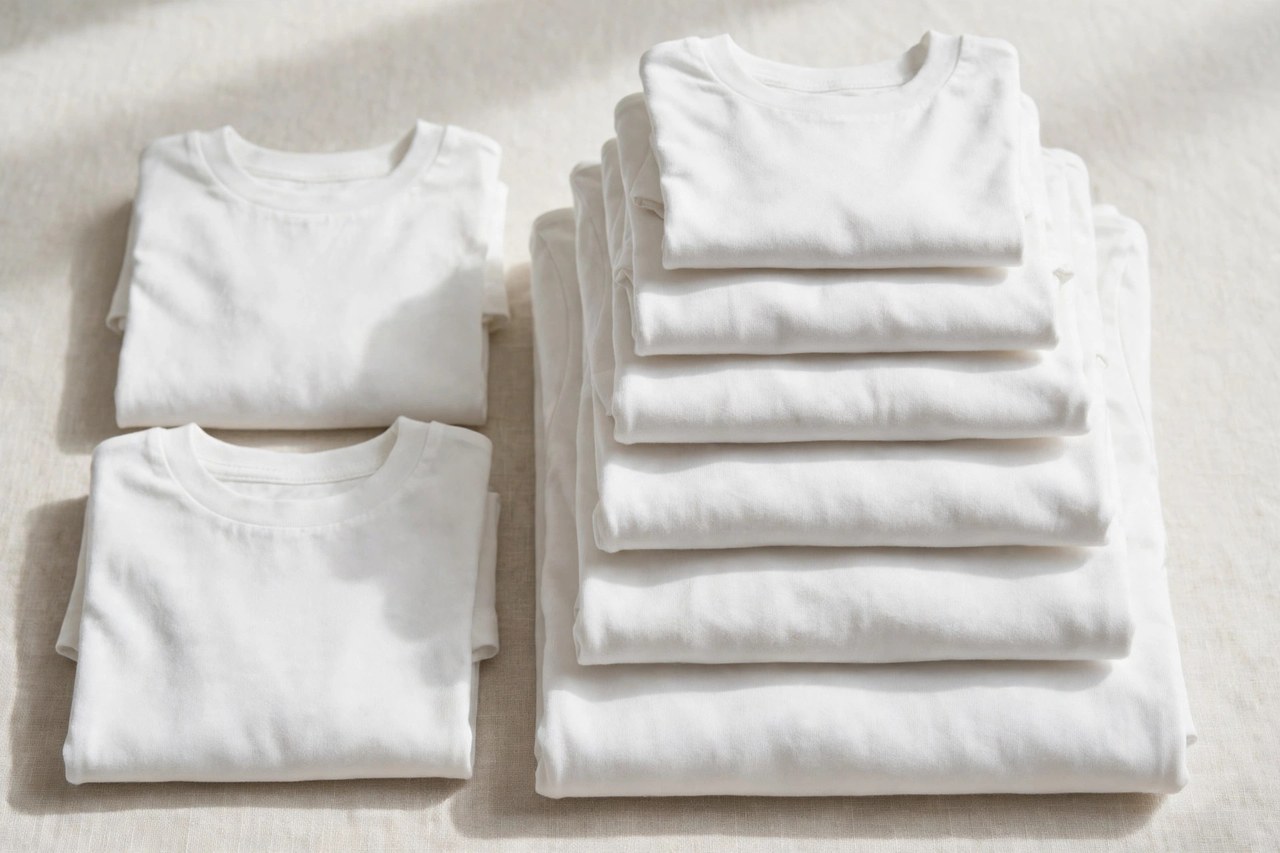
The children's white t-shirt is the simplest garment in the wardrobe and the one that gets bought most often - in multipacks, at the last minute, for school, sport, art class and under everything. The colour itself: white is the lightest color and is achromatic, having no hue; it is the color of fresh snow and milk; and white objects fully reflect and scatter all the visible wavelengths of light. That physics is the shirt's whole personality - a white tee reflects light, looks clean and bright, goes with everything, and shows every mark life leaves on it.
The color white is often used for undershirts, and that double life is how a children's white tee should be bought: some are undershirts, thin and close-fitting, and some are outer tees, substantial enough to wear alone. This guide separates the two, covers fabrics and fit, explains why the plain white tee is the standard printing and craft canvas, and gives the stain and washing routine that keeps a white shirt white for more than a week.
Undershirt or Outer Tee: Buy the Right Weight
An undershirt-weight white tee is cut close, made of fine ribbed or smooth lightweight cotton, and designed to disappear under a shirt, uniform or sweater - adding a soft, absorbent layer against the skin, catching perspiration before it reaches the outer garment, and smoothing the look of anything thin worn over it. Bought for that job, it should fit snugly without binding, sit flat at the neck so it does not show unless it is meant to, and come in the multipacks its price and washing frequency demand. Undershirt and t-shirt guides are linked below for exactly this distinction.
An outer white tee is a different garment: a mid-weight jersey with enough body that it is not see-through, a ribbed crew neck that holds its shape, and a cut that looks finished with shorts, jeans or a skirt. Test the weight by holding the shirt up to the light - if a hand shows clearly through a single layer, the shirt will wear like an undershirt however it is labelled. Check the neck ribbing first when judging quality, because a white tee's life usually ends not with a hole but with a stretched, wavy collar that makes the whole shirt look tired.
Why White Is the Canvas
Because white reflects and scatters all the visible wavelengths of light, it is the neutral ground on which every colour prints at full strength - which is why school shirts for decorating, camp and club tees, tie-dye projects and printed class shirts almost always start as plain white tees. Learn what kind of t-shirt varieties exist, and for a printing project the practical choice is a smooth, mid-weight 100 percent cotton tee: cotton takes fabric paint, screen print and dye evenly, and a smooth jersey gives a sharper print than a slubbed or textured one. Buy one spare shirt per project - the spare absorbs the mistakes and the growth surprises.
As everyday dress, the white tee's neutrality is its styling system. It is the layer under dungarees, pinafores, western shirts and cardigans, the top half of the cleanest school and photograph outfits, and the shirt that never clashes with the loudest shorts a child owns. That versatility is why white tees are sold in multipacks and why parents standardise on a brand and size once they find one that fits: the buying decision is made once and repeated, and the wardrobe always has a clean base layer ready.
Stains, Washing and When to Replace
A white tee on a child meets grass, tomato sauce, art paint, mud and ice lollies, and it meets them visibly - that is the honest price of the colour of fresh snow and milk. The routine that keeps white tees in service is prompt and simple: rinse or treat stains before they dry, wash whites together and separately from colours in warm water (hot water sets some stains and ages elastic and prints), use an oxygen-based stain remover for the stubborn marks, and never put a still-stained shirt in a hot dryer, because the heat bakes the stain in permanently. Line drying in sunlight is the traditional white-keeper - sun is a mild natural brightener - but dry printed white tees inside out so the print does not fade.
Replace a white tee when the collar waves, when the underarm or body has greyed past rescue, or when the fit turns it into a crop top - and demote rather than discard where you can: a clean but tired white tee becomes an art smock shirt, a pyjama top or a painting-day spare. Sizing follows the usual tee rules: buy the child's current size for outer tees that should look neat now, and undershirts close-fitting in the size that sits flat. Kept in rotation - three or more in the drawer - a set of white tees is the hardest-working purchase in a child's wardrobe, and the easiest to replace when the rotation wears out.
Common Questions
What is the colour white?
White is the lightest color and is achromatic - having no hue. It is the color of fresh snow and milk, and white objects fully reflect and scatter all the visible wavelengths of light. The color white is often used for undershirts.
What is the difference between a white undershirt and a white outer tee?
An undershirt is fine, close-fitting and made to disappear as a soft layer under other clothes. An outer tee is a mid-weight jersey with enough body not to be see-through and a ribbed neck that holds its shape - hold a shirt to the light: if a hand shows clearly through one layer, it will wear like an undershirt.
How do you keep children's white t-shirts white?
Treat stains before they dry, wash whites separately in warm water with an oxygen-based stain remover for stubborn marks, never tumble-dry a shirt while a stain remains because heat sets it, and line-dry in sunlight where possible - sun is a mild natural brightener.
More in Children's Clothes Guide W
The W letter hub and the other W guide:
Looking for Children's Clothing Stores?
This guide helps you choose children's white t-shirts. To browse where to buy, visit our children's clothing store directory, where you can find retailers that carry them.