Men's Double Breasted Suits Guide
A men's double-breasted suit is a suit whose jacket closes with two overlapping columns of buttons, the front panels crossing deep over the chest. It is tailoring's boldest standard pattern: broader in presence than the single-breasted default, formal by history, and governed by pleasingly precise rules - which buttons fasten, how the lapels roll, where the button stance sits. This page treats the cut itself; its sibling page in this letter, designer suits, treats what a house label adds to tailoring of any cut.
Shop Men's Double Breasted Suits Now
Shop Men's Double Breasted Suits on Amazon Shop Men's Double Breasted Suits on eBayThe Amazon and eBay links on this page are affiliate links. If you make a purchase through them, Apparel Search may earn a commission.
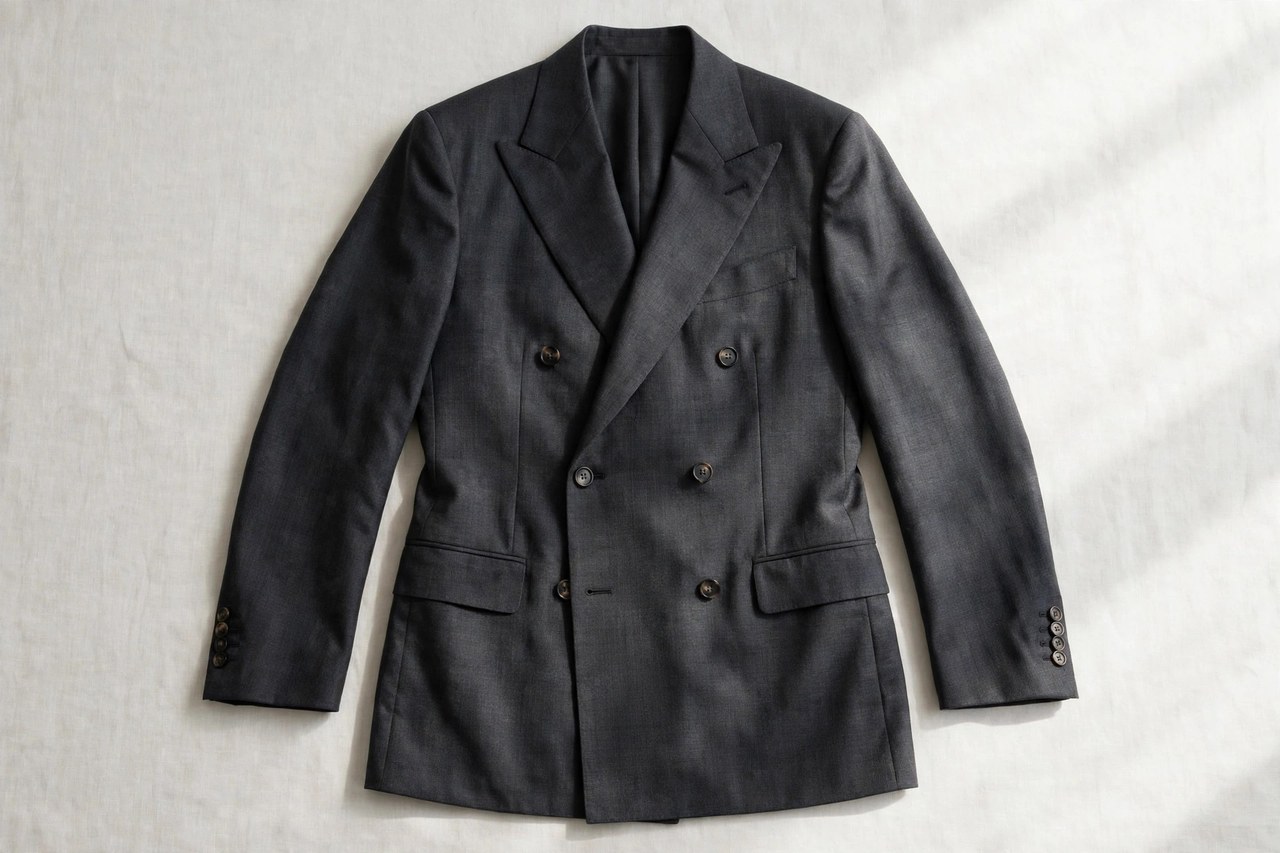
A men's double-breasted suit is a suit whose jacket closes with two overlapping columns of buttons, the front panels crossing deep over the chest. It is tailoring's boldest standard pattern: broader in presence than the single-breasted default, formal by history, and governed by pleasingly precise rules - which buttons fasten, how the lapels roll, where the button stance sits. This page treats the cut itself; its sibling page in this letter, designer suits, treats what a house label adds to tailoring of any cut. This guide is built around the questions buyers actually ask: which style, which size, which fabric, and what will it look like after a year of real use - answered in order, with the trade-offs stated plainly.
Styles and Construction
Anatomy first. The classic configuration is six buttons in two columns (6x2), of which the middle pair fastens; 4x2 and 6x1 stances serve leaner builds and stronger statements. Peak lapels are the pattern's native partner - the overlap needs their upward line - and the wrap depth decides the geometry: a deep wrap reads military and formal, a shallow wrap reads modern. Because the front is built from overlapping cloth, the jacket carries more structure than a single-breasted: the chest is architectural, the waist is shaped by the button point, and trousers are classically higher-risen and pleated or clean flat-fronts, finished with the jacket's formality in mind.
A top earns its keep in finishing: seams that hang straight and stay even at eight to twelve stitches per inch, collars and plackets that lie flat after washing, buttons sewn with thread shanks so they sit in their holes without pulling. Hold the cloth to the light - a tight, even weave or knit outwears a loose one at the same labeled weight, and pattern pieces cut on grain keep the garment from twisting around your body by the third wash.
Fit and Sizing
Fit is unforgiving in a productive way: the overlap magnifies error. The fastening button must close without the fronts pulling apart below it or gaping above; the collar must sit to the neck because the closed front offers no open V to forgive a gap; shoulders must be exact, since the broad chest line advertises any slope mismatch. The jacket's length should cover the seat fully - proportion is the style. Have a tailor assess stance before purchase: button position cannot move, so a double-breasted jacket is bought by its stance first and its cloth second.
Fit tops shoulders and chest first, because tailors cannot cheaply move either: the shoulder seam ends at the shoulder bone, the chest closes without pulling, and both arms raise without the hem escaping the waistband. Tucked lengths must stay tucked sitting; untucked lengths should end mid-fly. Sleeves are the cheap alteration, shoulders the permanent one - reject a wrong shoulder for any reason, forgive a long sleeve for many.
Wearing and Care
Care doubles down on tailoring care: the overlapping front must be hung on a broad hanger with the fastening button closed so the wrap dries and rests in its worn shape. Brush after wear, rest two days between wearings, and press professionally with the lapel roll preserved - a hard crease pressed into a rolled lapel is the commonest way these jackets are ruined. Store the suit together, clean the pieces together (so cloth ages as one garment), and the architecture you bought will hold for a decade.
Launder tops by the label with three defaults: cool or warm water to protect color and trims, dark and printed pieces inside out, and low or line drying, which is the largest single lever on a shirt's lifespan. Fasten buttons and zips before washing to protect the whole load, treat stains before the dryer can set them, and store knits folded so their shoulders keep the shape they were knitted with.
Common Questions
Which buttons do you fasten on a double-breasted suit?
On the classic 6x2, you fasten the middle pair only - the top pair is display, the bottom pair stays open so the jacket moves when you sit (some traditions fasten the internal anchor button, which the maker provides inside the wrap for exactly this structure). On a 6x1, the single low pair fastens. The rule beneath the rules: the fastening pair is the one at the natural waist, and a double-breasted jacket, unlike a single, generally stays buttoned when seated - its cut is designed for it.
Who should wear a double-breasted suit?
More men than the fashion thinks: the wrap front adds chest presence that flatters slim builds, and its shaped waist flatters athletic ones. Tall and broad men wear the classic 6x2 naturally. Shorter men should choose the lower stance (4x2 or 6x1), a slightly shorter jacket, and let proportion do the work. The genuine requirement is not a body type but an attitude: the pattern is deliberate, and it suits a wearer who is.
Is a double-breasted suit more formal than a single-breasted?
Traditionally yes, a step: its military and naval lineage, closed front and peak lapels place it above the single-breasted notch-lapel suit in formality, and it has been the boardroom and state-occasion pattern for a century. Modern soft-shouldered versions in lighter cloth dress it down toward smart-casual. What never dresses down is a mismatched one: the pattern's formality lives in its precision, so fit and condition carry the formality more than the button count does.
More in Men's Clothes Guide D
Looking for Men's Clothing Stores?
This guide explains men's double breasted suits. To browse where to buy, visit our men's clothing store directory, where you can find retailers that carry them.