Start Here
The Gown Covers Almost Everything — Plan for What It Doesn’t
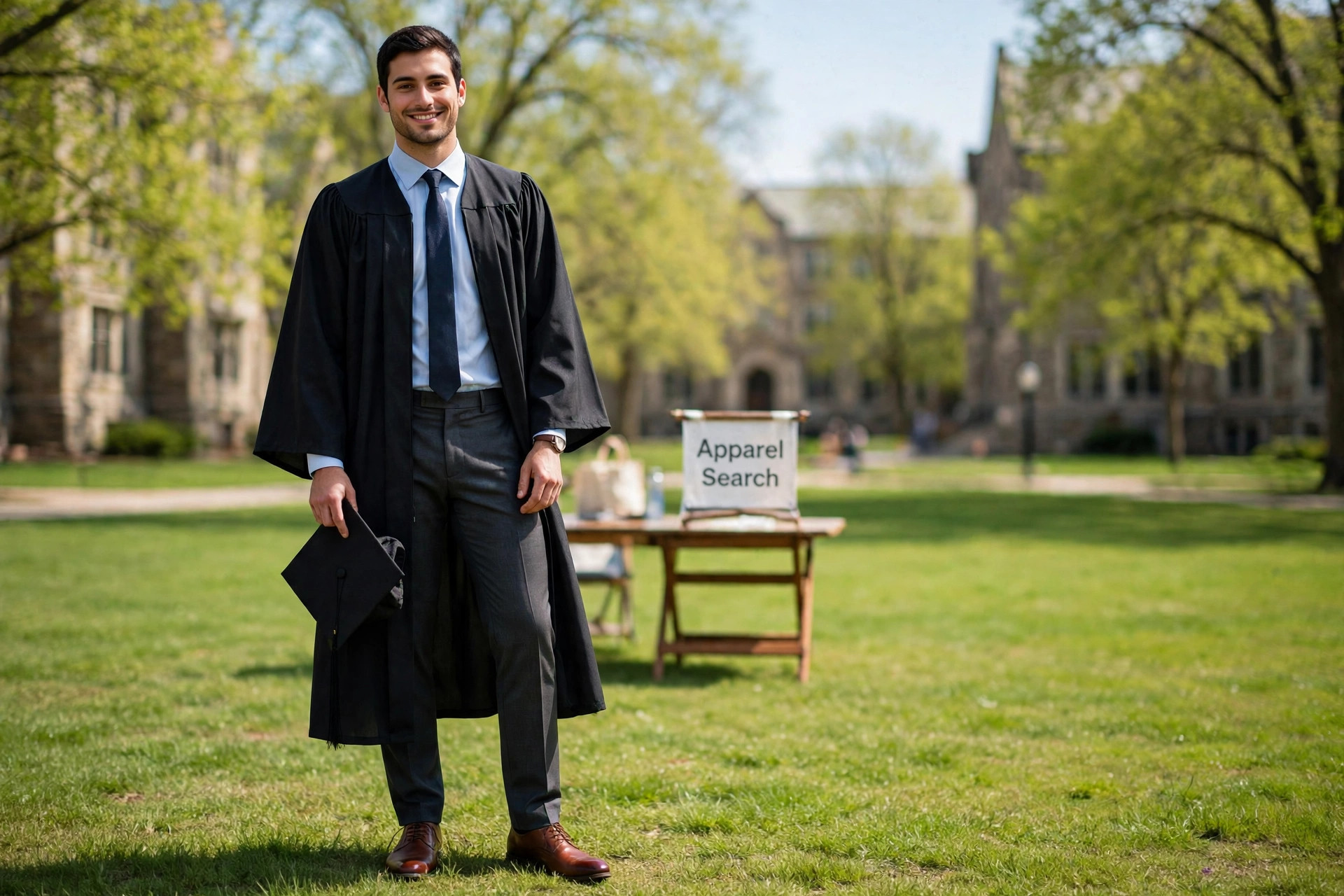
A graduation gown hides most of an outfit, which tempts graduates to dress carelessly underneath. That is a mistake in both directions: the parts that do show — collar, tie, trousers below the hem and shoes — appear in every photograph, and the parts that don’t show still decide whether you spend a two-hour ceremony in comfort or quietly overheating in a heavyweight suit.
Dress in two layers of thought. Under the gown, wear light, breathable pieces that survive heat and sitting. At the visible edges, wear the formal version: a proper collar, a tie if your school’s photographs will be formal, trousers that break correctly over real dress shoes. The gown itself — its sizing, ordering and return — is covered by the graduation cap and gowns retail guide; this page is about everything underneath and below it. Guests dress by a different logic, set out in the men’s graduation guest guide linked at the end.
Start Here — In Four Steps
Dress Under the Gown, in Order
On the morning itself there is no time to improvise. Lay the outfit out the night before, in this order:
- Check the gown first. Try it on at home: note where the hem falls (mid-calf is standard) and how much collar shows. Everything else is chosen against those two measurements.
- Pick light layers. A lightweight dress shirt and light trousers, not a full suit, unless the gown comes off for a formal reception straight after.
- Decide the tie question. If formal portraits follow, wear the tie — it is the single most visible item you own that day. A bow tie also sits neatly inside a gown’s V opening.
- Break the shoes in. The walk across the stage, on camera, in new stiff shoes, is the classic graduation stumble. Wear shoes you have already walked in.
Heat, Sitting & Photographs
Under-the-Gown Dressing, Honestly Considered
Heat is the graduate’s real dress code. Ceremonies run long, venues run warm, and a polyester gown traps all of it. A cotton or cotton-blend dress shirt in white or pale blue, lightweight wool or blended trousers, and no jacket under the gown is the comfortable standard; a jacket can wait in the car or with family for photographs afterwards. Shorts under the gown are a persistent rumour and a poor idea — hems ride up in photographs, seated shots show bare legs, and many schools state a dress expectation outright.
Photographs reward contrast and tidiness. A white shirt reads clean against a black gown; a dark tie anchors the V of the opening; a collar that stands properly matters more than the shirt’s price. Trousers should be dark — charcoal, navy or black — because the strip below the hem is in every full-length shot, and light chinos or jeans break the line of the gown. The men’s dress shirts guide and the men’s dress shoes guide cover the two visible pieces in detail.
Shoes & the Hem Line
What Shows Below the Gown
From mid-calf down, you are fully dressed in public: trousers and shoes carry the whole lower half of every photograph. Polished black or dark brown dress shoes are the standard and the safest; loafers in good condition pass at most ceremonies. Trainers, sandals and flip-flops show exactly as casual as they sound, and they are the detail families notice when the photographs come back. Socks should be dark and long enough to stay covered when seated on stage — a flash of sports sock under a gown hem is the other classic photograph regret.
Finally, plan the after-ceremony change of state. The gown comes off and the outfit underneath becomes the restaurant outfit, so choose pieces that stand on their own: the shirt and trousers above do, especially with the jacket retrieved. If a suit is the family’s expectation for the meal, wear the full suit and accept the warm ceremony — the men’s suits guide helps pick the lightest version you own.
Questions
Common Questions
What should a man wear under his graduation gown?
A lightweight white or pale blue dress shirt, dark lightweight trousers and polished dress shoes, with a tie if formal photographs will follow. Skip the jacket under the gown — it adds heat without showing — and bring it separately for afterwards if the celebration calls for one.
Can a graduate wear shorts under the gown?
It is not a good idea. Gown hems ride up when seated and in photographs, many schools state a dress expectation for graduates, and bare legs below the hem look unfinished in the pictures families keep. Lightweight trousers are just as cool and always look right.
What shoes should a graduate wear?
Polished black or dark brown dress shoes that are already broken in. The stage walk is photographed and filmed, and stiff new shoes are a genuine trip risk on steps and ramps. Dark, long socks complete the line below the hem.
More to Explore
Search Apparel Search