Men's MMA Clothing Guide
MMA clothing is the garment-level account of the mixed martial arts wardrobe - the fight shorts, rash guards, compression pieces and casual wear themselves, as opposed to the scene-and-system view of our MMA apparel guide. This guide is short and pointed: it links the athletic clothing family and the compression clothing definitions, and that is the right skeleton. Fight clothing is engineered clothing - every seam, closure and panel answers a rule of the sport or a friction of the mat - and this guide reads the garments one specification at a time.
Shop Men's MMA Clothing Now
Shop Men's MMA Clothing on Amazon Shop Men's MMA Clothing on eBayThe Amazon and eBay links on this page are affiliate links. If you make a purchase through them, Apparel Search may earn a commission.
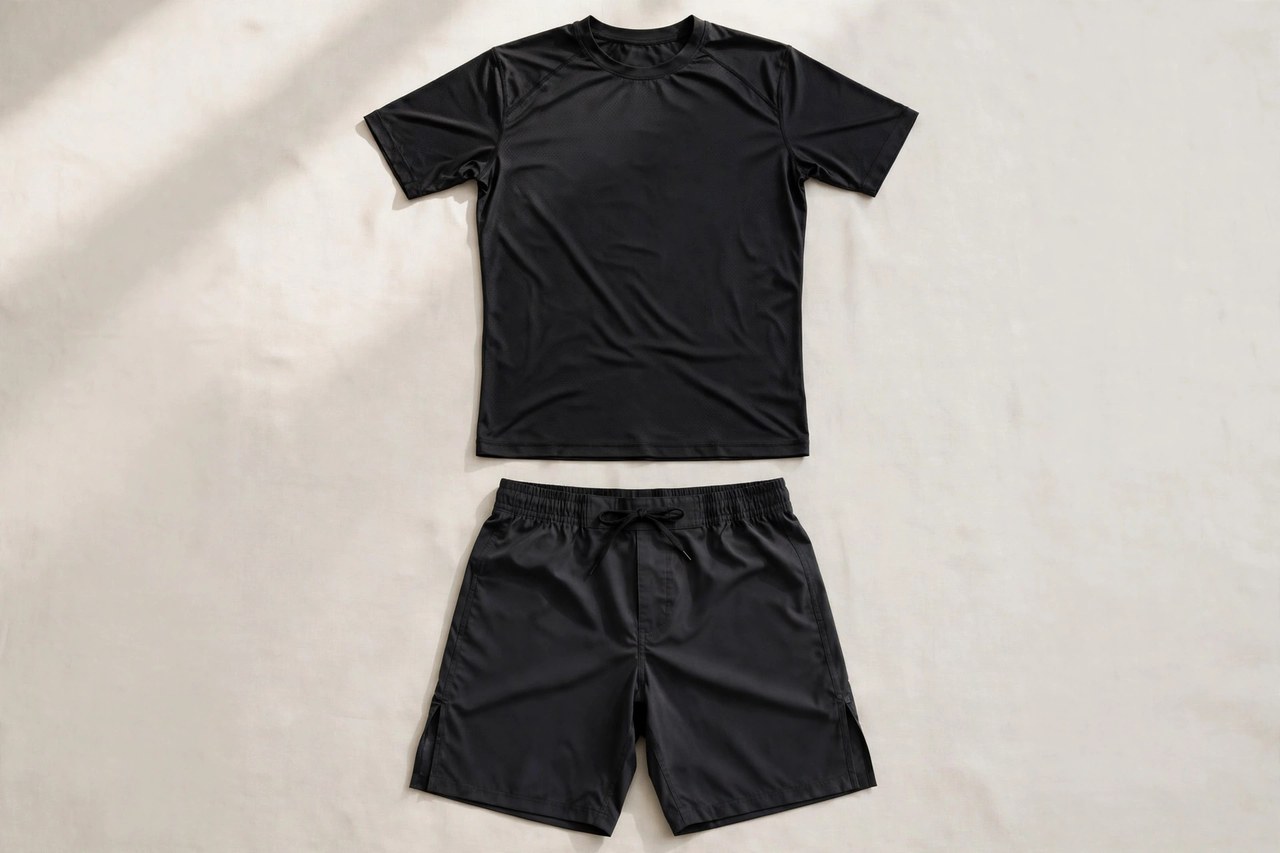
MMA clothing is the garment-level account of the mixed martial arts wardrobe - the fight shorts, rash guards, compression pieces and casual wear themselves, as opposed to the scene-and-system view of our MMA apparel guide. This guide is short and pointed: it links the athletic clothing family and the compression clothing definitions, and that is the right skeleton. Fight clothing is engineered clothing - every seam, closure and panel answers a rule of the sport or a friction of the mat - and this guide reads the garments one specification at a time. This guide covers the styles worth knowing, the fit points that decide comfort, the fabrics and construction that separate a good buy from a regret, and the simple care that makes the garment last.
The Fight Short, by Subtraction
The fight short is the signature garment, and its specification is written by subtraction: no pockets, no zippers, no buttons, nothing to catch a finger or tear a partner's skin. What remains is engineered - a four-way stretch body or stretch crotch and side panels for the kick and the sprawl, a split or shaped leg opening, a waistband that closes with hook-and-loop over a drawstring so the short cannot be pulled down or work loose, and sublimated graphics that cannot peel because the ink is in the fabric. The rash guard is the second garment: a long or short sleeve compression top that prevents mat burn, wicks sweat, and gives an opponent nothing to grip. Compression shorts and spats layer beneath for the same reasons. Above the training layer sit the walkout and casual pieces - tees, hoodies, caps - which are ordinary garments carrying the sport's graphics.
The durable buying order is job, specification, budget - in that sequence. Decide what the garment must do, translate that into fiber, weight, construction and size numbers, and only then shop price. Read labels as specifications, inspect the garment inside out where finishing is unposed, and prefer the maker who publishes measurements to the one who publishes adjectives. A garment that matches your measurements, climate and laundry will be worn; one that misses any of the three becomes expensive storage.
Verified in Motion
Fit is verified in motion. Shorts should pass the movement test - full squat, high kick, sprawl, shrimp - with the leg opening clearing the knee's travel and the waistband fixed; the waist measurement, not your jeans size, is the ordering number. Rash guards size by chest and should fit without air gaps, the torso long enough to remain over the waistband through groundwork; a guard that rides up is a size or a cut wrong, not a nuisance to accept. Compression pieces should compress without numbing - pins and needles mean a size down too far. Between sizes, the tie-breaker is always the closure and the range test, never the mirror.
Measure yourself once a year and keep the numbers - chest, waist, inseam, foot, head - because bodies drift gradually while size habits never do. Shop from measurements, try garments under real conditions (over layers, in your own shoes, late in the day for footwear), and be honest about alterations: lengths and small waist changes tailor beautifully; shoulders, rises and patterns are the garment you bought forever.
The Hygiene Covenant
Mat clothing is washed after every wear - this is the sport's hygiene covenant, stated in the apparel guide and repeated here because the garments are where it applies. Cool water, closures fastened, no fabric softener on elastane if you want the stretch to live, and air or low drying. Inspect like a corner man: seams at the stretch panels, the waistband's hook-and-loop grip, the rash guard's cuffs and hem. Retire a piece that fails an inspection rather than mid-session. Kept this way the kit is inexpensive per session - engineered garments, honestly maintained, outlast the training cycles that destroy ordinary gym clothes in a month.
Five minutes when a garment comes off - shake it out, hang or fold it correctly, note the stain and the loose button - prevents most of the damage later blamed on quality. Keep a small kit where the clothes live: brush, lint roller, conditioner suited to your leathers, black, navy and grey thread. Clothing rarely dies at once; it fades by small neglects, and small attentions reverse the process at the same pace.
Common Questions
What are MMA fight shorts made of?
Typically a polyester or polyester-blend microfiber, often with four-way stretch panels at the crotch and sides, built without pockets, zippers or buttons so nothing can catch or injure. The waistband closes with hook-and-loop, usually over an internal drawstring, and graphics are sublimated - dyed into the fabric - so they cannot crack or peel. The design brief comes from the sport's rules and the mat's frictions, not from fashion.
Why do MMA fighters wear rash guards in training?
Protection and hygiene. A rash guard shields the skin from mat burn during groundwork, wicks sweat better than a cotton tee, gives training partners nothing loose to grip or tear, and puts a washable layer between skin and a shared mat. In no-gi grappling it is effectively the uniform top. Fit should be a true second skin - snug, long in the torso, with no air gaps to bunch under a partner.
What is compression clothing in MMA?
Close-fitting elastic garments - shorts, spats and tops - worn in training for support, coverage and a surface that slides rather than grips. The compression clothing definitions and the compression shorts and shirts guides are linked below, and the family's logic is consistent: compress without restricting, manage sweat, protect skin, and add nothing an opponent or the mat can catch. It is a layer, not a shortcut - no garment trains for you.
More in Men's Clothes Guide M
Clothing and Compression
This is a short, pointed guide: it pairs with the MMA apparel guide beside it and the men’s athletic clothing guide in A, and the compression clothing family — the compression clothing term and the compression shorts and compression shirts guides — covers the layer beneath the fight shorts, all linked below.
More to Explore on Apparel Search
Looking for Men's Clothing Stores?
This guide explains men's mma clothing. To browse where to buy, visit our men's clothing store directory, where you can find retailers that carry them.