Men's Leather Underwear Guide
Men's leather underwear is underwear made from leather - usually soft lambskin - or from leather-look synthetic materials, built in brief, boxer-brief and minimal cuts. This guide is strictly product-focused: the real-versus-faux material question, construction and lining, sizing of a material that barely stretches, and the specialist care leather requires, which differs completely from cloth underwear.
Shop Men's Leather Underwear Now
Shop Men's Leather Underwear on Amazon Shop Men's Leather Underwear on eBayThe Amazon and eBay links on this page are affiliate links. If you make a purchase through them, Apparel Search may earn a commission.
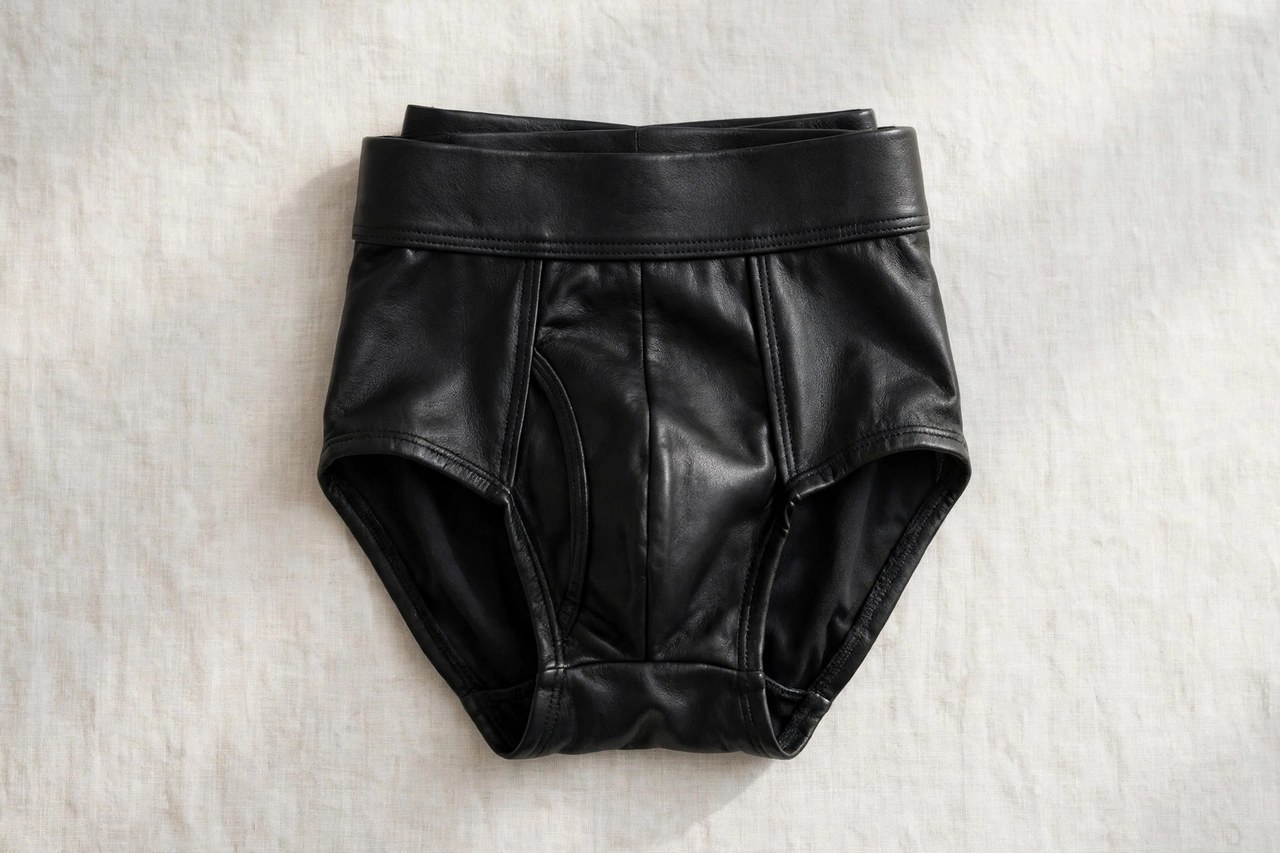
Men's leather underwear is underwear made from leather - usually soft lambskin - or from leather-look synthetic materials, built in brief, boxer-brief and minimal cuts. This guide is strictly product-focused: the real-versus-faux material question, construction and lining, sizing of a material that barely stretches, and the specialist care leather requires, which differs completely from cloth underwear. This guide is built around the questions buyers actually ask: which style, which size, which fabric, and what will it look like after a year of real use - answered in order, with the trade-offs stated plainly.
Styles and Construction
Real leather underwear is cut from thin, garment-grade lambskin or similar hides, often with stretch fabric panels or elastic inserts, because leather itself has give but almost no recovery stretch. Better garments are lined (light jersey or mesh) so the hide is not against the skin and seams do not chafe; the hide's flesh side against skin is the budget build. Faux-leather versions in polyurethane-coated fabric or stretch vinyl mimic the look with more stretch, easier care and far lower cost, at the price of breathability and longevity - coatings crack with age and heat. Construction details to judge: smooth, turned seams; reinforced joins at the waistband, since leather tears at stitch holes under tension; and quality elastic where the pattern relies on it. Leather is the least breathable underwear material in this section - a fact to weigh for duration of wear.
The durable buying order is job, specification, budget - in that sequence. Decide what the garment must do, translate that into fiber, weight, construction and size numbers, and only then shop price. Read labels as specifications, inspect the garment inside out where finishing is unposed, and prefer the maker who publishes measurements to the one who publishes adjectives. A garment that matches your measurements, climate and laundry will be worn; one that misses any of the three becomes expensive storage.
Fit and Sizing
Fit leather underwear precisely: it will ease slightly to the body with wear and warmth but will not stretch a size, so buy your measured waist size and prefer patterns with elastic panels if you are between sizes. A lined garment should feel smooth at every seam when worn; any roughness at a join is permanent, not a break-in phase. Faux versions fit like their base fabric (usually a stretch knit) and are more forgiving.
Measure yourself once a year and keep the numbers - chest, waist, inseam, foot, head - because bodies drift gradually while size habits never do. Shop from measurements, try garments under real conditions (over layers, in your own shoes, late in the day for footwear), and be honest about alterations: lengths and small waist changes tailor beautifully; shoulders, rises and patterns are the garment you bought forever.
Wearing and Care
Never machine wash real leather underwear: wipe or sponge clean, use leather-specific cleaners sparingly, dry away from heat, and condition the hide occasionally to prevent drying and cracking; store flat or gently folded, not compressed. Lining fabrics may allow hand rinsing - follow the maker's instruction, which overrides general rules for this category. Faux leather wipes clean similarly and must be kept from high heat, which accelerates coating failure. Retire leather when the hide dries and cracks at flex points; conditioning delays but cannot reverse it.
Five minutes when a garment comes off - shake it out, hang or fold it correctly, note the stain and the loose button - prevents most of the damage later blamed on quality. Keep a small kit where the clothes live: brush, lint roller, conditioner suited to your leathers, black, navy and grey thread. Clothing rarely dies at once; it fades by small neglects, and small attentions reverse the process at the same pace.
Common Questions
Real leather or faux leather - which should I buy?
Real lambskin offers the genuine material: it molds to the body, lasts for years with conditioning, and costs substantially more with specialist care. Faux leather (PU-coated or vinyl stretch fabrics) gives the appearance with more stretch, easy wipe-clean care and a low price, but breathes less and its coating eventually cracks. Occasional wear argues faux; committed wear argues real.
Is leather underwear lined, and why does it matter?
Better garments are, in light knit or mesh. The lining protects the skin from seams and the hide's flesh side, absorbs moisture the leather cannot, and reduces friction at every join. An unlined leather garment is harsher to wear and to the hide itself. Given leather's price, lining is one of the clearest quality signals when comparing two pieces.
How do I clean leather underwear?
Surface cleaning only for real leather: a damp cloth, a leather cleaner for soil, air drying away from radiators and sun, and a light conditioner when the hide feels dry. Never machine wash, tumble dry or use detergents meant for cloth. If the maker provides a different instruction for a specific lined construction, the maker's instruction wins - leather constructions vary too much for one rule.
More in Men's Clothes Guide U
Background and History
Leather is a durable and flexible material created by tanning animal rawhide and skin, often cattle hide (but can be from other animals). Learn about various types of leather grain from our fashion blog. Leather to make various goods including clothing. In regard to clothing & footwear it is most common for shoes, hats, jackets, skirts, trousers, and belts. However, underwear can also be made from this natural material. One of the negative sides of wearing leather underwear is the lack of breathability . Breathability is about the measure of how quickly (or how slowly) moisture passes through a fabric or other substance. Undergarments are items of clothing worn beneath outer clothes, usually in direct contact with the skin. Therefore, people typically want breathability in their undergarments. You may want to also learn about men's g-string underwear & men's thong underwear . Apparel Search is a leading guide to fashion, style, clothing, glam and all things relevant to apparel. We hope that you find this Men's Leather Underwear page to
Looking for Men's Clothing Stores?
This guide explains men's leather underwear. To browse where to buy, visit our men's clothing store directory, where you can find retailers that carry them.