Men's Satin Underwear Guide
Men's satin underwear is underwear made from satin-weave fabric - a smooth, glossy-faced cloth most often woven today from polyester or silk - built in brief, boxer and boxer-brief cuts. This guide is strictly product-focused: what satin weave is, satin versus silk (a confusion the Satin and Silk guides in this section divide carefully), construction, sizing and the gentle care a smooth face demands.
Shop Men's Satin Underwear Now
Shop Men's Satin Underwear on Amazon Shop Men's Satin Underwear on eBayThe Amazon and eBay links on this page are affiliate links. If you make a purchase through them, Apparel Search may earn a commission.
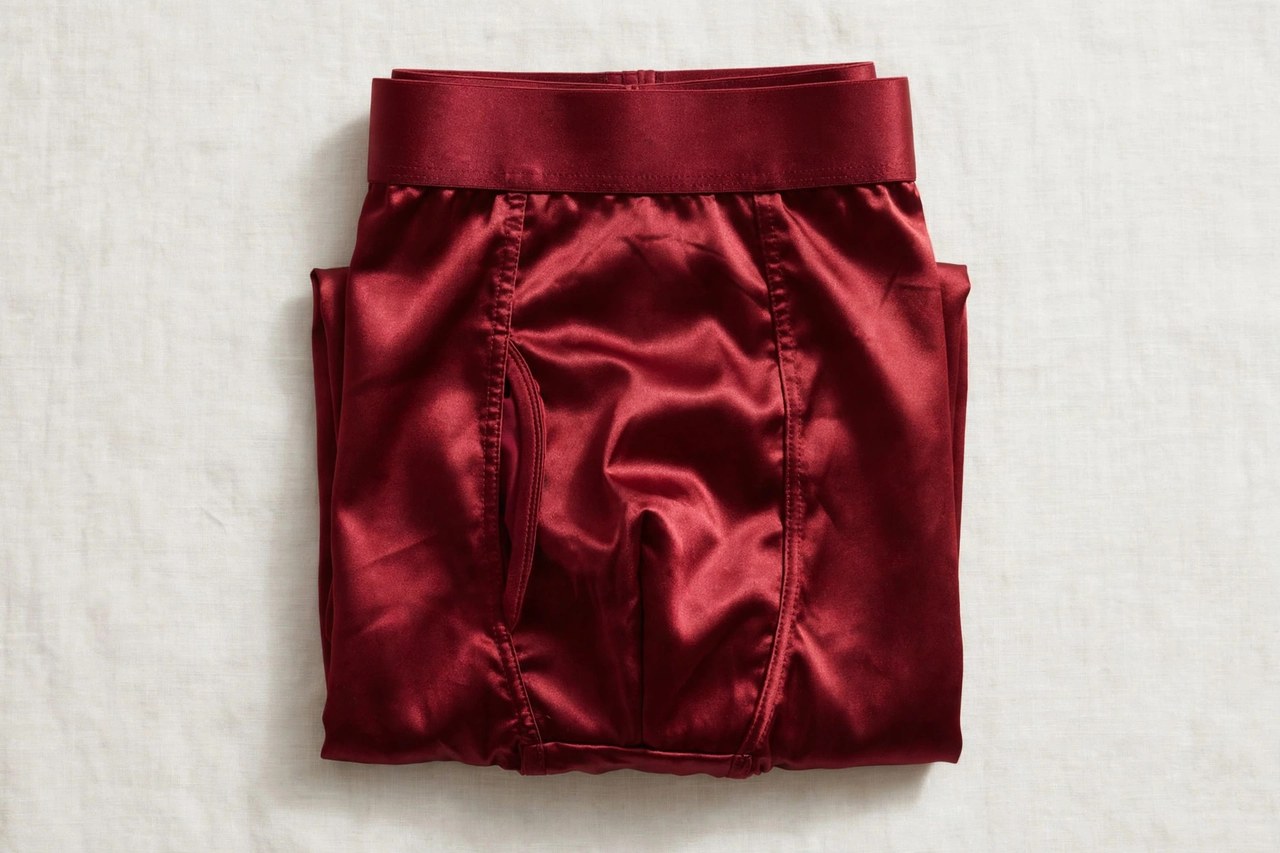
Men's satin underwear is underwear made from satin-weave fabric - a smooth, glossy-faced cloth most often woven today from polyester or silk - built in brief, boxer and boxer-brief cuts. This guide is strictly product-focused: what satin weave is, satin versus silk (a confusion the Satin and Silk guides in this section divide carefully), construction, sizing and the gentle care a smooth face demands. This guide covers the styles worth knowing, the fit points that decide comfort, the fabrics and construction that separate a good buy from a regret, and the simple care that makes the garment last.
Styles and Construction
Satin is a weave, not a fiber: warp threads float over multiple weft threads to create the characteristic smooth, light-reflecting face and dull back. In underwear the fiber is usually polyester (durable, inexpensive, colorfast), sometimes silk (the luxury version, covered by comparison in the Silk guide), occasionally nylon. Satin boxers are the classic form - the glossy woven short has decades of history - while satin briefs and boxer briefs add stretch panels or satin-front constructions to make a woven cloth work in close fits. The fabric's virtues are its glide (satin layers slide under trousers without friction) and its cool, smooth hand; its limits are low absorbency, modest breathability in polyester versions, and a face that snags and shows pulls - satin's beauty is a surface, and surfaces need defending. Better garments use heavier satin with a tighter weave, which resists snagging and drapes rather than clings.
The durable buying order is job, specification, budget - in that sequence. Decide what the garment must do, translate that into fiber, weight, construction and size numbers, and only then shop price. Read labels as specifications, inspect the garment inside out where finishing is unposed, and prefer the maker who publishes measurements to the one who publishes adjectives. A garment that matches your measurements, climate and laundry will be worn; one that misses any of the three becomes expensive storage.
Fit and Sizing
Size satin as its base style directs, remembering that woven satin has no stretch of its own: woven satin boxers take your waist size with the boxer's usual forgiveness; satin briefs must be exact, and versions without stretch panels are the least forgiving briefs in this section. A satin garment should glide, not pull - any drag at the seams means the size or the cut is wrong, because the fabric cannot ease its way out of a fit error.
Measure yourself once a year and keep the numbers - chest, waist, inseam, foot, head - because bodies drift gradually while size habits never do. Shop from measurements, try garments under real conditions (over layers, in your own shoes, late in the day for footwear), and be honest about alterations: lengths and small waist changes tailor beautifully; shoulders, rises and patterns are the garment you bought forever.
Wearing and Care
Wash satin cool, inside out, ideally in a mesh bag, and line dry or dry on the lowest heat: the face abrades against other garments and loses its even gloss in rough loads, and polyester satin takes a shine-set from hot pressing it never asked for. Iron, if at all, on the reverse at low temperature. Store folded, not hung on clips that mark the face. A satin piece kept this way holds its surface for years; treated as ordinary laundry it dulls within a season.
Five minutes when a garment comes off - shake it out, hang or fold it correctly, note the stain and the loose button - prevents most of the damage later blamed on quality. Keep a small kit where the clothes live: brush, lint roller, conditioner suited to your leathers, black, navy and grey thread. Clothing rarely dies at once; it fades by small neglects, and small attentions reverse the process at the same pace.
Common Questions
Is satin the same as silk?
No: satin is a weave structure; silk is a fiber. Silk can be woven as satin (silk satin, the luxury original) and polyester can be woven as satin (the common modern version). The two feel similarly smooth but differ in breathability, absorbency, price and care - the Silk Underwear guide covers the fiber itself; this guide covers the weave in its usual polyester form. Read labels for the fiber line, not the headline word.
Are satin boxers practical for everyday wear?
As a woven boxer they behave like any boxer - loose, airy, no support - with two satin-specific traits: they glide exceptionally well under trousers (nothing catches) and they absorb little, so they feel cool but not moisture-managing on hot days. Many men keep satin boxers as a sleep and lounge favorite. For active days, the moisture behavior argues for another fabric.
How do I stop satin from snagging?
Defend the face: wash inside out in a mesh bag without hooks or zips in the load, line dry, and store it away from rough fabrics and Velcro. Choose heavier, tighter-woven satin when buying - it snags less and drapes better - and trim the snag risk at the source, since a pulled thread in satin cannot be un-pulled, only laid flat with a needle's patience.
More in Men's Clothes Guide U
Background and History
Undergarments made of satin fabric would be considered satin underwear. Wow, isn't that clever. Satin is a textile weave that typically has a glossy surface and a dull back. Satin is usually a warp-faced weaving technique in which warp yarns are "floated" over weft yarns, although there are also weft-faced satins. If a fabric is formed with a satin weave using filament fibers such as silk, nylon, or polyester, the corresponding fabric is termed a satin, although some definitions insist that the fabric be made from silk. A satin fabric tends to have a high luster due to the high number of floats on the fabric. If you want to be technical about satin, the satin weave is characterized by four or more fill or weft yarns floating over a warp yarn or vice versa, four warp yarns floating over a single weft yarn. Floats are missed interfacings, where the warp yarn lies on top of the weft in a warp-faced satin and where the weft yarn lies on top
More to Explore on Apparel Search
- Men's Underwear Guide
- Men's Underwear Stores
- Men's Underwear Wholesalers
- Underwear Factories
- Men's Clothes
- Men's Underwear
- Underwear Glossary
- Men's Fashion
- Men's Clothing Stores
- Men's Fashion News
- Men's Apparel
- Men's Fashion Brands
- Men's Fashion Store
- Men's Clothing on eBay
- Men's Clothing on Amazon
- Men's Clothes Guide H-P
- Men's Clothes Guide Q-Z
Looking for Men's Clothing Stores?
This guide explains men's satin underwear. To browse where to buy, visit our men's clothing store directory, where you can find retailers that carry them.