Men's Silk Underwear Guide
Men's silk underwear is underwear made from silk fiber, knitted as silk jersey or woven as silk boxers: the luxury natural option, prized for its smooth hand, temperature behavior and lightness. This guide is strictly product-focused - silk grades and blends, why silk behaves as it does on skin and moisture, the differences between knitted and woven silk garments, sizing and the careful washing silk honestly requires.
Shop Men's Silk Underwear Now
Shop Men's Silk Underwear on Amazon Shop Men's Silk Underwear on eBayThe Amazon and eBay links on this page are affiliate links. If you make a purchase through them, Apparel Search may earn a commission.
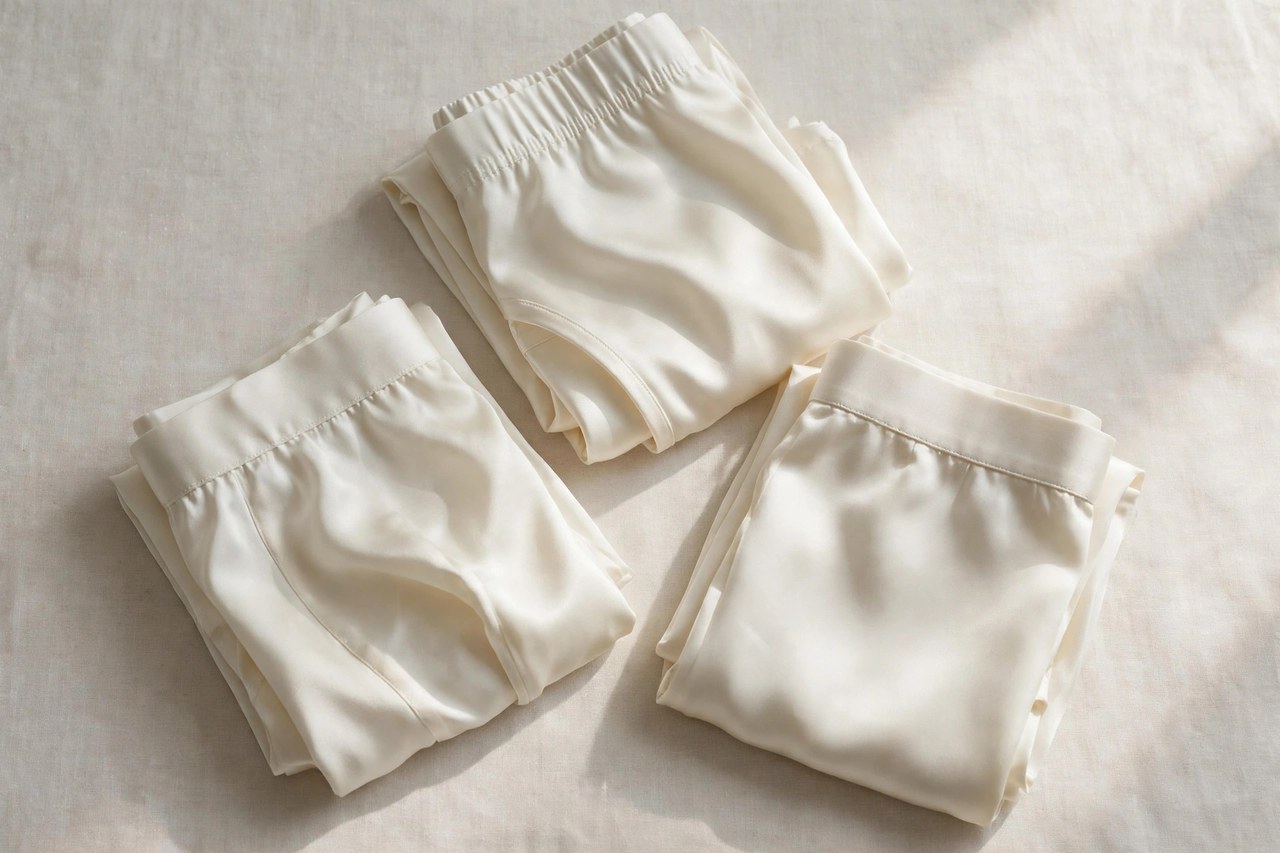
Men's silk underwear is underwear made from silk fiber, knitted as silk jersey or woven as silk boxers: the luxury natural option, prized for its smooth hand, temperature behavior and lightness. This guide is strictly product-focused - silk grades and blends, why silk behaves as it does on skin and moisture, the differences between knitted and woven silk garments, sizing and the careful washing silk honestly requires. This guide is built around the questions buyers actually ask: which style, which size, which fabric, and what will it look like after a year of real use - answered in order, with the trade-offs stated plainly.
Styles and Construction
Silk is a protein fiber spun by the silkworm, and its underwear virtues are physical: a smooth triangular fiber cross-section that slides rather than drags on skin, natural temperature regulation (cool in heat, warmer than its weight suggests in cold), respectable moisture absorption with a less clammy feel than cotton, and exceptional lightness. Knitted silk (silk jersey, usually with a small elastane percentage in modern garments) makes briefs and boxer briefs that feel like a second skin and pack to nothing for travel; woven silk makes the classic silk boxer, a luxury sleep and lounge garment. Grades matter: mulberry silk is the cultivated standard; fabric weight (stated in momme for wovens) predicts durability - silk's weakness is abrasion and strength loss when wet, so silk underwear is a rotation garment, not a daily workhorse, whatever the price suggests.
The durable buying order is job, specification, budget - in that sequence. Decide what the garment must do, translate that into fiber, weight, construction and size numbers, and only then shop price. Read labels as specifications, inspect the garment inside out where finishing is unposed, and prefer the maker who publishes measurements to the one who publishes adjectives. A garment that matches your measurements, climate and laundry will be worn; one that misses any of the three becomes expensive storage.
Fit and Sizing
Fit silk underwear by measured size with a gentle hand: knitted silk stretches but its recovery is modest compared with synthetics, so a size small does not ease into service - it stresses seams that silk cannot spare. Woven silk boxers fit as woven boxers do, by waistband. Silk's glide is a fit factor: silk layers move against trousers and skin with almost no friction, which wearers experience as the garment disappearing - size so that disappearance is comfortable, not loose.
Measure yourself once a year and keep the numbers - chest, waist, inseam, foot, head - because bodies drift gradually while size habits never do. Shop from measurements, try garments under real conditions (over layers, in your own shoes, late in the day for footwear), and be honest about alterations: lengths and small waist changes tailor beautifully; shoulders, rises and patterns are the garment you bought forever.
Wearing and Care
Silk care is the price of admission: hand wash or machine wash cold on a silk/delicate cycle in a mesh bag, with a pH-neutral or silk-specific detergent - alkaline detergents and bleach dissolve protein fibers. Never wring; roll in a towel, then line dry in shade, since sun and heat weaken silk. Kept this way, silk underwear lasts surprisingly well for a delicate; treated as cotton, it fails in a handful of washes. Judge the purchase with the care honestly in view.
Five minutes when a garment comes off - shake it out, hang or fold it correctly, note the stain and the loose button - prevents most of the damage later blamed on quality. Keep a small kit where the clothes live: brush, lint roller, conditioner suited to your leathers, black, navy and grey thread. Clothing rarely dies at once; it fades by small neglects, and small attentions reverse the process at the same pace.
Common Questions
Is silk underwear worth the price?
For the wearer who values it, yes: no synthetic matches silk's combination of smoothness, lightness and temperature behavior, and for travel - where silk washes in a sink and dries overnight - it has a functional case beyond luxury. The honest limits are durability and care: silk is a rotation piece with delicate washing, so value it as such rather than as a daily staple and it repays its price in years of small daily pleasure.
Silk or satin underwear - which should I choose?
They are different products sharing a smooth feel: silk is a natural fiber (breathable, temperature-regulating, delicate, expensive); satin is a weave, usually polyester (durable, easy-care, inexpensive, less breathable). The Silk choice buys fiber performance and demands care; the Satin choice (covered in its own guide) buys the look and glide cheaply and forgivingly. Many men own satin boxers for every week and silk for the weeks that matter.
Can silk underwear be machine washed?
Yes, with discipline: cold water, delicate or silk cycle, the garment in a mesh bag, silk-safe neutral detergent, no bleach, line dry in shade. Hand washing remains gentler and is recommended for the finest pieces. What silk cannot survive is a hot cotton wash with alkaline detergent - that single load can end a garment, which is why silk buyers sort laundry as carefully as they shop.
More in Men's Clothes Guide U
Background and History
If you want a sense of luxury next to your skin, you may want to get on board with this fiber. As you have already figured out, undergarments can be produced in a wide variety of styles, colors, and textures. This type of garment can be made in from many various fabrics & fibers. One of which would be from silk fiber. Silk is a natural protein fiber, some forms of which can be woven into textiles. The protein fiber of silk is composed mainly of fibroin and is produced by certain insect larvae to form cocoons. Silk is produced by several insects, but generally only the silk of moth caterpillars has been used for textile manufacturing. Undergarments are items of clothing worn beneath outer clothes, usually in direct contact with the skin. Silk generally feels nice on the skin. Put on a pair of silk boxer shorts and you may never want to go back to cotton. Silk has a smooth, soft texture that is not slippery, unlike many
Looking for Men's Clothing Stores?
This guide explains men's silk underwear. To browse where to buy, visit our men's clothing store directory, where you can find retailers that carry them.