Men's Vintage Fashion Guide
Vintage fashion is the style side of older men's clothing: the silhouettes, proportions, patterns and combinations that defined how men dressed in earlier decades, and how those looks can be worn credibly today. Where other guides judge individual garments, this one reads eras: the shoulder line, lapel width, trouser rise and leg, tie width and pattern scale that belong together. Understanding those relationships prevents the costume effect that comes from mixing strong period signals carelessly.
Shop Men's Vintage Fashion Now
Shop Men's Vintage Fashion on Amazon Shop Men's Vintage Fashion on eBayThe Amazon and eBay links on this page are affiliate links. If you make a purchase through them, Apparel Search may earn a commission.
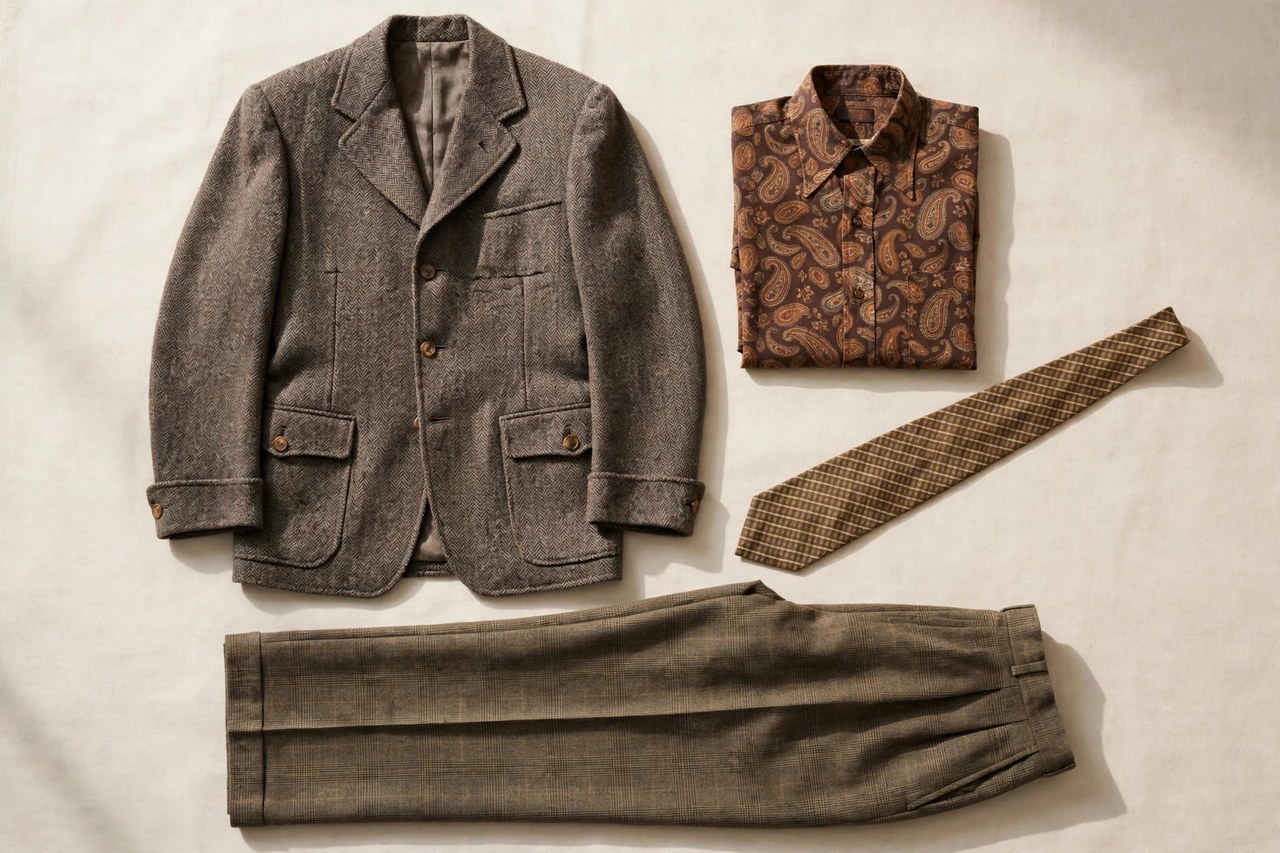
Vintage fashion is the style side of older men's clothing: the silhouettes, proportions, patterns and combinations that defined how men dressed in earlier decades, and how those looks can be worn credibly today. Where other guides judge individual garments, this one reads eras: the shoulder line, lapel width, trouser rise and leg, tie width and pattern scale that belong together. Understanding those relationships prevents the costume effect that comes from mixing strong period signals carelessly. This guide walks through the choices that matter - style, fit, fabric and finish - with the practical detail a product listing rarely gives you, and closes with the care habits that keep the garment in service.
Styles and Construction
Each era has a coherent construction language. Sharper, padded shoulders pair with wider lapels and fuller trousers in some periods, while cleaner, narrower tailoring pairs with slim lapels, shorter jackets and tapered legs in others. Workwear eras favor heavy cloth, plaid, denim and boots; more formal periods favor smooth fabrics, restrained patterns and polished leather. When buying, check that a piece's details agree with each other, because altered lapels, replaced buttons and shortened hems can blur a garment's original period.
The durable buying order is job, specification, budget - in that sequence. Decide what the garment must do, translate that into fiber, weight, construction and size numbers, and only then shop price. Read labels as specifications, inspect the garment inside out where finishing is unposed, and prefer the maker who publishes measurements to the one who publishes adjectives. A garment that matches your measurements, climate and laundry will be worn; one that misses any of the three becomes expensive storage.
Fit and Sizing
Wearing vintage today works best with one strong period statement at a time, anchored by simple modern basics in matching proportions. Vintage sizes run smaller and cuts differ, so fit remains the foundation: a period jacket must still meet at the chest and sit correctly on your shoulders, whatever its decade. Match widths within the outfit, tie to lapel and trouser leg to shoe, and let color or pattern, rather than every silhouette detail, carry the vintage signal.
Measure yourself once a year and keep the numbers - chest, waist, inseam, foot, head - because bodies drift gradually while size habits never do. Shop from measurements, try garments under real conditions (over layers, in your own shoes, late in the day for footwear), and be honest about alterations: lengths and small waist changes tailor beautifully; shoulders, rises and patterns are the garment you bought forever.
Wearing and Care
Care for vintage fashion as the mixed wardrobe it is: tailored pieces brushed, rested and professionally cleaned sparingly; knitwear folded; denim and workwear washed gently and rarely. Store complete outfits' key pieces clean and supported, away from light that fades one side of a hanging garment. Photograph combinations that work, so successful styling is repeatable, and keep a small repair kit for buttons and hems, because a period piece worn regularly needs the same maintenance as modern clothing.
Five minutes when a garment comes off - shake it out, hang or fold it correctly, note the stain and the loose button - prevents most of the damage later blamed on quality. Keep a small kit where the clothes live: brush, lint roller, conditioner suited to your leathers, black, navy and grey thread. Clothing rarely dies at once; it fades by small neglects, and small attentions reverse the process at the same pace.
Common Questions
How do I wear vintage without looking like I am in costume?
Limit yourself to one unmistakably period piece per outfit, keep the rest simple and current, and make sure everything genuinely fits. A vintage jacket with modern trousers and plain shoes reads as style; adding a period hat, tie, shirt and shoes at once reads as a uniform. Confidence and fit do more than accessories.
Which vintage era is easiest for men to wear today?
Periods with cleaner, narrower tailoring and restrained patterns usually blend most easily with modern wardrobes, because their proportions are closest to current clothing. Fuller, more dramatic eras can look excellent but demand more deliberate matching of widths and lengths. Start with the era whose trousers rise and jacket length resemble clothes you wear comfortably now.
Should vintage pieces from one outfit match in age exactly?
No. They should agree in proportion, formality and condition rather than share a birth year. A slightly later jacket can work with earlier trousers if lapel, leg width and fabric weight feel coherent. Glaring mismatches, such as a very wide tie with a very narrow lapel, look accidental even when both pieces are individually excellent.
More in Men's Clothes Guide V
Background
Vintage clothing is a generic term for garments originating from a previous era. The phrase is also used in connection with a retail outlet, e.g. "vintage clothing store." Fashion is a term used to goup clothing, footwear and accessories. Fashion is a distinctive and often constant trend in the style in which a person dresses. How to distinguish between antique, vintage and retro fashions? Clothing, shoes, or accessories which were produced before the 1920s is referred to as antique and if these items were manufactured from the 1920s to 20 years before the present day is considered vintage . Retro , short for retrospective, or "vintage style" usually refers to clothing that imitates the style of a previous era. Reproduction, or repro, clothing is a newly made copy of an older garment. Clothing produced more recently is usually called modern or contemporary fashion. Learn the difference between vintage fashion and antique fashions.
Looking for Men's Clothing Stores?
This guide explains men's vintage fashion. To browse where to buy, visit our men's clothing store directory, where you can find retailers that carry them.