Men's Vintage Levi's Guide
Vintage Levi's are older jeans and denim jackets made by Levi Strauss and Company, collected for durable cotton denim, classic five-pocket styling, riveted construction, and the way indigo fades with wear. Collectors study details such as selvedge edges, pocket stitching, patches, tabs, buttons, and care labels to understand a garment's general era and authenticity. This guide focuses on identifying and caring for vintage Levi's denim in general, rather than dating any specific model from a single feature alone.
Shop Men's Vintage Levi's Now
Shop Men's Vintage Levi's on Amazon Shop Men's Vintage Levi's on eBayThe Amazon and eBay links on this page are affiliate links. If you make a purchase through them, Apparel Search may earn a commission.
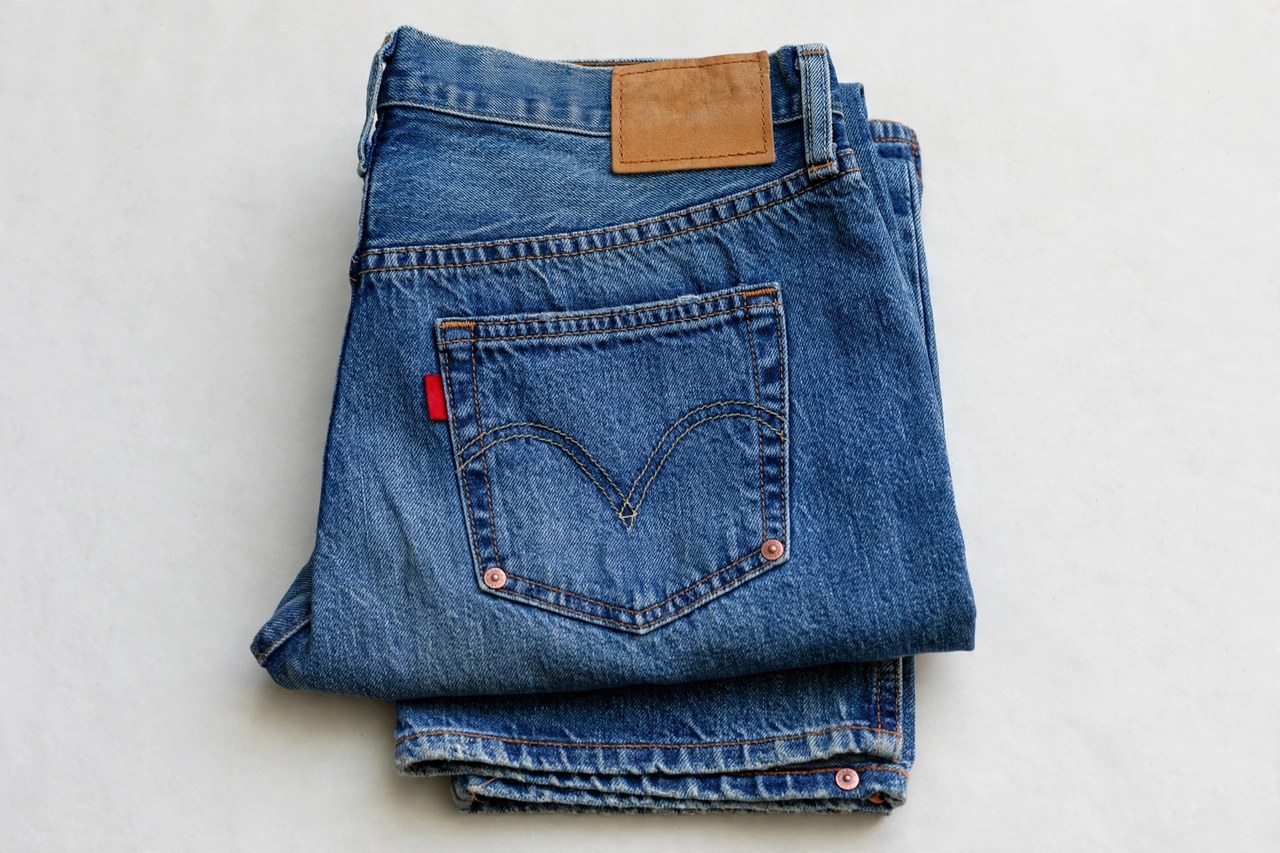
Vintage Levi's are older jeans and denim jackets made by Levi Strauss and Company, collected for durable cotton denim, classic five-pocket styling, riveted construction, and the way indigo fades with wear. Collectors study details such as selvedge edges, pocket stitching, patches, tabs, buttons, and care labels to understand a garment's general era and authenticity. This guide focuses on identifying and caring for vintage Levi's denim in general, rather than dating any specific model from a single feature alone. This guide covers the styles worth knowing, the fit points that decide comfort, the fabrics and construction that separate a good buy from a regret, and the simple care that makes the garment last.
Styles and Construction
No single detail reliably dates a Levi's garment, so look at the whole picture: fabric weight and texture, selvedge or finished outseams, rivet and button markings, pocket construction, patch material, stitching style, and label wording together. Fakes and later reproductions exist, so compare several features against trusted references and be wary of claims resting on one clue. Check condition as carefully as authenticity, especially inner thighs, hems, pocket bags, and buttonholes, before paying collector prices.
For any leg garment the rise is the first specification, because it decides sitting comfort before fabric gets a vote: measure from front waistband through to back and compare it with a pair that already works. Then audit the stress points - bar-tacked belt loops and pocket corners, double-stitched inseams, hems finished evenly - and the pocketing, which should be deep, smooth and strong enough to carry what the garment's pockets invite you to carry.
Fit and Sizing
Fit varies considerably across decades and styles bearing the same tag size, and many vintage pairs have shrunk from years of hot washing. Rely on measured waist, inseam, rise, thigh, and leg opening compared with jeans you own, not the stamped size. Expect rigid, all-cotton denim to feel firm at first and ease modestly with wear. If a rare pair fits the waist but needs hemming, ask whether the original hem can be preserved before altering it.
Measure where the waistband will actually sit, plus inseam to your preferred break, and thigh and seat for closer cuts. Then sit, squat and climb a step in the fitting room - a leg garment that only works standing still does not work. Waistbands relax roughly half an inch in wear and inseams shrink most in early washes, so buy the fit you want after those changes rather than the fit in the mirror.
Wearing and Care
Treat vintage Levi's as collectible cotton: wash rarely, cold, and inside out, with gentle detergent, and always air dry to protect shrinkage-prone fabric and leather or leather-like patches. Store folded in a dry, dark place, away from damp that invites mildew on old cotton and stitching. Have thinning areas reinforced by a denim specialist using matching thread where possible. Document measurements, labels, and distinctive details when you acquire a pair for your records.
Wash leg garments inside out and cool; heat is the agent that fades dye, tires elastic and shortens inseams. Dry low or on the line, hang or fold promptly, and crease deliberately or not at all. Walk the stress points each season - hem edges, pocket corners, seat and inner thigh - and mend the small fray while it is still small: leg garments fail gradually, then suddenly, and the two-minute October repair prevents the November replacement.
Common Questions
How do I identify genuinely vintage Levi's?
Assess several features together, including fabric, selvedge edges, rivets, buttons, pocket stitching, patch material, and label style, and compare them with reliable references. No single clue proves age or authenticity, so be cautious of sellers who date a garment from one detail or cannot provide clear, detailed photographs.
Why do vintage Levi's sizes vary so much?
Cutting standards changed over the decades, individual pairs shrank differently depending on how they were washed, and some were altered by previous owners. Two pairs with identical tags can measure quite differently. Always buy from actual flat waist, inseam, and rise measurements compared against jeans that fit you now.
How should I wash vintage Levi's denim?
Wash infrequently in cold water, turned inside out, with a small amount of gentle detergent, and air dry away from direct heat. Hot water and tumble drying accelerate shrinkage, fade indigo, and can damage older patches. Spot cleaning and airing between wears will preserve most pairs far better than frequent laundering.
More in Men's Clothes Guide V
Background and History
It all begins in the late half of the 1800's. Wouldn't you love to own the very first pair of Levi waist overalls? May 20, 1873 marked an historic day: the birth of the blue jean. It was on that day that Levi Strauss and Jacob Davis obtained a U.S. patent on the process of putting rivets in men's work pants for the very first time. They were called “ waist overalls ” or “ overalls ” until 1960, when baby boomers adopted the name “ jeans .” One day the wife of a local laborer asked Jacob to make a pair of pants for her husband that wouldn't fall apart. Jacob tried to think of a way to strengthen his trousers and came up with the idea to put metal rivets at points of strain, like pocket corners and the base of the button fly. These riveted pants were an instant hit.
More to Explore on Apparel Search
References & Further Reading
Looking for Men's Clothing Stores?
This guide explains men's vintage levi's. To browse where to buy, visit our men's clothing store directory, where you can find retailers that carry them.