Men's Wool Button-Front Coat Guide
A men's wool button-front coat is the classic single-breasted overcoat closed with visible buttons - the Chesterfield and its close relatives - as distinct from fly-front coats that hide their fastening, double-breasted styles and casual zip coats. The visible button line is both the closure and the design: it reads formal, lengthens the body and pairs with suits and knitwear alike.
Shop Men's Wool Button-Front Coat Now
Shop Men's Wool Button-Front Coat on Amazon Shop Men's Wool Button-Front Coat on eBayThe Amazon and eBay links on this page are affiliate links. If you make a purchase through them, Apparel Search may earn a commission.
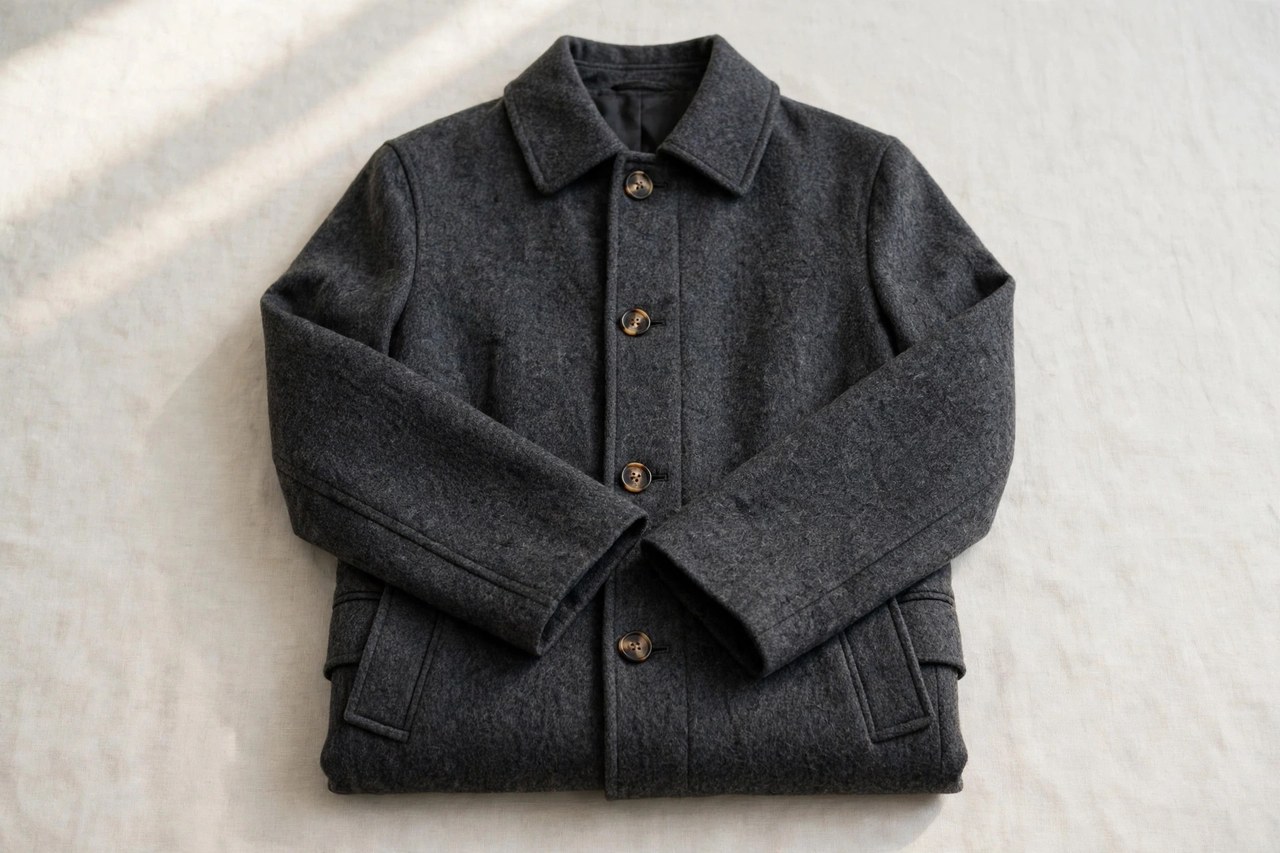
A men's wool button-front coat is the classic single-breasted overcoat closed with visible buttons - the Chesterfield and its close relatives - as distinct from fly-front coats that hide their fastening, double-breasted styles and casual zip coats. The visible button line is both the closure and the design: it reads formal, lengthens the body and pairs with suits and knitwear alike. This guide explains what to look for, how the sizing actually works, which fabrics and constructions earn their price, and how to care for the garment so it keeps doing its job season after season.
Styles and Construction
Cloth is usually a smooth worsted or a dense melton for weather, in navy, charcoal, black or camel; herringbone and subtle checks soften the formality. Good examples carry a half or full canvas front so the chest and lapels hold their shape, a lining that slides over a suit jacket without grabbing, horn or horn-look buttons sewn with thread shanks, and a center vent that lets the coat move and sit cleanly. Details to audit: the collar should stand and hug the neck, buttonholes should be cleanly cut and stitched, and the top button position decides how much chest and scarf the coat shows - a higher stance reads formal, a lower one relaxed.
A tailored wool coat or jacket is judged in layers: the cloth, the canvas or fusing that gives the chest and lapels their shape, and the lining that lets it glide over knitwear. Melton weaves dense and wind-tight for peacoats and overcoats, flannel reads soft and matte, tweeds hide wear and suit country styling, and gabardine runs smooth for rain-shedding trench styles. Sleeves should show clean pitch without diagonal drag lines, the collar should hug the neck, buttons should be sewn with thread shanks, and a half or full canvas front will drape and recover better than a fully fused one at the same cloth weight.
Fit and Sizing
Fit a button-front coat over the bulkiest honest layer - usually a suit or a blazer and knit - and button every button: the fronts should meet in a straight, quiet line with no X-pull at the waist, the shoulders should echo yours, and you should be able to sit and raise your arms to drive. Length at or just above the knee is the versatile modern standard; longer reads more formal and protects trousers better in rain. Sleeves should cover the jacket cuff and reach the wrist bone.
Tailored wool outerwear should be brushed after wear - a clothes brush lifts surface soil before it works into the weave - and rested a full day between outings on a broad hanger that carries the shoulders. Spot-clean promptly rather than washing; dry clean only a few times a season, since solvent and pressing fatigue cloth and canvas. Store coats clean, unbuttoned, in breathable garment bags with moth protection, never compressed in plastic. Set the creases and lapel roll with steam, not a hard press, and have loose buttons and lining tears repaired early - a coat's structure makes small repairs cheap and neglect expensive.
Wearing and Care
Brush after wear, rest between outings, and hang on a broad hanger that fills the shoulders - a thin hanger will emboss its shape into a wool coat within a season. Dry clean sparingly and spot-clean promptly, store clean and unbuttoned in a breathable bag with moth protection, and re-sew any loosening button immediately: on a button-front coat the buttons are the face of the garment, and one hanging by a thread undoes the whole effect.
Fit a wool coat or sports coat over the bulkiest layer it will honestly cover - a sweater for an overcoat, a shirt and light knit for a blazer - and test the working range: arms forward, arms crossed, sitting with the buttons fastened. Shoulders end at yours, the collar sits against the neck without a gap, and the fronts close without an X of pulling at the button. Coat length is coverage: a trench or overcoat should reach at least mid-thigh, a peacoat ends at the hip, and a blazer should cover the seat. Sleeve length shows a sliver of shirt cuff on tailored jackets; coat sleeves protect the wrist.
Common Questions
Button-front or fly-front overcoat - which looks more formal?
The fly-front, with its hidden buttons, reads the most formal and minimal, while the button-front is the classic business standard - a step more detailed, a step more versatile. The button-front pairs more easily with casual knitwear; the fly-front belongs over suits.
How many buttons should a men's overcoat have?
Most single-breasted button-front coats have three or four buttons, sometimes with the top one under the lapel fold. What matters is stance - where the top working button sits - more than count: it sets how open the chest looks and how the coat pairs with scarves.
Can a wool button-front coat be worn casually?
Yes, especially in softer cloths like herringbone or camel. Over a roll-neck or crew sweater with flannels or dark denim it reads smart-casual. The structured navy worsted version stays formal; cloth and color decide the coat's range.
More in Men's Clothes Guide W
Background
First of all, do you know what the word button means? In modern clothing and fashion design, a button is a small fastener, now most commonly made of plastic, but also frequently made of metal, wood, horn, bone or seashell, which secures two pieces of fabric together. You can find different types of button manufacturers in our button factory section. Buttons come in various shapes and sizes. The size is measured with the term "ligne". You can learn more about that on our button size chart page. A coat is a garment worn by any gender, for warmth or fashion. Coats typically have long sleeves and are open down the front, closing by means of buttons, zippers, hook-and-loop fasteners, toggles, a belt, or a combination of some of these. If the coat utilizes buttons instead of zippers etc. as a closure on the front side of the coat it can be referenced as a button front coat .
Looking for Men's Clothing Stores?
This guide explains men's wool button-front coat. To browse where to buy, visit our men's clothing store directory, where you can find retailers that carry them.