Men's Wool Peacoats Guide
A men's wool peacoat is the short, double-breasted naval coat: broad lapels that button up to the throat, a boxy hip-length cut, oversized buttons and cloth dense enough to stand up on a winter deck. Born as sailors' working gear, it became the most democratic of coats - as correct over a suit as over a fisherman's sweater - and the easiest tailored shape for a man to wear well.
Shop Men's Wool Peacoats Now
Shop Men's Wool Peacoats on Amazon Shop Men's Wool Peacoats on eBayThe Amazon and eBay links on this page are affiliate links. If you make a purchase through them, Apparel Search may earn a commission.
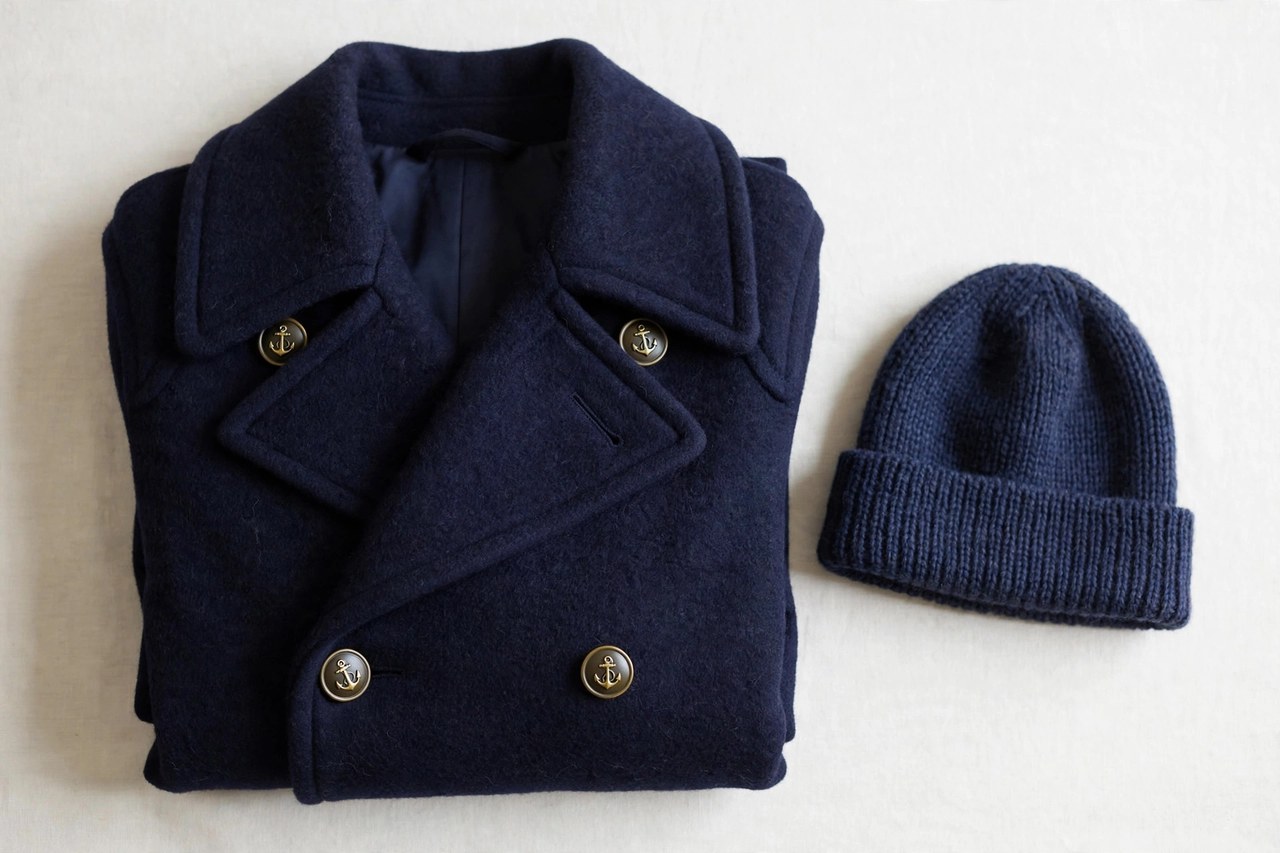
A men's wool peacoat is the short, double-breasted naval coat: broad lapels that button up to the throat, a boxy hip-length cut, oversized buttons and cloth dense enough to stand up on a winter deck. Born as sailors' working gear, it became the most democratic of coats - as correct over a suit as over a fisherman's sweater - and the easiest tailored shape for a man to wear well. This guide walks through the choices that matter - style, fit, fabric and finish - with the practical detail a product listing rarely gives you, and closes with the care habits that keep the garment in service.
Styles and Construction
The defining cloth is melton wool: a thick, densely woven and heavily milled fabric whose surface is almost felt-like, shedding wind and spray and hiding wear for decades. Naval-issue coats ran to very heavy cloth; civilian peacoats use lighter meltons that keep the character with less armor. Details to verify: a double-breasted front with buttons that actually all work (decoration-only buttons mark a fashion copy), wide lapels that close to the neck with a throat latch or buttoned collar, vertical or slash hand-warmer pockets set high, and a single vent. Anchor-motif buttons are the tradition; plain horn or matte buttons modernize the coat.
A tailored wool coat or jacket is judged in layers: the cloth, the canvas or fusing that gives the chest and lapels their shape, and the lining that lets it glide over knitwear. Melton weaves dense and wind-tight for peacoats and overcoats, flannel reads soft and matte, tweeds hide wear and suit country styling, and gabardine runs smooth for rain-shedding trench styles. Sleeves should show clean pitch without diagonal drag lines, the collar should hug the neck, buttons should be sewn with thread shanks, and a half or full canvas front will drape and recover better than a fully fused one at the same cloth weight.
Fit and Sizing
Peacoats fit close and boxy by design - they were cut to work in, over a sweater, on a moving ship. Fit yours over knitwear with the front buttoned: shoulders square at yours, chest closed without strain, and enough room to reach and row your arms forward. Length should cover the seat or end just at the hip bone - shorter reads fashion, longer reads naval. Sleeves to the wrist, and check the collar stands up and stays: a peacoat's storm collar is a working feature, not a pose.
Tailored wool outerwear should be brushed after wear - a clothes brush lifts surface soil before it works into the weave - and rested a full day between outings on a broad hanger that carries the shoulders. Spot-clean promptly rather than washing; dry clean only a few times a season, since solvent and pressing fatigue cloth and canvas. Store coats clean, unbuttoned, in breathable garment bags with moth protection, never compressed in plastic. Set the creases and lapel roll with steam, not a hard press, and have loose buttons and lining tears repaired early - a coat's structure makes small repairs cheap and neglect expensive.
Wearing and Care
Melton wool asks little: brush it, rest it, hang it broad, and it will handle years of winters. Spot-clean promptly, dry clean sparingly, and store clean with moth protection - a peacoat's dense cloth is a moth favorite precisely because it is all wool. Loose anchor buttons should be re-sewn with heavy thread and a shank; they carry real load when the coat is buttoned against weather.
Fit a wool coat or sports coat over the bulkiest layer it will honestly cover - a sweater for an overcoat, a shirt and light knit for a blazer - and test the working range: arms forward, arms crossed, sitting with the buttons fastened. Shoulders end at yours, the collar sits against the neck without a gap, and the fronts close without an X of pulling at the button. Coat length is coverage: a trench or overcoat should reach at least mid-thigh, a peacoat ends at the hip, and a blazer should cover the seat. Sleeve length shows a sliver of shirt cuff on tailored jackets; coat sleeves protect the wrist.
Common Questions
Why is the peacoat double-breasted?
For the same reason navies issued it: overlapping fronts give two layers of melton over the chest, and if one side's buttons were damaged, the coat could be re-buttoned to the other side - the symmetrical front is function, later adopted as style. It also lets the collar close fully against wind.
Can a peacoat be worn over a suit?
Yes, provided it is long enough to cover the suit jacket's length or come close, and roomy enough to close over it. A hip-length fashion peacoat that ends above the jacket looks unfinished; a classic seat-covering length in navy works over tailoring and knitwear alike.
How warm is a melton wool peacoat, really?
Very warm for its length: dense melton blocks wind, the double front insulates the chest, and the stand collar seals the neck. It lacks the leg coverage of a long overcoat, so in deep cold pair it with flannel trousers and proper boots rather than expecting miracles from the coat alone.
More in Men's Clothes Guide W
Background
Do you know what this style of coat looks like? Here is one example of a wool navy pea coat. A pea coat (or pea jacket, pilot jacket) is an outer coat, generally of a navy-colored heavy wool, originally worn by sailors of European and later American navies. Pea coats are characterized by short length, broad lapels, double-breasted fronts, often large wooden, metal or plastic buttons, and vertical or slash pockets. References to the pea jacket appear in American newspapers at least as early as the 1720s, and modern renditions still maintain the original design and composition. You may also want to learn about other wool coat and wool jacket styles. Yes, their is a difference between coats and jackets.
Photos

Looking for Men's Clothing Stores?
This guide explains men's wool peacoats. To browse where to buy, visit our men's clothing store directory, where you can find retailers that carry them.