Men's Wool Coats Guide
Men's wool coats are the overcoat family as a whole - the long, warm top layer worn over suits, jackets and knitwear through the cold months. This guide maps the family: which coat styles exist, which cloths make them, and how to choose the one coat (or the two) that covers a man's winter - the specialist guides on this site then take the peacoat, trench and button-front styles one at a time.
Shop Men's Wool Coats Now
Shop Men's Wool Coats on Amazon Shop Men's Wool Coats on eBayThe Amazon and eBay links on this page are affiliate links. If you make a purchase through them, Apparel Search may earn a commission.
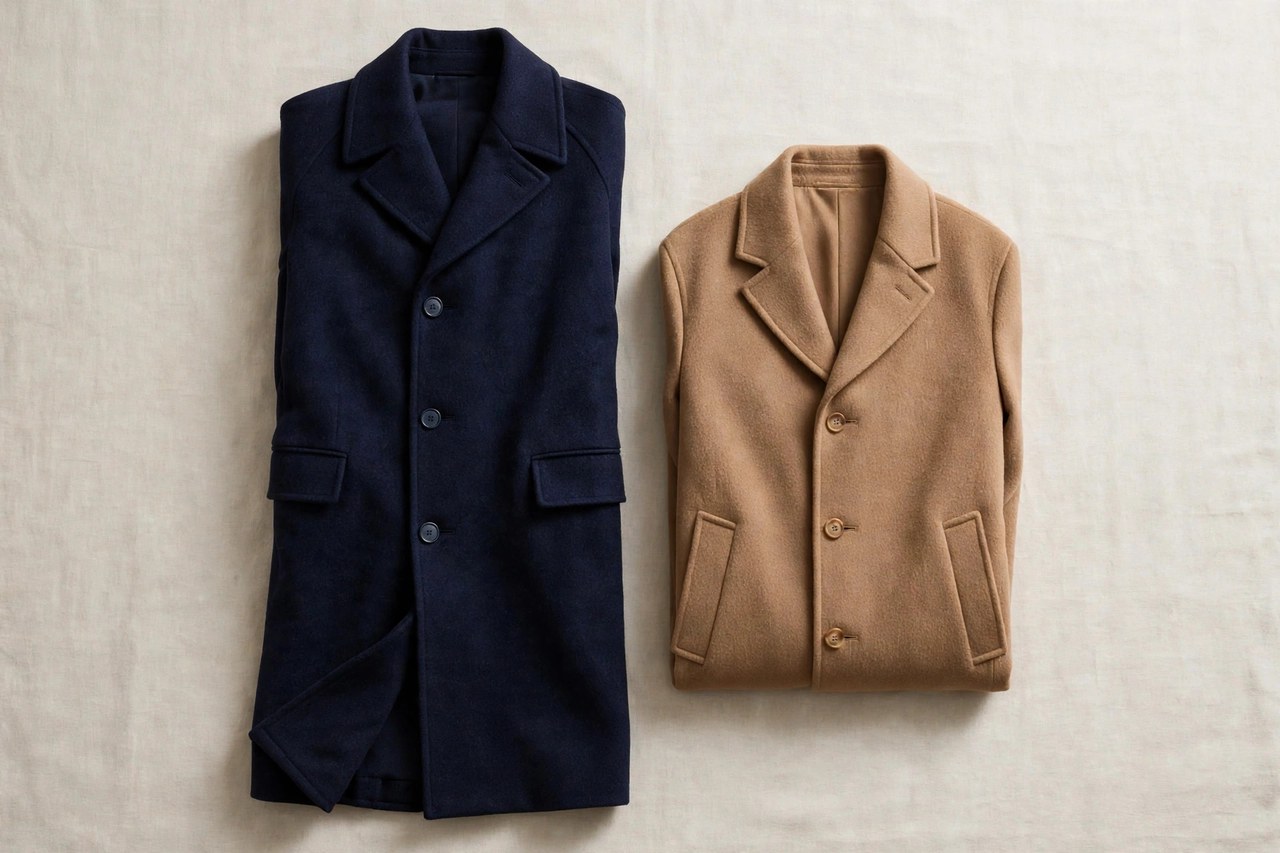
Men's wool coats are the overcoat family as a whole - the long, warm top layer worn over suits, jackets and knitwear through the cold months. This guide maps the family: which coat styles exist, which cloths make them, and how to choose the one coat (or the two) that covers a man's winter - the specialist guides on this site then take the peacoat, trench and button-front styles one at a time. This guide covers the styles worth knowing, the fit points that decide comfort, the fabrics and construction that separate a good buy from a regret, and the simple care that makes the garment last.
Styles and Construction
The family divides by silhouette. Single-breasted coats (Chesterfield and button-front styles) are the business standard; double-breasted polo and ulster styles add warmth and presence; the peacoat brings a short, nautical cut; the trench adapts wool gabardine to rain; duffle coats fasten with toggles for a country-casual register. Cloths run from smooth worsted and melton to herringbone tweeds and camel hair blends - density is warmth and weather resistance, and a good coat cloth should feel substantial: most quality overcoatings weigh 500 grams per meter and up. Inside, canvas construction, a smooth full lining and well-set sleeves decide how the coat wears over a suit.
A tailored wool coat or jacket is judged in layers: the cloth, the canvas or fusing that gives the chest and lapels their shape, and the lining that lets it glide over knitwear. Melton weaves dense and wind-tight for peacoats and overcoats, flannel reads soft and matte, tweeds hide wear and suit country styling, and gabardine runs smooth for rain-shedding trench styles. Sleeves should show clean pitch without diagonal drag lines, the collar should hug the neck, buttons should be sewn with thread shanks, and a half or full canvas front will drape and recover better than a fully fused one at the same cloth weight.
Fit and Sizing
Choose by the life the coat will lead: the daily suit-wearer needs a knee-length single-breasted coat in navy or charcoal; the casual wardrobe is better served by a peacoat or a textured tweed; very cold climates justify the longer, heavier, double-breasted option. Fit over your bulkiest layer with all fastenings closed - no pulling at the chest, shoulders at yours, sleeves to the wrist, and enough skirt flare to sit and stride. One great coat worn daily beats three mediocre ones rotated, because the coat is the garment everyone sees.
Tailored wool outerwear should be brushed after wear - a clothes brush lifts surface soil before it works into the weave - and rested a full day between outings on a broad hanger that carries the shoulders. Spot-clean promptly rather than washing; dry clean only a few times a season, since solvent and pressing fatigue cloth and canvas. Store coats clean, unbuttoned, in breathable garment bags with moth protection, never compressed in plastic. Set the creases and lapel roll with steam, not a hard press, and have loose buttons and lining tears repaired early - a coat's structure makes small repairs cheap and neglect expensive.
Wearing and Care
A wool coat is a decade purchase with decade care: brush after wear, rest between wearings, hang broad, dry clean sparingly, store clean in a breathable bag with cedar, and repair buttons, linings and hems at the first sign of failure. Keep it out of plastic and compression in storage - wool cloth needs air, and a coat stored dirty is a moth banquet with shoulders.
Fit a wool coat or sports coat over the bulkiest layer it will honestly cover - a sweater for an overcoat, a shirt and light knit for a blazer - and test the working range: arms forward, arms crossed, sitting with the buttons fastened. Shoulders end at yours, the collar sits against the neck without a gap, and the fronts close without an X of pulling at the button. Coat length is coverage: a trench or overcoat should reach at least mid-thigh, a peacoat ends at the hip, and a blazer should cover the seat. Sleeve length shows a sliver of shirt cuff on tailored jackets; coat sleeves protect the wrist.
Common Questions
What is the most versatile wool coat a man can own?
A knee-length, single-breasted coat in navy or charcoal worsted or melton. It goes over suits for work, over knitwear at weekends, and in those colors pairs with every trouser and shoe in a normal wardrobe. Camel is the classic second coat, not the first.
How heavy should a wool coat cloth be?
For a genuine winter overcoat, look for cloth around 500 to 700 grams per meter - that density is what blocks wind and holds the coat's shape. Fashion coats in lighter cloth look right in the shop and disappoint in January; weight in the hand is the honest test.
Should my overcoat be the same size as my suit jacket?
Usually yes - coats are cut with ease allowed for the jacket beneath when you buy your normal size. Size up only if you will wear the coat over heavy knitwear without a jacket, and always fit it over the bulkiest layer you honestly plan.
More in Men's Clothes Guide W
Background
Wool has many benefits and many of them are appropriate for outwear such as men's jackets and coats. Wool is the textile fiber obtained from sheep and other animals, including cashmere and mohair from goats, qiviut from muskoxen, angora from rabbits, and other types of wool from camelids. The benefits of wool include properties to help the wearer stay warm. Wool is one of nature's best insulating materials. Aside from being warmer than cotton, wool also dries much faster. The most widely available types of wool come from sheep. However, as mentioned above sheep aren't the only animals that produce wool-like fibers. A coat is a garment worn by any gender, for warmth or fashion. Coats typically have long sleeves and are open down the front, closing by means of buttons, zippers, hook-and-loop fasteners, toggles, a belt, or a combination of some of these. Other possible features include collars, shoulder straps and hoods. Coats are made from various fibers. Wool is obviously one of the options.
More to Explore on Apparel Search
- About Wool for Menswear
- Men's Coats
- Men's Clothes
- Men's Apparel
- Fashion
- Wool News
- Wool Research
- Wool fiber
- Wool Definition
- difference between a coat and jacket?
- Pea Coat
- Men's Clothes Guide H-P
- Men's Clothes Guide Q-Z
- Fashion Designers
- Popular Brands
- Men's Fashion News
- Men's Clothing Stores
- Men's Clothing Wholesalers
- Men's Fashion
Looking for Men's Clothing Stores?
This guide explains men's wool coats. To browse where to buy, visit our men's clothing store directory, where you can find retailers that carry them.